Scaling Segmentation Without Extra Campaigns
Generated by Klaviyo AI
Klaviyo’s omnichannel campaign builder lets teams create one campaign structure with audience-specific paths across email and text messaging. This approach supports more relevant lifecycle and purchase-based segmentation while reducing duplicate campaign work and managing overlapping audiences.
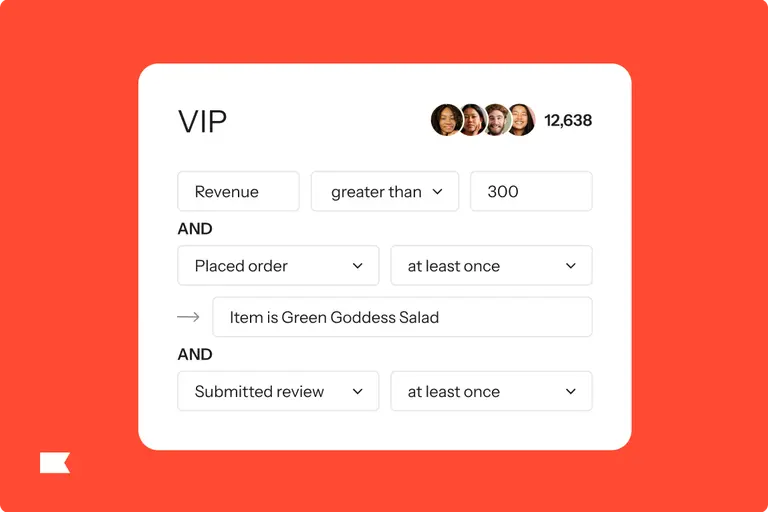
- Core lifecycle segments: Retention programs can distinguish potential customers, recent first-time buyers, one-time buyers, disengaged customers, and VIPs.
- One flexible build: Teams can clone messages and vary subject lines, copy, products, timing, channels, CTAs, and offers by audience path.
- Overlap management: Channel affinity settings determine which path wins when a recipient qualifies for multiple segments.
- Segmented performance: In a 14-day spring sale, a sustainable and organic buyer path converted at 0.77%, while the VIP early-access text achieved a 2.34% click-through rate.
- Softer broad results: Lower general-list performance can indicate that higher-intent customers are being routed into more relevant dedicated paths.
As director of retention at Kulin, a performance marketing agency for DTC brands specializing in paid ads and retention, I spend most of my time convincing brands that one or two segments isn't a segmentation strategy.
Dividing your audience into potential customers, customers, VIPs, and disengaged customers is a start, but it's a rough sketch. The real opportunity is in building relevant segments that map to where someone actually stands in their relationship with your brand.
For years, the objection I heard was fair: more segments means more campaigns, more designs, and more hours nobody has.
That objection stopped holding up the day I started building inside Klaviyo's omnichannel campaign builder. It's the reason I can run 10 segments with the workload of two.
The 5 segments I build for every retention program
Every brand's list looks different, but these are the segments I build into nearly every retention program, regardless of category:
- Potential customers: Shoppers who have subscribed, but never purchased. They're curious, but not yet convinced, so I send education, social proof, and product comparisons. We don’t use loyalty language yet. They haven't earned it, and they don't want it.
- Recent first-time buyers: Anyone in their first 30 days post-purchase is asking themselves one thing: did I make the right call? I send validation, usage tips, and what to expect next. No up-sells or hard promos yet.
- One-time buyers who haven't bought again: This is the highest-leverage segment in ecommerce. If someone buys once and then goes quiet for 30–90 days, I time a repurchase nudge to when the product would naturally run out, then follow with a soft subscription or loyalty pitch.
- Disengaged customers: Anyone who purchases and then goes quiet for 90-plus days needs to be put in a deeper segment. Someone who’s made a single purchase reads a win-back message differently than a former subscriber or someone who’s made multiple purchases. Treating them as one group wastes the send.
- VIPs: Your top-tier customers by order value or frequency expect to be treated like it. Early access, exclusive content, and recognition go here. Skip the constant promos.
Beyond lifecycle, I layer in product- and collection-specific segments once the basics are solid: buyers of one product who've never tried another, customers who only ever buy on sale, and values-based buyers who need messaging built around what they care about, not a discount code.
How omnichannel campaigns change the segment math
People hear "Build 10-plus segments" and picture 10-plus separate campaigns. That's not how it works inside the omnichannel campaign builder, and it's the single biggest shift in how I plan a launch.
You build one campaign structure, then add audience paths on top of it. Those paths aren't mutually exclusive. A spring sale can send a general launch email to your whole list on day one, then branch on day 3: VIPs get a personalized message, first-time buyers get a different one, and everyone else gets a reminder. One campaign build, several distinct experiences.
What's actually changing between segments is smaller than people assume:
- Subject line, which alone can move open rates meaningfully
- Hero line or opening copy, matched to where someone stands in their journey
- Products or categories featured, cross-referenced against what the recipient has already purchased
- Send time, with VIP messages going out a day early and the general list staying on schedule
- Channel, based on which segments respond better to email vs. text messaging
- CTA or offer, like an early-access code for VIPs and a standard price for everyone else
I clone messages inside the builder and change only what needs to change, which cuts build time down considerably. I build the master path first with the general campaign, then layer segment-specific variations on top. If someone qualifies for two paths, channel affinity settings decide which one wins. Most teams are already doing this manually without realizing it. I’ve worked with a client in the intimates category whose segmentation plan for a seasonal sale ranks 6 overlapping segments in strict priority order: VIPs, then a product-upgrade segment, and then a few narrow purchase-history segments. People can easily qualify for more than one. That priority list is a spreadsheet doing the job Klaviyo automatically does inside the builder. The moment you have more than a few segments, you need a rule for who wins the overlap, whether a person writes it by hand or Klaviyo enforces it for you.
An omnichannel campaign example: 23 messages, 14 days
I ran a spring sale for a client in the intimates category: one omnichannel campaign, 23 messages total, across a 14-day window covering email and text messaging.
Here’s what happened inside that single build:
- VIPs got early access two days ahead of the general list.
- Potential customers who'd browsed or abandoned cart got their own path.
- Returning customers were segmented 3 ways based on purchase history: sustainable and organic buyers, people who'd never bought a padded style, and a catch-all group.
- On text messaging, early-access, general-access, mid-campaign nudge, and last-chance messages each ran on their own schedule.
What the segmented sends actually converted at
Email hit a 0.15% placed order rate at $78.37 average order value (AOV). Text messaging hit a 0.25% placed order rate at $71.08 AOV.
But the standouts were the segmented sends. The returning-customer path built around sustainable and organic buyers converted at 0.77%, more than double the general launch. The VIP early-access text message pulled a 2.34% click-through rate, the highest of any message in the campaign.
This sat alongside the general campaign. That's the actual argument for building more segments: you don't lose the broad send, you add personalized layers on top of it. The omnichannel campaign builder is what makes adding those layers cheap enough to be worth doing.
Why a softer general-list number is a good sign
The general campaign’s numbers get less impressive as your segmentation gets better, and that’s actually a good thing. If your VIPs and warm buyers are being routed into higher-converting dedicated paths, the broad send is by definition left talking to the people least likely to convert. In other words, a softer general-list number means your segmentation is doing its job.
If you're only running one campaign to your whole list right now, any segmentation is a win. If you've already got a few, the omnichannel campaign builder is where you find out how many more you can afford to build.

Related content