Choosing email platforms for 2026
Generated by Klaviyo AI
The article outlines five core capabilities that matter most in modern email marketing platforms and evaluates seven leading tools against those needs. It explains which types of businesses each platform suits best, along with key tradeoffs around data, automation, reporting, and deliverability.
- Core evaluation criteria: Effective platforms in 2026 are defined by data quality, deep personalization, advanced automation, meaningful reporting, and strong deliverability rather than templates or pricing.
- Best for ecommerce: Klaviyo is positioned as the top overall choice for ecommerce brands due to its real-time Shopify data sync, fast segmentation, unified SMS and push, and reliable deliverability.
- Use-case specific tools: Braze, Iterable, Salesforce Marketing Cloud, Listrak, HubSpot, and Mailchimp are recommended for specific scenarios like app-first, multi-brand retail, large enterprises, sales-driven B2B, and small businesses.
- Tradeoffs and limitations: Each platform carries downsides such as higher cost, technical complexity, weaker ecommerce depth, dated interfaces, or scalability limits that teams must weigh against their needs.
- Decision principle: The article concludes that the best platform is the one that delivers speed and visibility, making marketing faster and more connected rather than more complicated.
This blog was written in collaboration with Zettler Digital. No compensation was exchanged for this collaboration.
When you’re running an ecommerce business, email marketing isn’t optional. It’s the heartbeat of your customer communication and the foundation of retention and growth.
But picking the right platform can make or break how effective your email program actually is. Over the years, as founder of Zettler Digital, I’ve tested just about everything out there. What separates the good from the great in 2026 isn’t templates or pricing: it’s data, personalization, automation, reporting, and deliverability.
Here’s how I think about what matters, and which platforms deliver.
5 things to look for in an email marketing platform
1. Depth and granularity of data
Data is everything. If a platform can’t give you clean, fast, actionable data (that isn’t delayed or watered down) it’s already a non-starter. You need real-time triggers, product-level logic, and the ability to build segments that don’t choke when you add one more filter.Depth and granularity of that data (ideally in all of your owned channels) is what unlocks personalization. Which brings us to our next point.
“Bad data in equals bad data out,” says Ashley Ismailovski, director of email marketing at SmartSites. “If you’re working with fragmented data sources, inconsistency with formatting, or poor-quality data, you aren’t putting yourself in a position to succeed.”
Bad data in equals bad data out.
2. Personalization that goes deep
Personalization has to go beyond “Hi [First Name].” You want behavioral and predictive intelligence baked in. That’s what lets you send the right message automatically, without overcomplicating your set-up or burning hours in spreadsheets.
3. Automation beyond batching and blasting
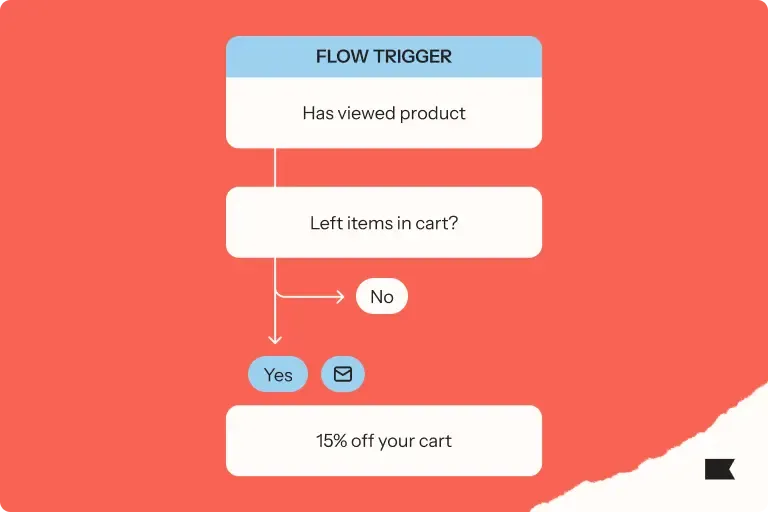
Automation depth matters. Branching, testing, time windows, global throttles—the works. Without that, you’re just batching and blasting. And that’s not a retention strategy.“The best email marketing platform isn’t the one with the longest feature list,” says Mike Tatum, lifecycle marketing lead at Prismfly. “It’s the one that makes it easy to act on customer data and deliver messages that feel timely and relevant.”
The best email marketing platform is the one that makes it easy to act on customer data.
4. Reporting that shows what’s actually moving the needle
If you can’t see where your revenue is actually coming from (and what’s incremental) you’re not seeing the whole picture. Good reporting shows you which messages move the needle and which ones waste your send volume.
“Attribution models can vary by platform, with some extending the opportunity to brands to change their attribution windows to match their existing reporting settings,” says Ismailovski. “It’s important to find a platform that aligns with the attribution model your brand is already using,” she recommends.
It’s important to find a platform that aligns with the attribution model your brand is already using.
5. Deliverability that makes all your strategizing worthwhile
No amount of strategy fixes a platform that can’t get emails into inboxes. Strong deliverability infrastructure and compliance tools aren’t nice-to-haves. They’re requirements.
A great email marketing platform will also offer features that help you improve your deliverability over time and keep up with the latest industry requirements.
My top 7 email marketing platforms for 2026
1. Klaviyo: Best overall for ecommerce
If you’re running an ecommerce brand, Klaviyo is the best all-around platform, full stop.
The data sync with Shopify is instant, segmentation is incredibly fast, and the flow logic is deep enough to run an entire retention engine without any duct tape. I can create triggered flows for welcome, post-purchase, replenishment, win-back, and everything in between, without needing a developer or third-party add-on.
SMS and push notifications live inside the same ecosystem, so the customer data stays unified across every channel. Reporting is clean, not overcomplicated. And deliverability is consistently excellent.
“For ecommerce brands, the real advantage of Klaviyo is how seamlessly it connects with your store and scales as you grow,” Tatum says.
Best for: ecommerce brands that want speed, precision, and flexibility
Downsides: not built for massive enterprise data models (but 99% of ecommerce brands will never hit those limits)
Example: Coffee Beanery scaled SMS and email under one roof and grew revenue with faster execution.
The real advantage of Klaviyo is how seamlessly it connects with your store and scales as you grow.
2. Braze: Best for app-first businesses
Braze is a powerhouse for mobile-first companies. You get total control over push, in-app, and email. The Canvas builder is one of the best flow builders in the industry. It’s flexible, visual, and precise.
But Braze is expensive and technical, in part because they tend to rely on third-party data warehouses, which means you’re paying for that other tool on top of Braze. You’ll need engineering support to get full value. For ecommerce, it can be overkill, especially if your business doesn’t revolve around an app.
Best for: app-first or hybrid businesses with developer resources
Downsides: high cost, complex set-up, and limited ecommerce depth
3. Iterable: Best for multi-brand retailers
Iterable sits in a similar lane as Braze but leans a bit more marketer-friendly. It’s strong for brands managing multiple storefronts or product catalogs under one roof.
The tradeoff is that data set-up can get messy fast if your structure isn’t clean. You’ll also feel the cost: Iterable is one of the more expensive platforms on the market, and most teams need at least part-time dev support to maintain it.
Best for: multi-brand or omnichannel retailers
Downsides: high cost, steep learning curve, and limited pre-built ecommerce automations
4. Salesforce Marketing Cloud: Best for enterprise ecosystems
Salesforce Marketing Cloud is built for enterprises: retailers, airlines, and global companies that already run on Salesforce. When it’s configured properly, it’s a machine. It has deep CRM tie-in, heavy segmentation, and serious compliance.
But Salesforce Marketing Cloud is also slow, expensive, and resource-heavy. You’ll spend more time in admin screens than actually building campaigns. The architecture is fragmented, since it’s really a bundle of acquired products stitched together.
Salesforce is rolling out Marketing Cloud Next in an attempt to unify it, but right now it’s mostly B2B-focused and still a few years from parity.
Best for: big organizations that live in Salesforce and have dev teams to support it
Downsides: long implementation cycles, complex integrations, and high total cost of ownership
5. Listrak: Best for retailers
Listrak has been around forever, and you can tell, in both good and bad ways. Deliverability is solid, and their account teams are deeply involved in helping retail brands run campaigns and automations.
But the UI feels dated, the integrations aren’t as plug-and-play, and flexibility is limited. Their new Listrak Next architecture is more modern but requires replatforming. The biggest concern is around identity resolution: their GXP product uses cross-site data sharing that could raise privacy issues.
Best for: retail brands that want a high-touch service model
Downsides: less flexibility, weaker support, developer dependencies, and slow execution
6. HubSpot: Best for sales-driven B2B businesses
If your marketing is tied closely to a sales funnel, HubSpot is tough to beat. The CRM connection is seamless, and automation between marketing and sales is smooth.
For ecommerce, though, HubSpot is light. The automations, segmentation, and catalog capabilities don’t compare to Klaviyo’s. It’s a great tool for lead nurturing, but not lifecycle marketing, meaning it just isn’t a fit for B2C brands.
Best for: B2B or service-based brands with long sales cycles and sales representatives that work in stages
Downsides: limited ecommerce features and shallow product logic
7. Mailchimp: Best for small businesses and beginners
Mailchimp is where a lot of people start, and for good reason. It’s easy to use, it has polished templates, and it gets you sending quickly.
But you’ll hit the ceiling fast. Data management relies on tags, segmentation is basic, and advanced automations are clunky. Mailchimp’s SMS tool is still young, and its reporting inflates results with overly generous attribution windows.
Best for: small businesses or creators who just need to send newsletters with no segmentation
Downsides: limited data retention, weak ecommerce features, and scalability issues
How to choose the right platform
Type of brand | Best fit | Why |
Ecommerce and hospitality brands | Klaviyo | Unified data, fast segmentation, and deep ecommerce automation |
App-first business | Braze | Advanced mobile push and in-app messaging |
Multi-brand retailer | Iterable | Flexible catalog and multi-brand support |
Enterprise Salesforce user | Salesforce Marketing Cloud | Deep Salesforce CRM and compliance |
Retail brand that needs white-glove service | Listrak | Dedicated account support, in-house professional services |
Sales-driven business | HubSpot | Tight B2B CRM + marketing integration |
Small business or creator | Mailchimp | Simple, batch-and-blast emails |
My take on the best email marketing platforms
The right email platform should make your marketing faster, smarter, and more connected, not more complicated.
If you’re in ecommerce, Klaviyo is the best all-around choice in 2026. It’s built around real-time data, not delayed reports. It scales from startup to enterprise without breaking, and it gives marketers full control without needing engineers to babysit every change.
The other tools on this list have strengths, especially for mobile or enterprise ecosystems. But for ecommerce growth, nothing beats being able to move fast with clean data and deep automation.
In short: choose the platform that gives you speed and visibility. The rest follows.
See firsthand why Klaviyo is at the top of my list of the best email marketing platforms.
Get started
Related content