The holidays are make or break. Be ready.
Now's the time to prep for peak season Get tips, tactics, and templates in the BFCM Hub.

Who will spend more this holiday season?
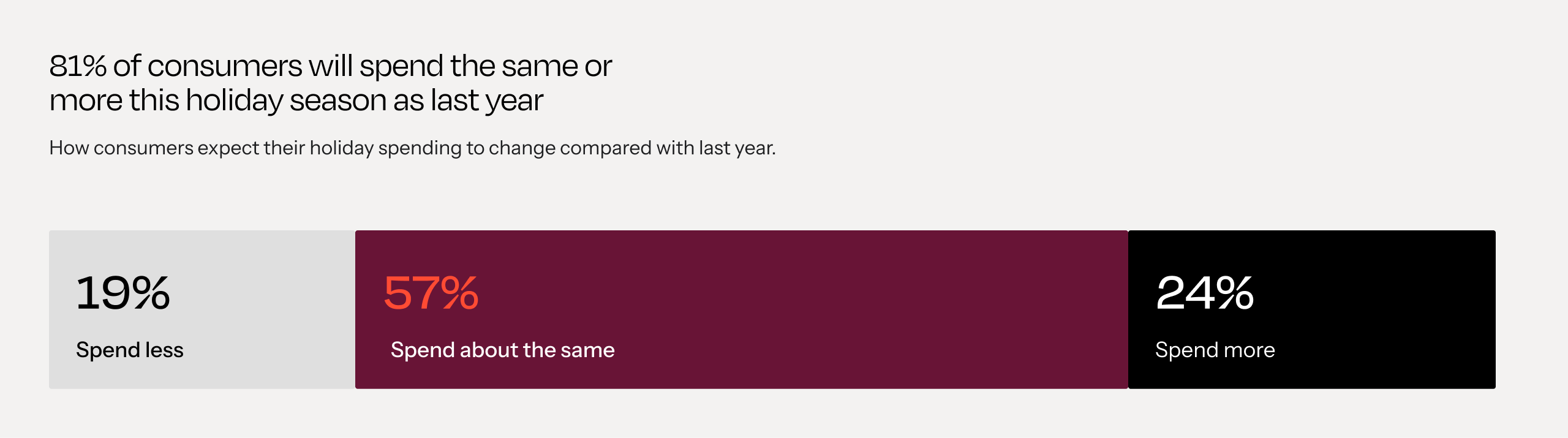
We expected AI to create sharper bargain hunters. It did. What we didn't expect was for those shoppers to arrive with bigger budgets.
AI-assisted shoppers have bigger budgets
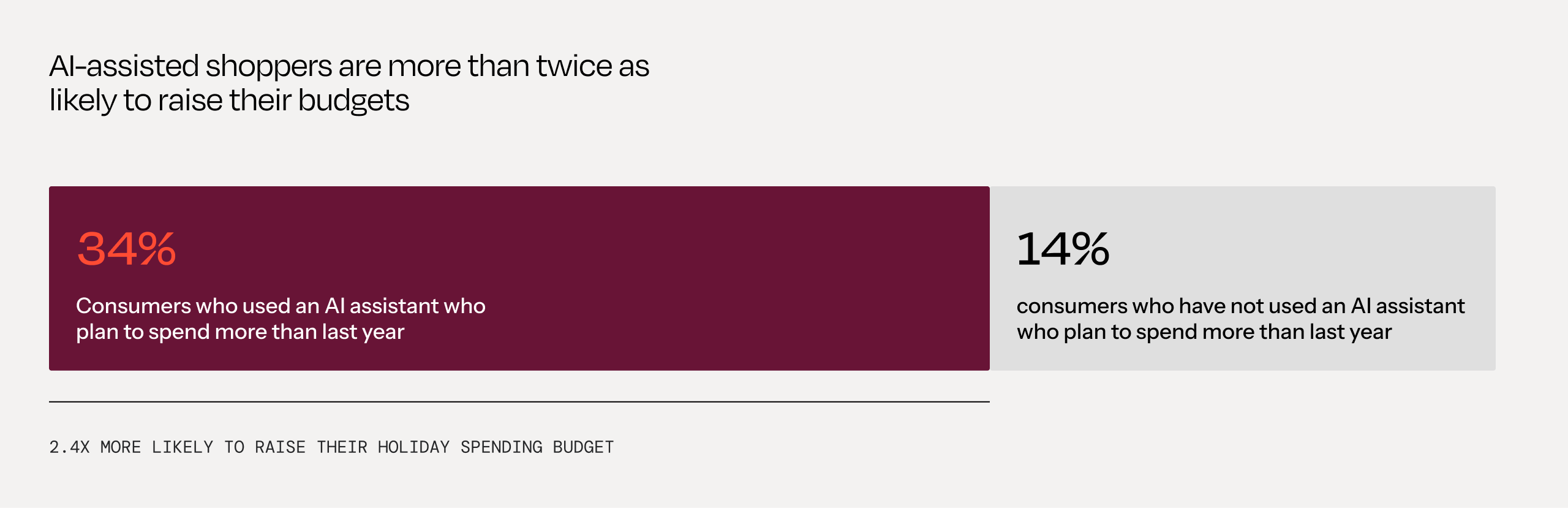
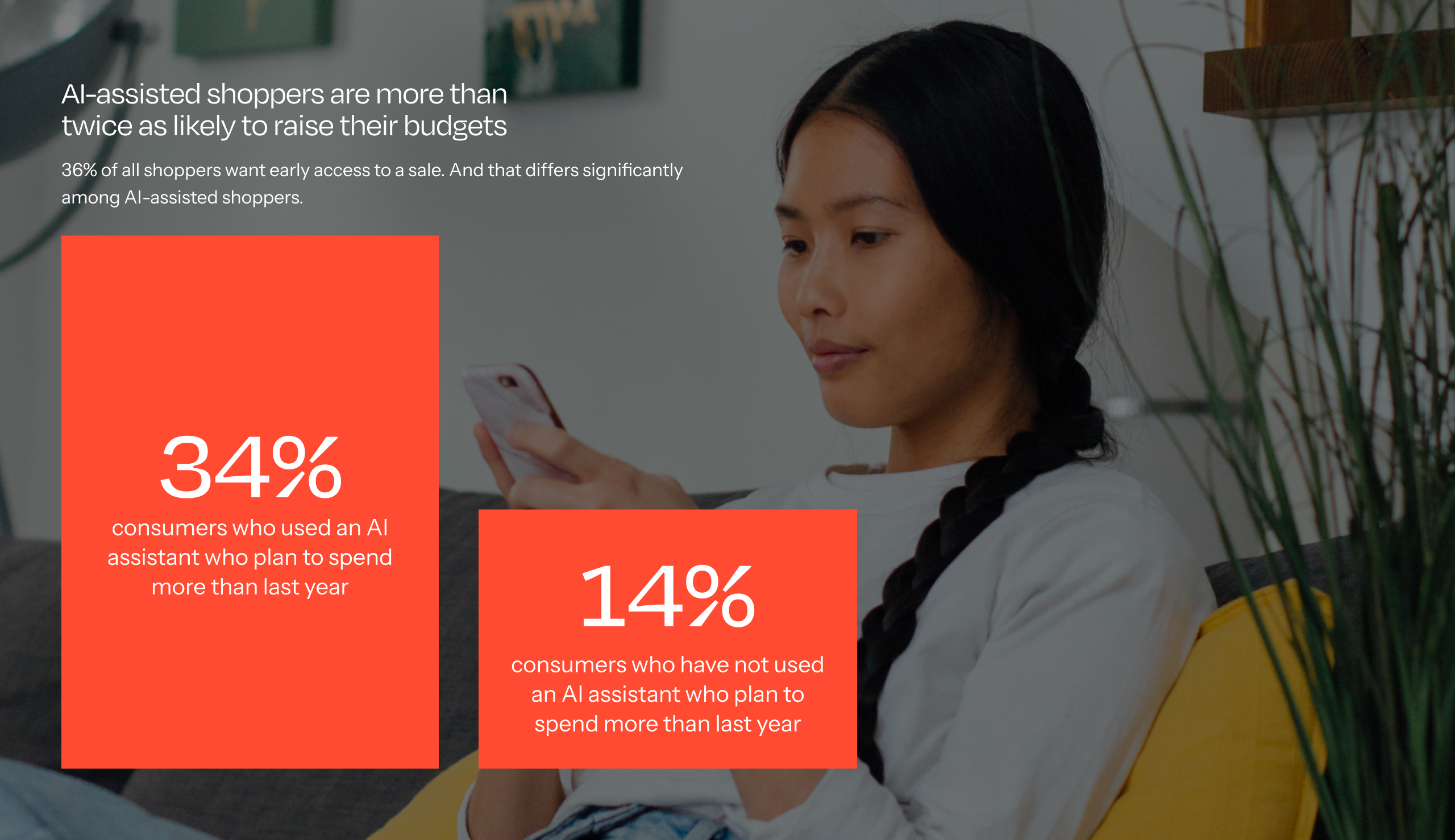
Among shoppers who've used an AI assistant, 34% plan to spend more this holiday season than they did last year. Among those who haven't used one, only 14% say the same. This finding runs counter to others in our study that suggest consumers use AI primarily for discount shopping.
They do, and that's because an AI assistant can compare hundreds of products, offers, reviews, shipping promises, and return policies before a shopper ever reaches a brand's website.
For a consumer with money to spend, the AI assistant doesn't necessarily reduce the budget. It reduces the time and uncertainty involved in spending it.
The search for gift ideas is getting shorter
A typical Google search results page may give a shopper 10 links and let them browse, but an AI assistant may only return them 3 brand names. The breadth of brand browsing shrinks considerably when consumers use an LLM instead of a traditional search tool like Google.
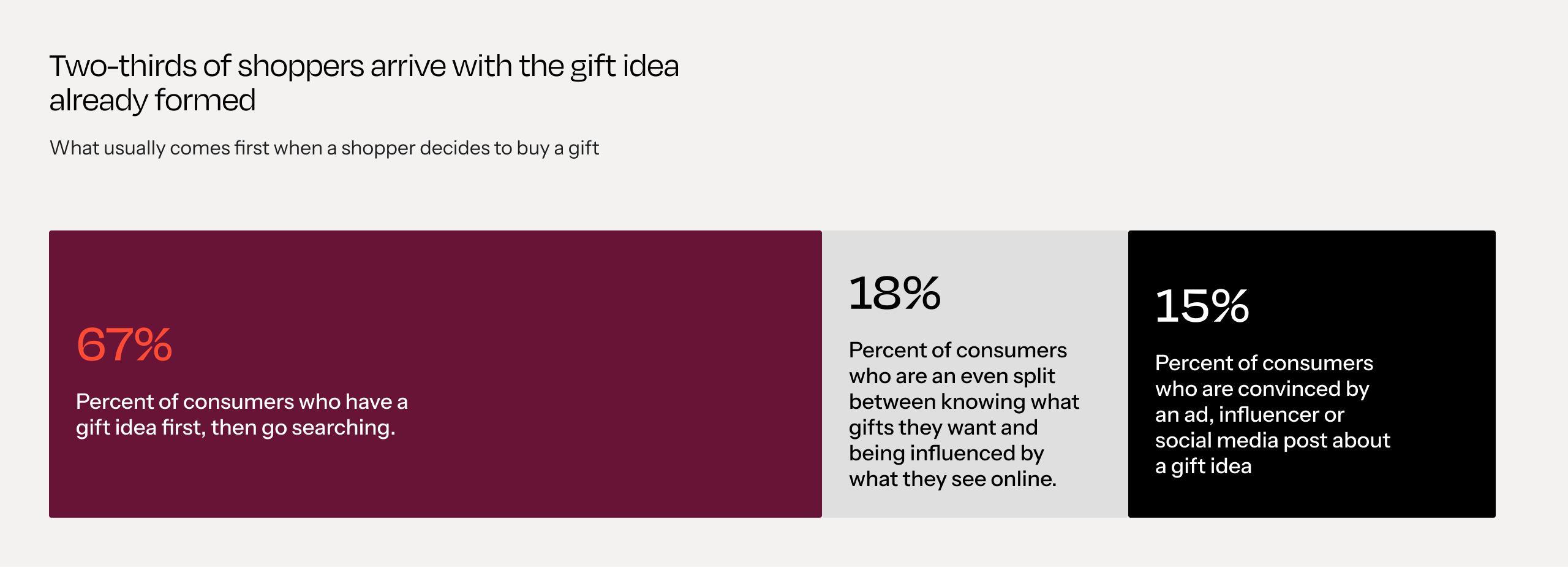
This matters because 67% of shoppers say they typically have an idea for a gift first, then go and search for the product. You need your brand showing up in traditional search and in that smaller AI consideration set.
This makes product data part of the brand experience. AI assistants read product titles, attributes, sizes, prices, availability, shipping promises, return terms, and review content. Brands that treat the product feed as an administrative chore risk losing high-intent shoppers before a campaign or product page ever gets the chance to persuade them.
Become the brand LLMs recommend
Learn how to improve your ChatGPT search visibility by joining our webinar with OpenAI on October 7.
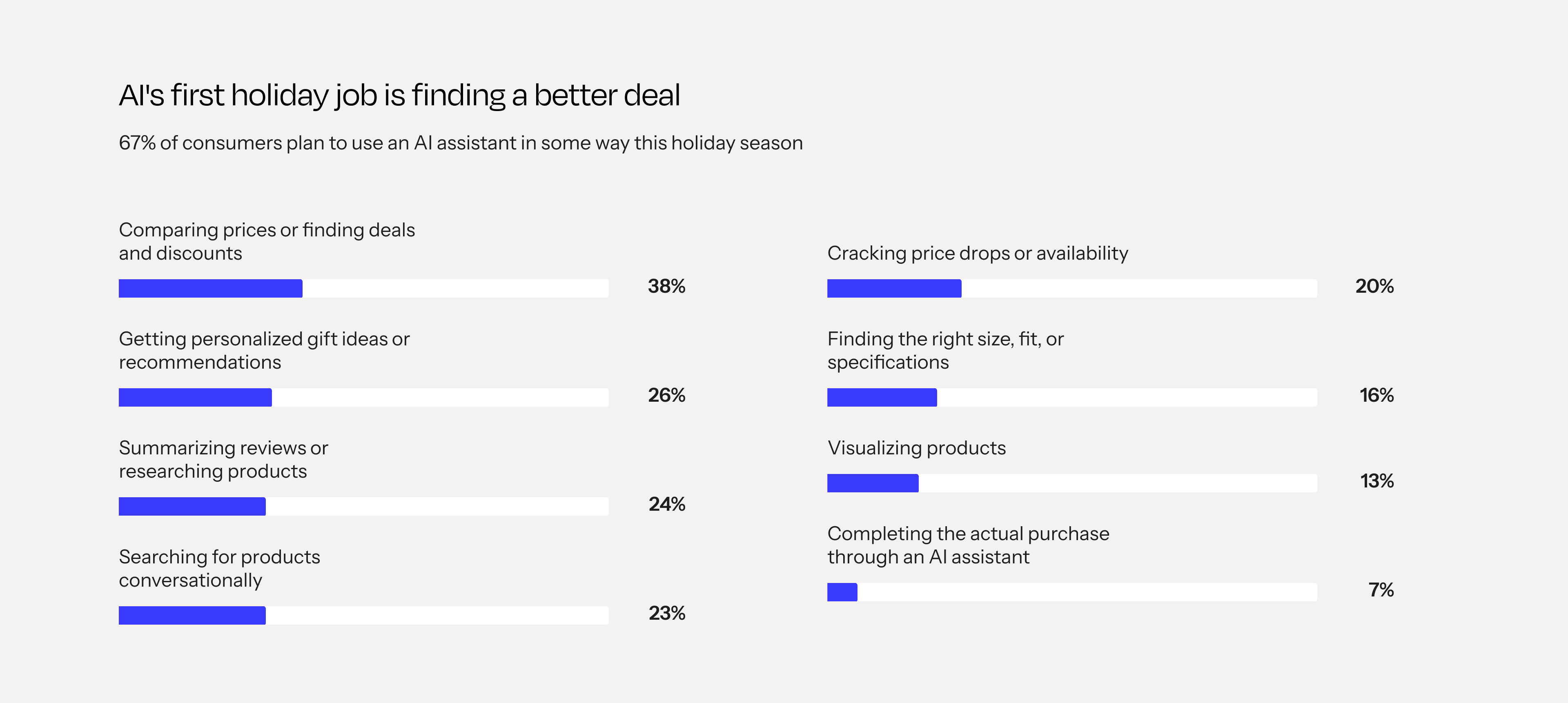
What jobs are shoppers giving AI?
The one thing AI can't do is something you already do best
Consumers love early access to sales — 36% of them do, and that number is even higher for those who've already used AI to shop.
Surfacing early access is something AI just cannot do right now. But your brand can. Using email, text, WhatsApp, or your social channels, you can alert loyal subscribers, followers, and customers to deals before AI gets wind of it.
Where is AI shopping happening?
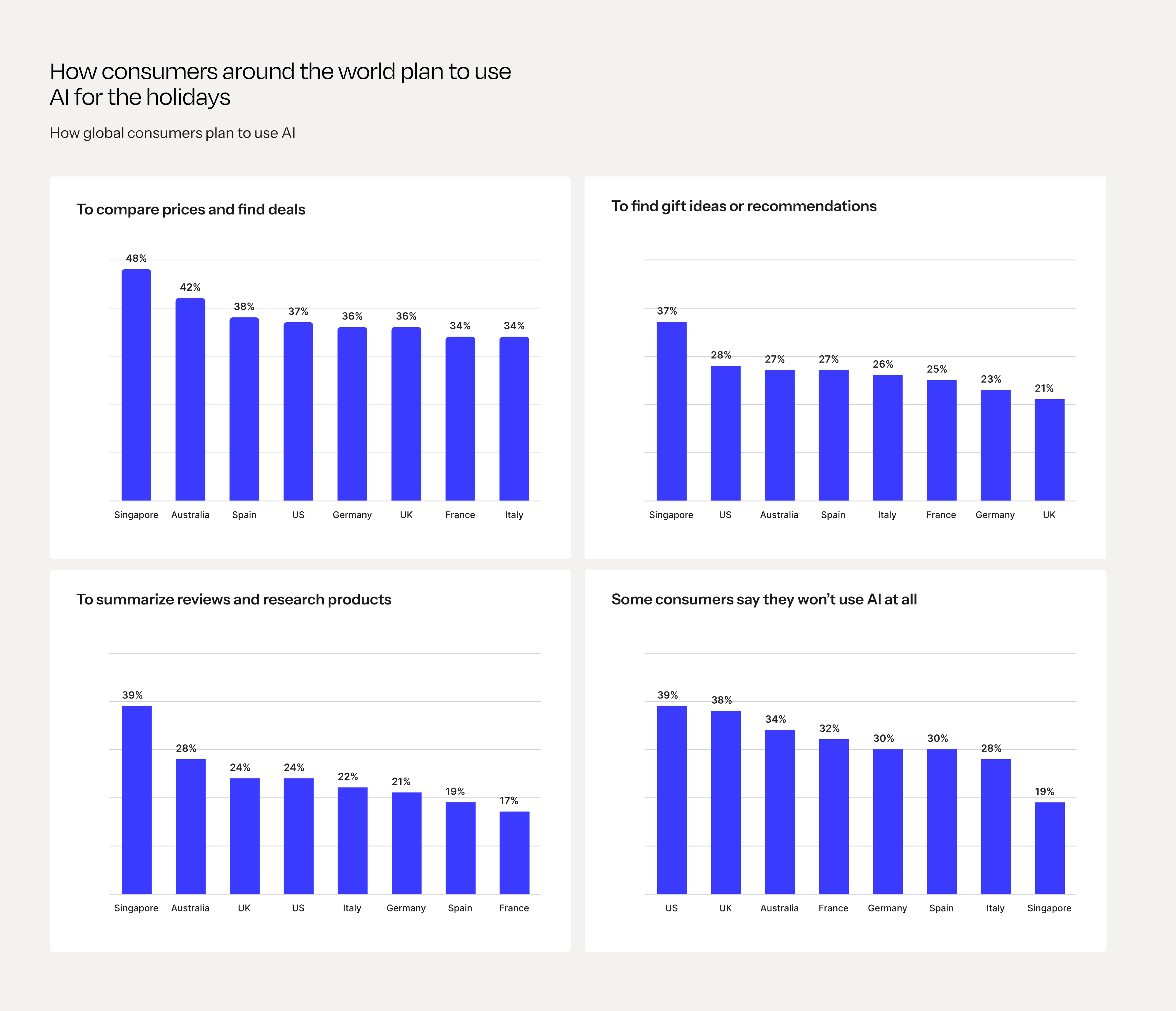
Read the US technology press, and AI shopping can sound like an American behavior the rest of the world is still adopting. The consumer data shows the reverse. In the US, 61% of consumers plan to use AI to shop this holiday season — leaving nearly 40% opting out of agentic shopping. The UK feels the same, with 62% planning to use AI this season.
Singapore is the AI-assisted shopping leader, with 81% of consumers there saying they'll use AI to shop this holiday season.
AI discovery is growing
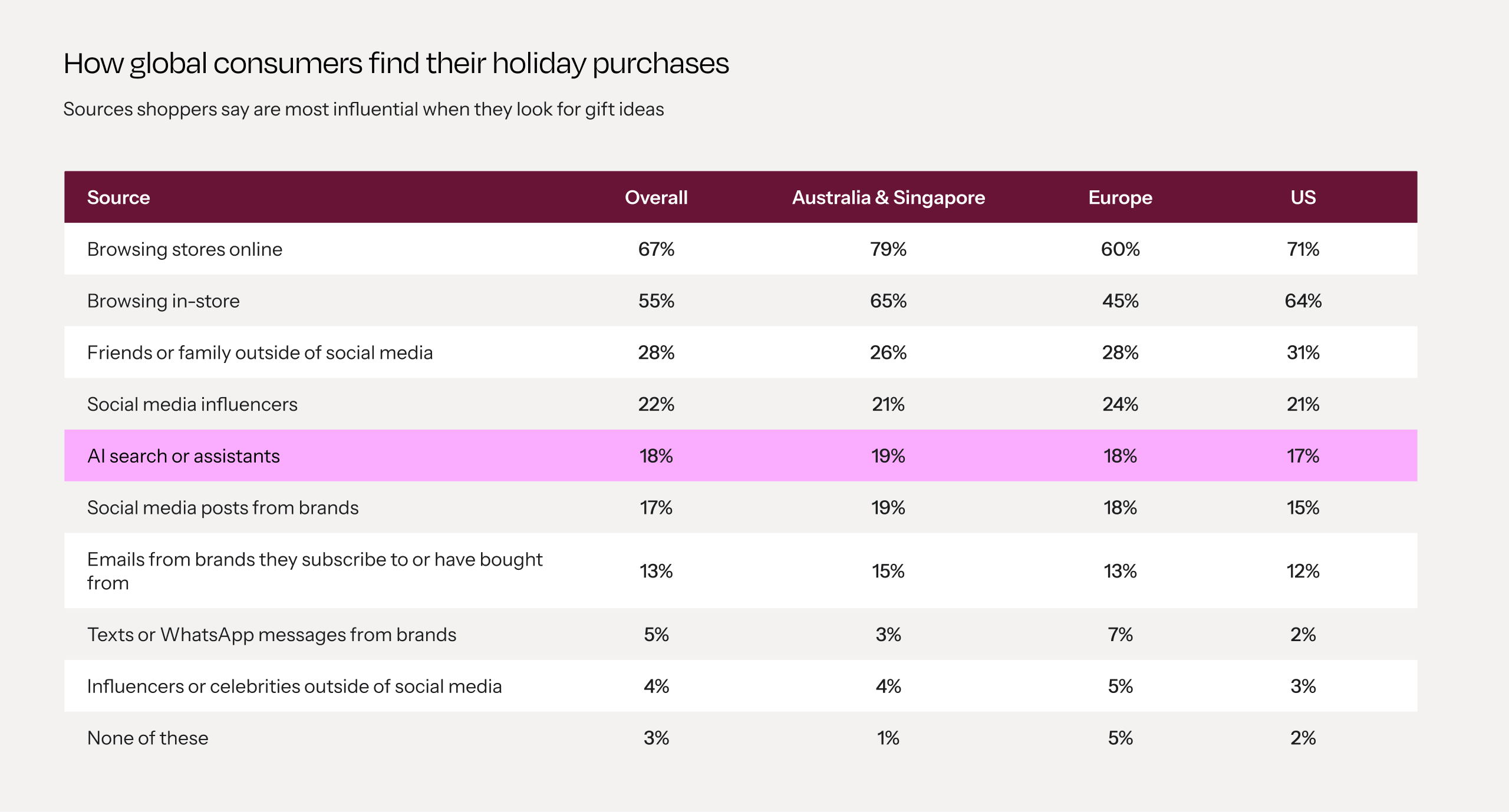
Shoppers say these are their most influential sources for gift ideas—trailing browsing stores online (67%) and browsing in-store (55%). But the share of people using AI to find gifts is already higher than for any of your owned channels (email, texting, or WhatsApp).
In other words, AI discovery is growing. For marketers, that means you need to make sure your products are showing up appropriately in the LLMs.
“Agentic commerce is fundamentally changing how people discover and choose brands. As journeys become more conversational and intent-driven, companies have to rethink how they show up — not just to be found, but to be chosen, and to deliver value in that moment.”
What do consumers plan to buy?
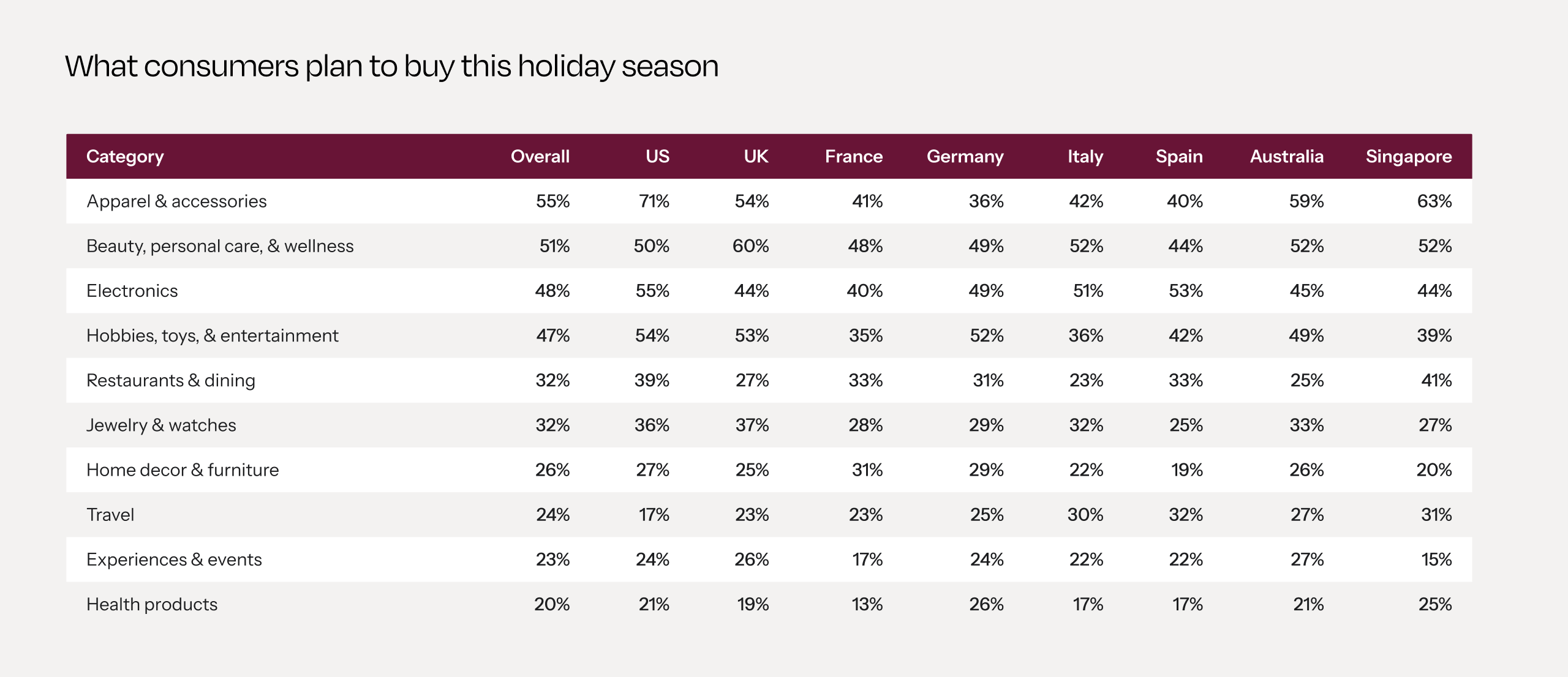
Apparel & accessories and beauty & personal care items are what most global consumers plan to buy this holiday season — but the spread changes significantly across countries.
Apparel leads in the US, Australia, and Singapore. Beauty leads the UK, France, and Italy. Germany picks hobbies, toys, and entertainment. Spain picks electronics.
Still, no matter what you sell — including services like restaurants or travel — consumers are planning to spend across the board.
Where do consumers want to hear from you?
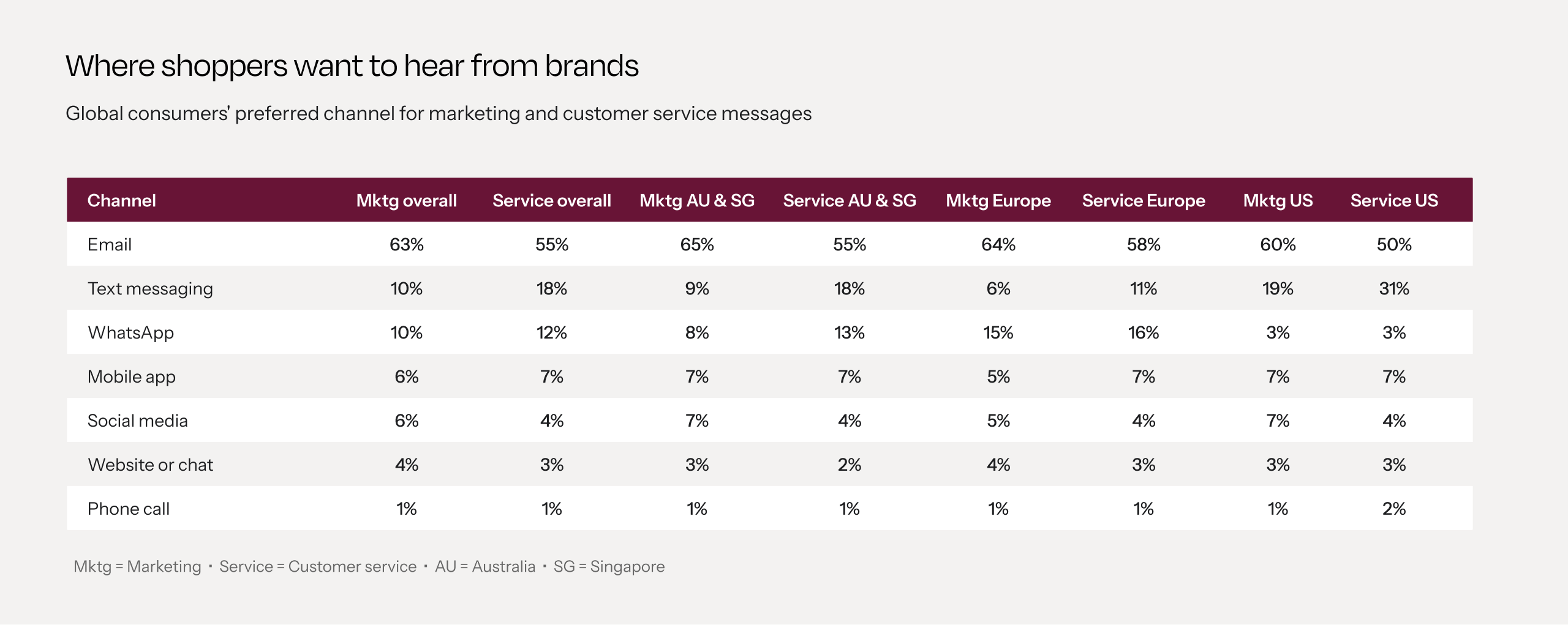
Email wins as the preferred marketing communication channel in every country, from 52% in Singapore to 73% in the UK.
Customer service messages are where the channel mix splits: 31% and 23% prefer texting in the US and Australia, respectively, while 30% prefer WhatsApp in Singapore, 25% in Spain, and 24% in Italy.
Depending on your global footprint, the channels you use to reach customers will differ — but not by much. Email, text messaging, WhatsApp, your branded app, social, and even AI web chat are enough to get the right message in the right place at the right time.
Consumers expect AI in their inbox
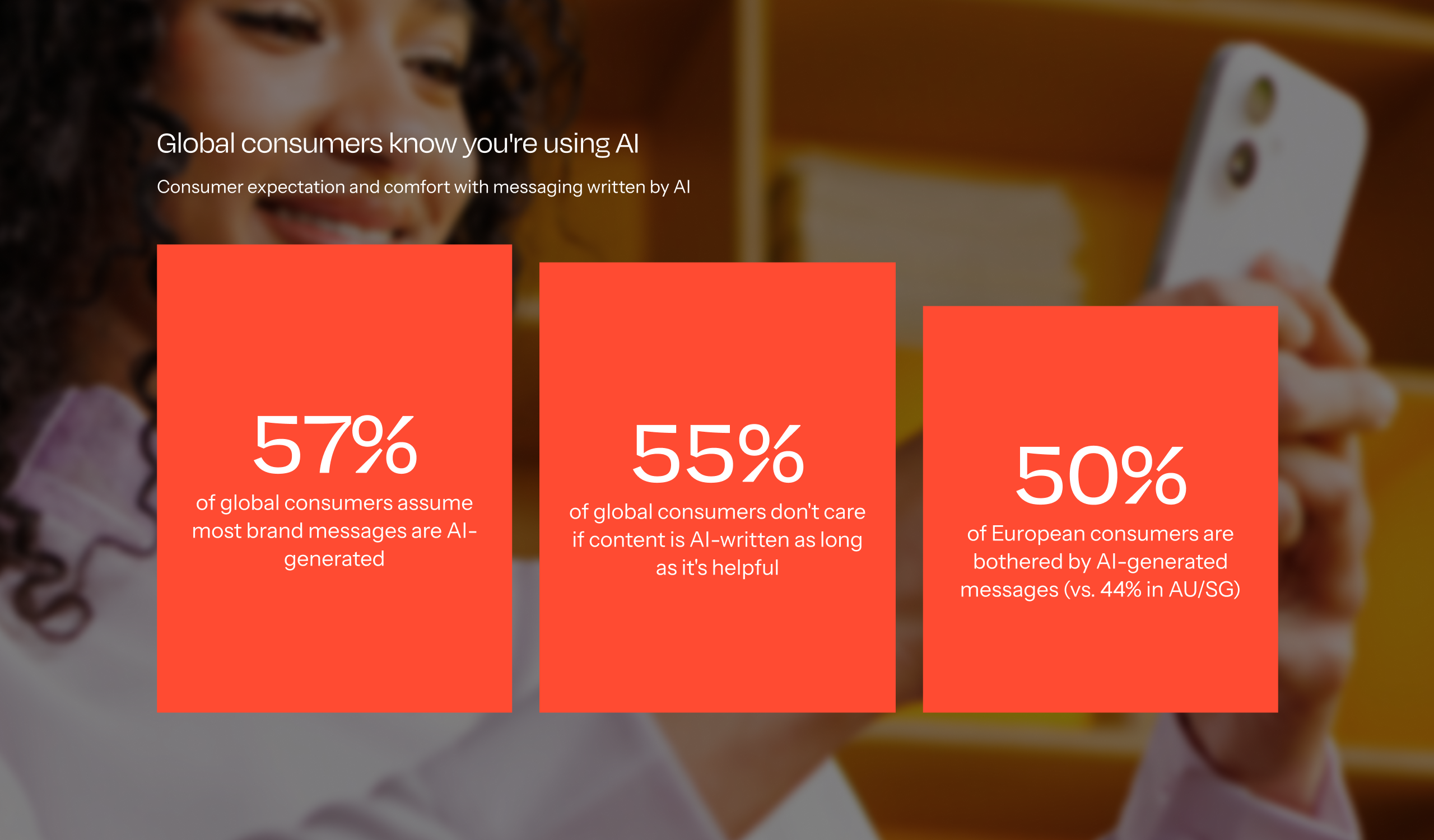
Globally, 57% of consumers assume that most of the messages they get from brands are AI-generated. Just under half say it bothers them when a message is written by AI rather than a person — and for over half (55%), if a brand's message is helpful and relevant, they don't care whether it's AI- or human-generated.
Sentiment falls into a roughly even 50/50 split worldwide, though European customers are most likely to be bothered by AI-generated messages (50%), while Australian and Singaporean consumers are least likely (44%).
Lean on AI to help produce personalized content across every channel — while making sure messages stay helpful and relevant. That's the same bar for human-written content, anyway.
How to be the brand LLMs recommend
Klaviyo and OpenAI sat down for a conversation about how to help your brand show up in holiday searches that start in ChatGPT. Watch now to see how AI systems discover and evaluate products, what it takes to improve your brand's visibility, and how to prepare for a customer journey that might begin long before someone lands on your site.
