Mariah Carey thawed out on schedule. Brands had their biggest weekend on record. But the story underneath BFCM 2025 shifted entirely: AI and loyalty—not heavy discounting—delivered the biggest lift this year.
Shoppers turned to AI assistants to discover and compare products, while Klaviyo brands used AI-powered CRM, unified profiles, and predictive intelligence to personalise every moment of the shopping journey at scale. The result was the strongest, most efficient BFCM ever recorded in Klaviyo’s ecosystem.
Klaviyo brands delivered standout results:
- 22.7B total messages sent over BFCM 2025, a 25% YoY increase
- More than $3.8B in total Klaviyo-attributed revenue for BFCM 2025, a 27% YoY increase
- More than 6B messages sent on Black Friday alone
- More than $1B in Klaviyo-attributed revenue on Black Friday (a first for a single day)
- 71% revenue increase across AI product recommendation-powered messages
- 25% YoY increase in text message revenue, as send volume soared 34%
- 42% of BFCM GMV was driven by CRM-revenue, or revenue from email & texts
- Discounts dropped 10% YoY, from an average of 29.1% in 2024 to 26.2% in 2025
- 13.6% YoY revenue increase from repeat buyers, outpacing new buyers (+9%)
This validates a pattern we’ve seen building since early Q4: strong loyalty programs, personalised messaging, and cross-channel engagement are paying off more than broad acquisition tactics. Customers who know a brand—its fit, its quality, its service promise—leaned in even when prices edged up.
All in all, AI made peak season smarter. Loyalty made it stronger. And personalised discounts made it more disciplined. This report breaks down the defining storylines of BFCM 2025 and what every brand should do next.
AI deepened the relationship between brands and customers
Shoppers don’t blink at lower discounts
A late BFCM rally: Sunday and Monday step up
Text and email are the revenue engines of BFCM
Cross-channel shoppers are the most valuable customers of BFCM
Repeat buyers deliver peak season’s strength
Executive summary
BFCM 2025 proved that connection beats promotion, with AI, loyalty, and CRM channels powering exceptional growth even as discounts fell. This executive summary distills the data behind the most efficient peak season Klaviyo brands have ever recorded.
Top BFCM 2025 insights

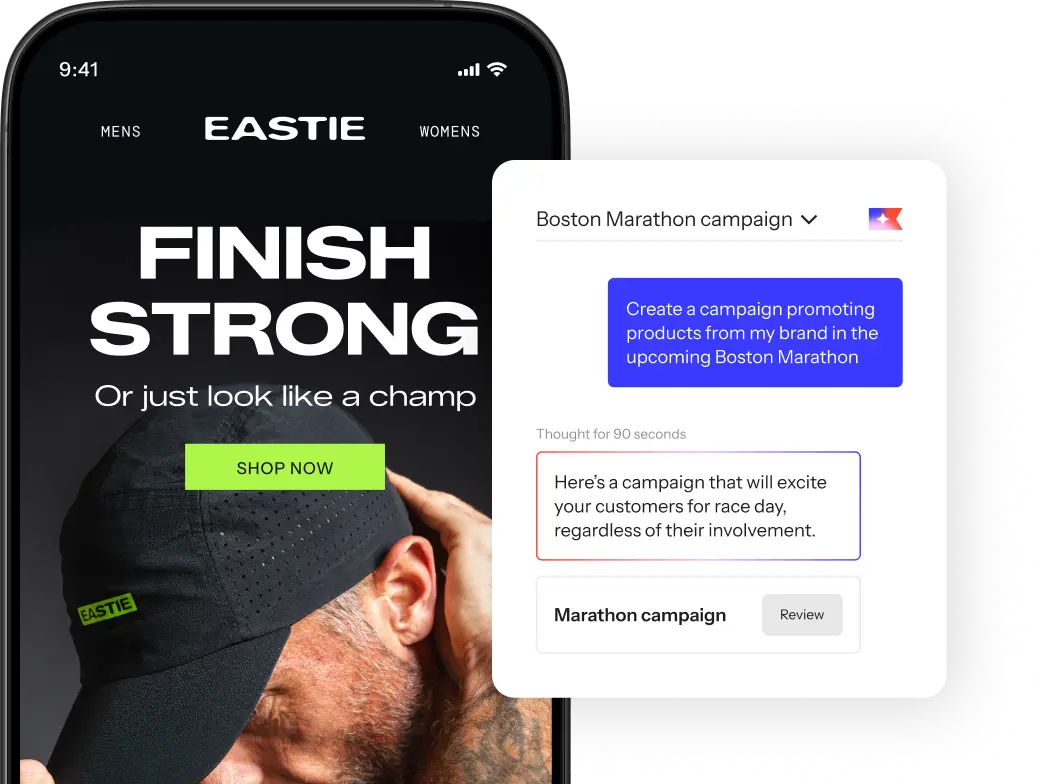
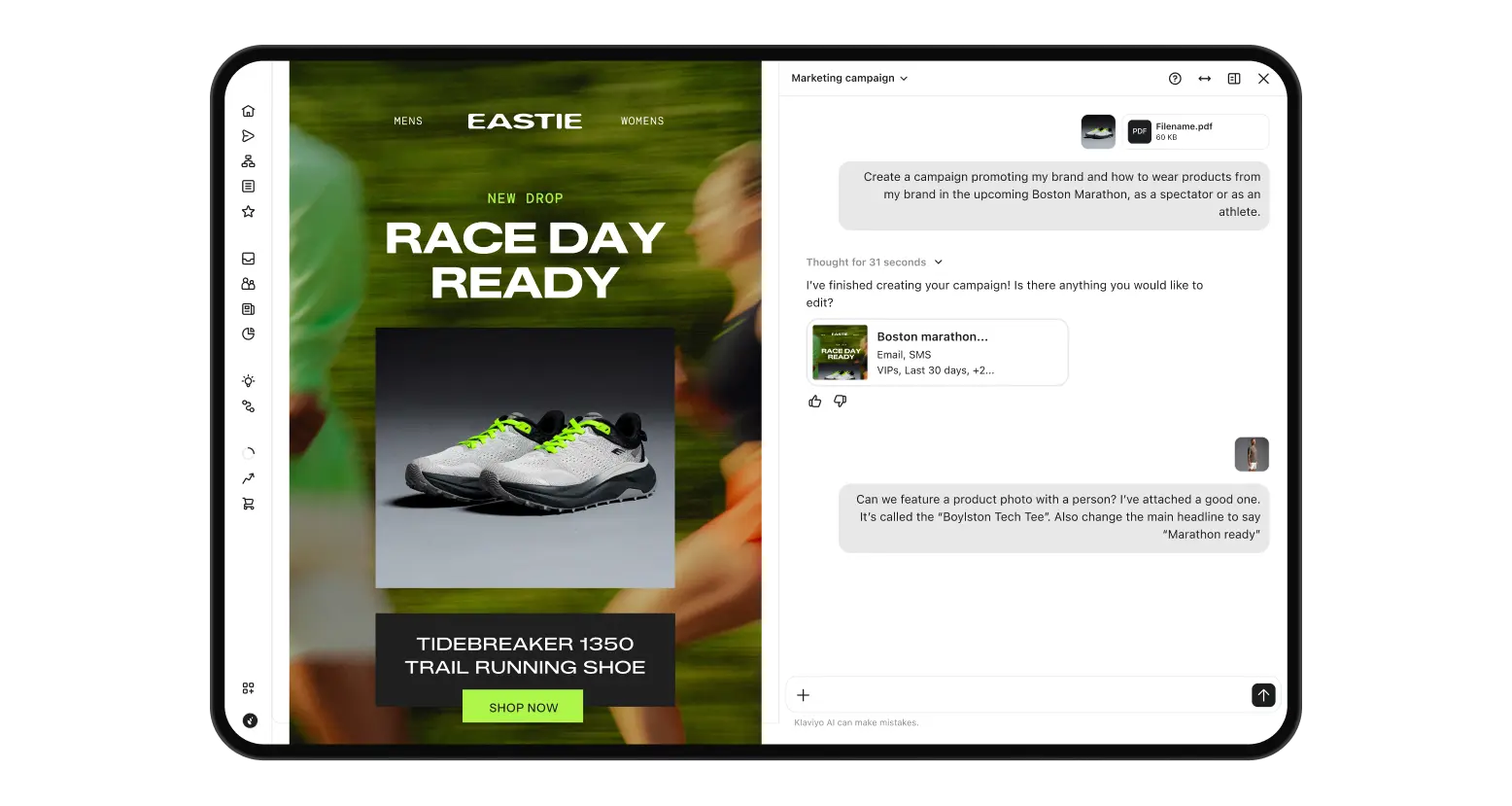
AI wasn’t just a headline this year. It was how brands delivered more personal, more relevant experiences across the entire shopper journey. Klaviyo brands leaned into AI to power smarter targeting, better recommendations, and real-time personalisation across marketing and website touchpoints.
AI adoption accelerated quickly among the brands we analysed:
- 45% more brands used AI-driven product recommendations in email.
- 68% more messages were powered by AI recommendations.
- 71% revenue increase across those recommendation-powered messages.
And the impact extended beyond marketing messages.
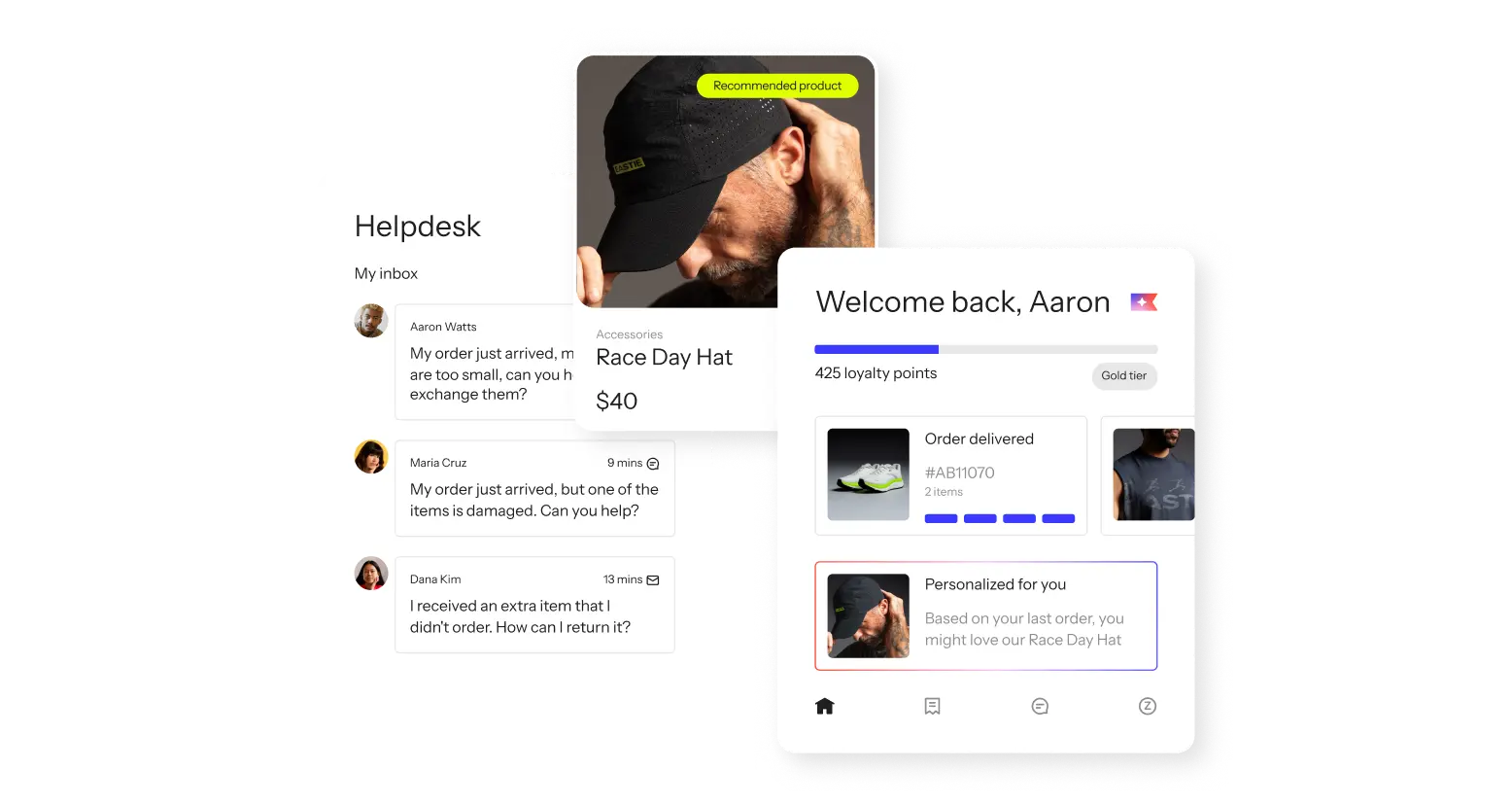
Brands redefined the website experience using Customer Hub, transforming it into a personalised storefront. They blended tailored product recommendations with practical tools like shipment tracking, fit guidance, and loyalty context, all informed by unified customer profiles. Shoppers who engaged with these personalised pages viewed 2.4 more pages per visit, signalling deeper engagement and stronger buying intent.
AI-powered service also emerged as a new conversion lever. Apparel, swimwear, and athletic brands used K:AI Customer Agent to answer fit questions, explain product details, and guide gifting, turning uncertainty into confident purchases.
- Unify your customer data to unlock real AI performance beyond personalisation. Centralising profile, browsing, purchase, and loyalty data gives AI the full context it needs to predict intent and automate revenue moments. Brands that unified their data saw more incremental revenue, higher AOV, and deeper website engagement because AI could act on a complete view of each shopper.
- Use AI-powered audience building to prioritise customers ready to buy before discounting. AI-led segmentation warms high-intent audiences early, improving efficiency and reducing the need for deep discounts. By targeting audiences most likely to convert, brands improved efficiency, increased engagement, and drove more revenue heading into BFCM.
- Scale AI-driven product recommendations across the entire journey. Brands used AI product recommendations at post-purchase, replenishment, and browsing moments to drive repeat revenue throughout BFCM. Even outside of BFCM, AI product recommendations matter.
- Adopt AI strategically, not experimentally, to drive revenue impact. Instead of one-off tests, embed AI where it directly influences purchase decisions, like fit assistance, product discovery, gifting, and replenishment. A leading swimwear and athletic brand used Customer Agent in cart and check-out moments to address questions that typically cause abandonment, making AI a real-time conversion tool.
Across ecommerce, discount rates dipped from last year’s average of 29.1% to 26.2%, with some verticals pulling back more aggressively. But shoppers, especially loyal customers, continued to spend, responding to early access and personalised offers rather than blanket markdowns. In fact, brands offering the lowest discounts saw the highest growth rates across BFCM (+14% YoY) compared with those offering higher discounts.
Discounts peaked, as expected, on Black Friday all the way through Cyber Monday. But unlike prior years, none of the big deal days topped a 30% average discount rate this year.
That discount discipline worked because brands focused on relationship levers, not blanket promotions. Personalised offers, early access for VIPs, and predictive replenishment moments outperformed broad discounting strategies.
When demand is healthy and brands understand their customers, steep discounts aren’t necessary to win.
BFCM isn’t just about flipping on discounts and hoping for volume. We use this moment to strike the balance between driving revenue and reinforcing what our brand stands for: premium, enduring product with real value
- Lead with loyalty and bundles, not blanket percentage cuts. BFCM 2025 rewarded brands that prioritised relationship value over deep discounts, offering exclusive perks that felt earned by loyal customers. Brands used Customer Hub to tailor website experiences for VIPs, showing curated bundles and early access that rewarded loyalty and reduced the need for deep markdowns.
- Test discount depth by segment, not across the board. Personalising discount levels by audience protects margin and improves conversion far more than universal cuts. AI-powered forms and segmentation help brands identify high-intent vs. price-sensitive shoppers and tailor incentives accordingly.
- Use early-access promotions to drive urgency without margin loss. Early access works because it signals exclusivity, not deeper markdowns, and top brands used it to ignite demand before broad promotions began. A major yoga retailer used early-access RCS messaging to reach mobile-first shoppers, generating high engagement without expanding discount depth.
- Avoid over-discounting where shoppers already show strong purchase intent. Browse signals, replenishment patterns, and post-delivery engagement helped retailers identify when customers were ready to buy without additional incentives.
While Black Friday still dominated total revenue, the entire 5-day period showed growth. Cyber Sunday was the biggest YoY percentage growth day, with 14% revenue growth, 13% new buyer revenue growth, and 15% repeat buyer growth.
Cyber Sunday’s rise, strong Monday spending, and growing product-view activity all point to another shift in BFCM shopping behaviour. Spending is moving later in the event, a return to the early days of ecommerce where Monday reigned. With shoppers browsing constantly and waiting for the urgency of likely-to-expire deals (we see you, “extended through Tuesday” deals), the back half of the weekend is surging again. Sunday and Monday are officially back.
This pattern is likely to persist into 2026 as shoppers continue to consider before converting and holding out for what they expect to be the right deal. And with AI-driven segmentation, text message urgency, early access for VIPs, and personalised reminders, brands are able to deliver more relevance and turn browsers into buyers.
- Treat Sunday as its own performance moment. Sunday is no longer a pause between discovery and urgency. It’s a high-intent conversion day that deserves dedicated offers, segmentation, and creative. Brands that recognised this shift structured Sunday messaging around intent signals captured earlier in the weekend and used real-time support to eliminate friction during the moment of decision.
- Build a weekend-through-Monday sequence that mirrors real shopping behaviour. Traffic peaks on Friday and Saturday, creating a surge of browsing that sets up Sunday as the natural conversion moment and Monday as the urgency closes. Use ecommerce and point-of-sale signals to structure your flow. Push discovery on Saturday via onsite behaviour, product views, and mobile signals. Lead with conversion messaging on Sunday. Capture final demand on Monday with deadline-driven messaging via retargeting.
- Personalise and segment more aggressively on Sunday morning. Use real-time signals like views, wishlists, and abandoned sessions to target shoppers who showed strong Saturday intent. Segment “ready-to-buy” shoppers based on repeated views or carts, and use Customer Agent in text message marketing to answer last-mile questions in seconds, turning uncertainty into same-day conversion.
- Adjust automation timing for remarketing and carts. Shift browse abandonment, cart abandonment, and back-in-stock flows to hit during Sunday’s heightened buying energy, then reinforce with Monday urgency. A leading swimwear brand used Customer Agent in abandoned cart texts to resolve fit questions instantly, acting as a second-chance seller and recovering high-value carts at the exact right moment.
What’s powering that shift isn’t just strategy. It’s AI. As marketers increasingly use Klaviyo AI to personalise every message and determine the right channel and moment for each individual consumer, email and text have become the true home of one-to-one personalisation. Marketers can now tailor every message to the person receiving it.
That level of one-to-one personalisation delivered significant YoY revenue gains for email (+15%) and text (+25%) across BFCM, outpacing other channels (+9% YoY, collectively).
Text messaging continued its multi-year surge. For brands that used text message marketing last year, text revenue rose 25% YoY this year, as send volume soared 34%. Even with a surge in sends, text’s revenue per recipient fell only nominally.
Email remained the workhorse of BFCM, especially for repeat buyers. Personalised product recommendations, dynamic content, and lifecycle-driven sends performed particularly well.
- Use text message marketing for loyalty nudges, restocks, and support, not just promotions. Brands shifted text messages from a promotional blast channel to a high-intent touchpoint that builds confidence. During BFCM, shoppers looked for clarity on fit, availability, and delivery just as much as deals—making texts ideal for restocks, loyalty prompts, post-purchase support, and resolving last-mile questions quickly.
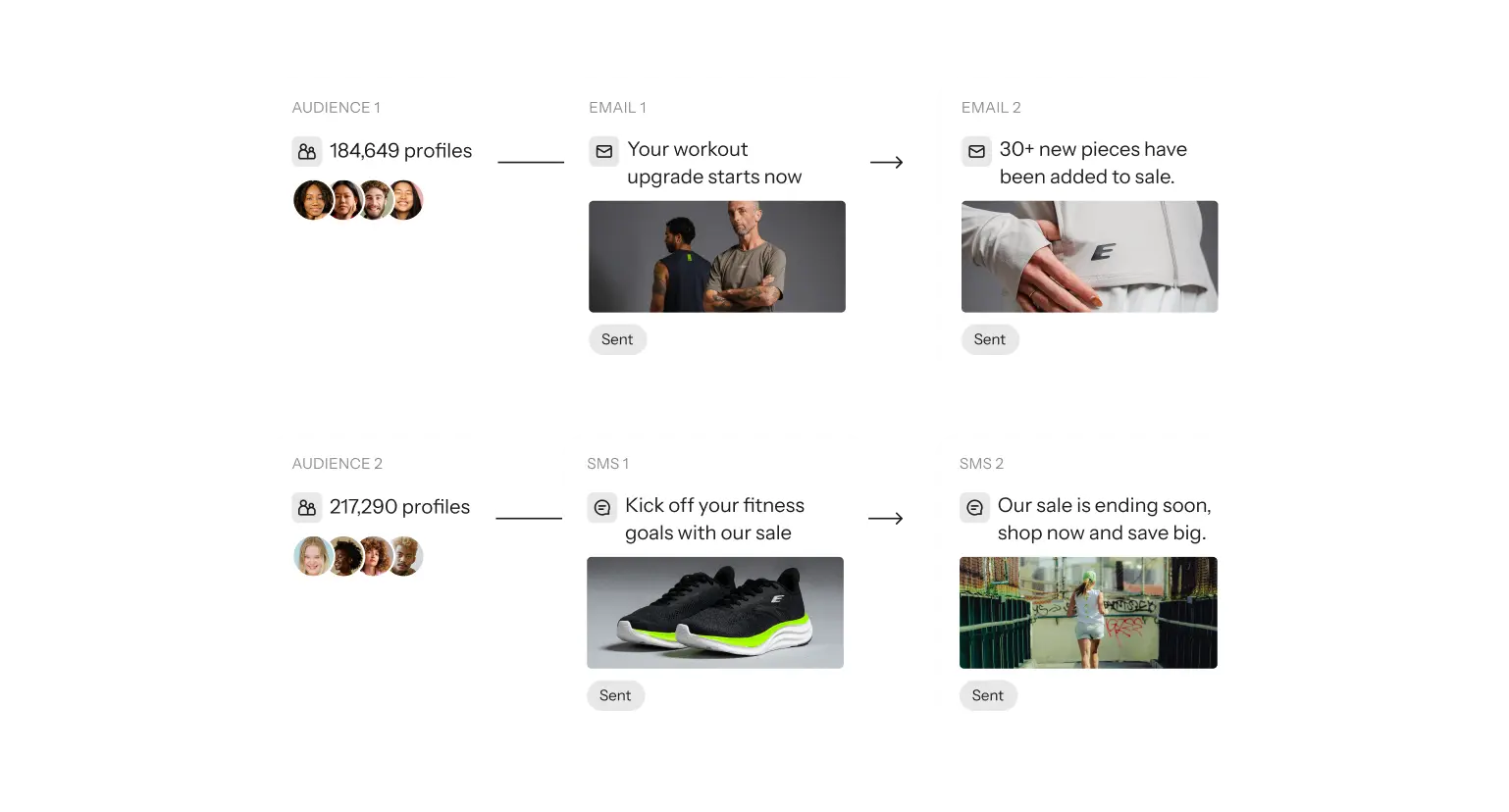
- Unify creative and segmentation across email, text and website. Top BFCM programs connect channels with shared segments, consistent creative, and aligned behaviour triggers so shoppers move naturally from discovery to check-out. A leading apparel brand unified email, text, and website personalisation, driving incremental revenue and a 30% reward redemption rate by keeping fit guidance and messaging consistent across every touchpoint.
- Let AI route messages to the best fit channel dynamically. During BFCM, shopper behaviour shifts rapidly, and AI-powered channel affinity ensures each message reaches each customer where they’re most likely to respond. A global activewear brand uses channel affinity to route deep-detail content to email and fast-action prompts to text message, maximising engagement across the weekend.
- Optimise for revenue per message, not volume. More sends don’t guarantee more revenue during peak saturation. High performing brands resisted the temptation to send more and instead focused on precision. By measuring revenue per message, they refined cadence, avoided fatigue, and protected performance during one of the most saturated weekends of the year. Predictive intelligence informed when a message would be most effective, not simply when it could be sent.
If text messaging and email were the revenue engines of BFCM, then shoppers who received messages in both channels were the fuel behind the season’s biggest gains.
Across Klaviyo brands, consumers who received messages from a single brand across both email and text were dramatically more engaged with that brand than those who received messages only on a single channel. These cross-channel shoppers placed more orders, added more items to cart, and engaged more deeply throughout the shopping journey.
Compared to those receiving only email messages, shoppers receiving messages across both email and text:
- Placed 11% more orders
- Added 34% more items to cart
- Viewed 71% more products
This proves that deepening relationships across multiple channels is paying off for retailers. As shoppers become more discerning—browsing longer, comparing more, and expecting message relevance rather than volume—the brands that orchestrate a consistent cross-channel experience will widen the gap between themselves and their competitors.
Email gives you room to tell the story. Texting creates urgency and immediacy. Together, they reinforce intent and accelerate purchase decisions.
- Build cross-channel journeys, not single-channel campaigns. Shoppers who receive coordinated email and text messages browse more products, add more items to cart, and convert at higher rates than single-channel audiences. Use shared segments and unified creative so the story continues seamlessly as shoppers move between inbox, text, and onsite, turning fragmented touchpoints into one connected buying experience.
- Reward multi-channel subscribers with meaningful perks. Incentivising shoppers to opt into both email and text boosts reach, improves engagement, and strengthens repeat-buyer behaviour. Offer early-access windows, restock alerts, or loyalty rewards exclusive to multi-channel subscribers to deepen commitment and give your highest-intent audiences reasons to stay close throughout BFCM.
- Use AI to predict which channel each shopper is most likely to engage with next. AI-powered channel affinity identifies where each customer is most likely to engage. Let AI route messages automatically so every shopper receives the right content on the right channel at the right moment, maximising engagement and revenue across the weekend.
Thursday–Monday, same-site sales show revenue from repeat buyers surging 13.5% YoY, outpacing revenue from new buyers (+9% YoY), helping to lift total GMV by 11% YoY. On Cyber Sunday, the season’s biggest growth day this year, revenue from repeat buyers grew an impressive 15.5% YoY.
The trend is unmistakable: brands with deeper relationships and those investing in loyalty benefits, behaviour-based personalisation, and coordinated email/text experiences saw their customer base show up with conviction. When shoppers already trust a brand’s fit, quality, and service, they need fewer incentives to buy, even when discounts are lighter.
Black Friday isn’t just about having a big sales day. It’s a moment to create loyal customers who keep coming back.
By better understanding our customers’ needs and behaviour through Klaviyo, we can personalise every touchpoint to build trust, strengthen relationships, and drive authentic engagement that lasts long after the deals end
- Reward loyalty early with VIP-only access and tier-based perks. Loyal shoppers convert with less discounting and higher AOV, making early-access windows and exclusive perks some of the highest-ROI plays of BFCM.
- Use predictive analytics to identify likely repeat purchasers. AI can pinpoint who’s primed for replenishment, refill, or “complete the look” moments, allowing you to trigger perfectly timed nudges that feel helpful, not promotional. Predictive insights help ensure your strongest customers receive the most relevant messages, reinforcing loyalty during peak weeks.
- Run a repeat-first playbook during peak moments. Shift focus from pure acquisition to nurturing your existing base in the days before BFCM, when repeat buyers are most likely to drive incremental revenue. Prioritising mid- and bottom-funnel journeys—welcome refreshes, post-purchase, win-back flows—pays off when your warmest audiences show up strongest.
- Use text for high-impact loyalty moments. Text-first shoppers respond exceptionally well to VIP access, restock alerts, and status-driven perks. Text message marketing cuts through noise with immediacy, making it the ideal channel for loyalty entitlements that reward your best customers when it matters most.
Peak season rewards relationship-driven brands
Brands that unified their customer data, activated intelligent segmentation, and used AI to personalise the buyer journey grew fastest. Repeat buyers delivered the lion’s share of gains, browsing reached a new peak, text and email proved their value, and discounts mattered less than relevance.
As we head into 2026, the brands that win will be the ones that double down on lifecycle engagement, unified data, and AI-powered personalisation at scale.

More BFCM insights
1 in 4 dollars is made in peak season, or November and December
While consumer surveys suggest that holiday shopping starts earlier each year, Klaviyo’s data tells a more nuanced story. Read more
Holiday browsing spikes just 10 days before Black Friday
The path from intent to purchase for BFCM is shorter than many think. The real bump in browsing begins only 10 days before Black Friday. Read more
BFCM is the single biggest new-customer event of the year
Brands see more new buyers during peak season than the prior 3 months combined. Read more.
BFCM 2025 is set to be the biggest in recent memory
From early shopping and deeper discounts to the rise of loyalty and SMS growth—discover six BFCM 2025 trends shaping this year’s peak season. Read more.
It’s the year of the browse
Ecommerce is in its “browsing boom.” Product views across ecommerce sites are up 37% year over year, while order growth has risen 14%. Read more.
Consumer behaviour shifts are already impacting BFCM predictions
Shopping is about to hit its peak season. But this year’s surge will look different from those before it. Read more.
Methodology
All data presented here is approximate and is based on various assumptions. All data is unaudited and is subject to adjustment. The methodology underlying the data may vary year on year and prior year results are not directly comparable to current results. All financial figures are in USD.
Performance data reflects same-site-sales (SSS) trends across a stable cohort of 10,000 Klaviyo brands, showing how shopper behaviour, loyalty, and channel effectiveness shifted during BFCM 2025. Metrics highlight where demand grew, how customers engaged, and which AI-powered, cross-channel strategies drove measurable lift. Total sends and KAV are global and anonymised.