Why personalization is your best lead acquisition tool in Klaviyo
Generated by Klaviyo AI
As paid ad costs keep climbing, most brands are converting only a small fraction of ad clicks — leaving the rest of that spend wasted. The post argues that fixing this isn't about spending more on ads, but about building a customer acquisition system rooted in personalization, so brands capture and nurture the traffic they're already paying for instead of letting it walk away.
- Start with zero-party data: Information customers hand over directly — through quizzes, surveys, or a follow-up question at sign-up — lets brands personalize from the first message. Get Better's Matt Mackenzie notes that most brand pop-ups stop at collecting an email address, missing the chance to ask a more useful question like why the visitor is shopping.
- Match messaging to funnel stage: Not every visitor is ready to buy, so a top-of-funnel lead magnet (a guide or comparison) can capture interest before pushing a sales pitch. The post cites Klaviyo's 2025 Future of Consumer Marketing Report, noting 74% of consumers expect personalized experiences, and warns that poor early segmentation can drive new subscribers to unsubscribe.
- Capture leads on every channel: Beyond sign-up forms, tools like K:AI Customer Agent and Klaviyo Social create new entry points — for example, replying to Instagram comments to collect contact info. Squire says his team has seen strong early results syncing these channels into Klaviyo, turning social engagement into owned subscribers.
Paid ads keep getting more expensive every year. That part isn't new. What's changing now is how much brands can afford to waste on traffic that never converts.
In my experience as CEO and founder of GSeddy, most brands convert 1–3% of the people who click their ads. That means 97–99% of the traffic you paid for walks away with nothing.
As cost per thousand climbs, that waste gets more expensive every month. If you're only capturing the people who are ready to buy right now, you're leaving almost all of your ad spend on the table.
The fix is a better customer acquisition system, one built on personalization that meets people where they actually are.
Zero-party data: the foundation of real personalization
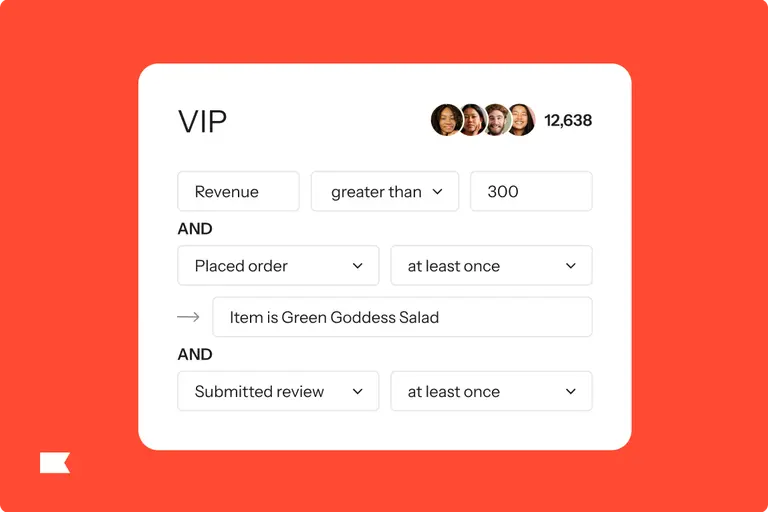
First, you have to know who you're actually talking to. That's where zero-party data comes in: information customers hand you directly, through quizzes, surveys, or a well-placed question at sign-up.
Say you sell clothing. If you find out early whether someone is shopping for themselves, for a partner, or for a kid, you can send them more relevant product images and offers from day one. Send a man who’s shopping for himself emails full of products for women, and he's unsubscribing, not converting.
Matt Mackenzie, head of strategy at Get Better, an agency that helps DTC brands grow across channels, builds this straight into the pop-up experience. “I think the vast majority of audits that we do, we still just see brands only getting the email address, and that's it,” he explains. “Closed pop-up. There's an opportunity there to have a second step where you can ask that more relevant question to gather zero-party data, like, ‘Why are you shopping here today?’"
That single follow-up question can shape everything downstream: how you frame their first welcome email, how you personalize campaigns using the data points mapped that we gathered from the pop-up, and much more.
Meet people at their funnel stage, not yours
Not every visitor who clicks your ad is ready to buy. Some don't even know they need your product yet. If someone lands on your site and isn't ready to purchase, hitting them with a straight sales pitch in your sign-up form won’t convert them.
What works better is a top-of-funnel lead magnet:
- A product guide
- A product comparison
- Something else that speaks to the problem they're actually trying to solve
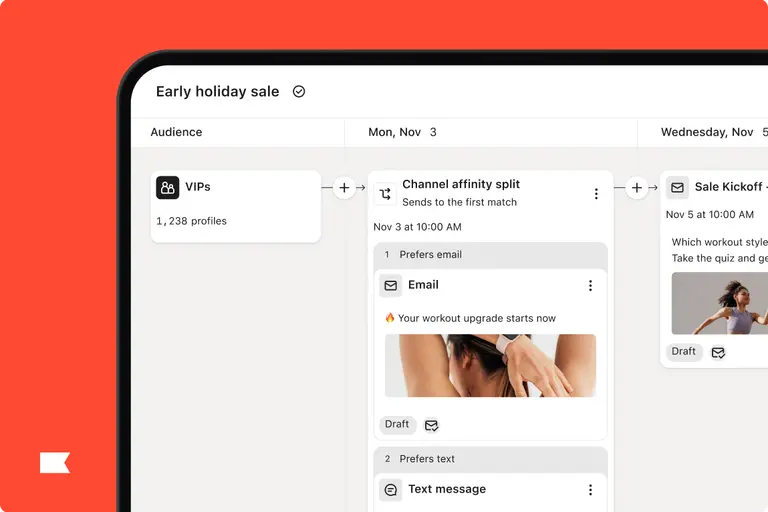
Once you have someone’s email address or phone number, you know their starting point. That's how your welcome flow can begin on the channel where they are instead of where you wish they were, and nurture them toward a purchase.
This matters more than most brands realize. According to Klaviyo’s 2025 Future of Consumer Marketing Report, 74% of consumers expect personalized experiences from brands. Someone who’s interested in paddleboards doesn’t want emails about jackets. Get the initial segmentation wrong and you’re not just missing a sale. You’re giving someone a reason to unsubscribe when they only just signed up in the first place.
Mackenzie sees this type of thing play out across Meta as well. His team pushes purchase data from Klaviyo back into paid campaigns to build lookalike audiences and exclusion lists.
“Klaviyo can provide Meta with an audience to say, ‘Can you go and find me another 100,000 people just like these people?’” Mackenzie points out. “Or you can create exclusions, as in, ‘Don't show my ads to anyone who's purchased in the last 14 days.’”
You're using what you already know about a customer to make sure the next dollar you spend reaches the right person.
Capture leads on every channel, not just your sign-up form
Personalization only works if you're capturing new subscribers everywhere your potential customers show up, not just through sign-up forms.
K:AI Customer Agent gives you another entry point. If someone asks it for a product recommendation, it can offer a relevant guide in exchange for an email address.
The same logic works using Klaviyo Social on Instagram. If you're a content creator posting about your product, you can invite followers to comment a keyword, and Klaviyo automatically replies asking for their email address or phone number. It's a small moment that turns passive social engagement into an owned contact in your database.
Mackenzie's team has been testing this kind of cross-channel automation directly. “Over the last few months, we've had 3–5 brands adopt Klaviyo Social in that first trial instance when we were rolling it out,” he says.
“Actually managing to sync up those audiences and use the social channels that they've got, and converting them into actual subscribers, and building that constant messaging through Klaviyo, and then vice versa, has been something we've seen quite good returns from," Mackenzie adds.
We've seen quite good returns from syncing up audiences, using the social channels they've got, converting them into actual subscribers, then building that messaging through Klaviyo.
The goal of all of this is simple: make sure every channel, every ad, every blog post, and every pop-up feeds the same Klaviyo database instead of working in isolation.
Every new subscriber you capture has value. The brands that treat acquisition as seriously as retention are the ones that won't need to keep paying more just to stand still.

Related content