Recognize returning shoppers after cookies expire
Generated by Klaviyo AI
Klaviyo’s Extended ID and First-Party ID help recognize known shoppers after standard cookies expire. The post explains how these settings differ, how they work together, and how improved identification supports abandonment flows, segmentation, retargeting, and personalization.
- Extended ID: Extended ID uses existing identifiers from other platforms to recognize returning shoppers, provided the browser has not cleared those identifiers.
- First-Party ID: First-Party ID requires one CNAME record to set a server-side cookie on your subdomain and only recognizes browsers that visit after activation.
- Complementary identification: When both settings are enabled, First-Party ID runs first and Extended ID provides backup, without identifying new visitors or tracking across devices.
- Marketing impact: Recognizing more known shoppers supports abandonment flows, activity-based segments, retargeting audiences, and personalized website experiences.
- Availability and measurement: Extended ID is available on all paid Klaviyo plans, First-Party ID has limited availability, and identification changes can be measured using extended_id and ssc_refresh filters in Active on Site.
The holiday shopping season is upon us and your shoppers are already browsing. They're opening Black Friday preview emails and clicking your latest text message. Many are even building carts to prepare for their holiday shopping.
When a subscriber comes back to your website, you may or may not know who they are if their browser deleted the cookie that connects them to their profile.
But with two simple Klaviyo settings, Extended ID and First-Party ID, you can recognize more shoppers and better personalize their journeys during this important shopping season.
First, some background info on cookies
Klaviyo sets a cookie when someone fills out a form, clicks on one of your emails or text messages, or checks out. That's how it knows who's browsing.
But browsers keep cutting that cookie short. Safari deletes it after 7 days without a visit, and sometimes within 24 hours if the shopper came from a social ad. Brave blocks the cookie entirely by default. It only survives, capped at 7 days, if the shopper turns off Shields. Consumer personal browser settings may also determine how long cookies are maintained.
In practice, that means you may not be able to recognize shoppers browsing this week when they return to your site in two weeks.
What each Klaviyo feature helps you accomplish
Two Klaviyo features work to recognize known shoppers after their cookie expires. Neither feature identifies brand-new visitors or tracks people across devices, empowering you to maintain consumer privacy while also better understanding each individual’s journey with your brand.
Here’s how those features work:
Extended ID: put the identifiers you already have to work
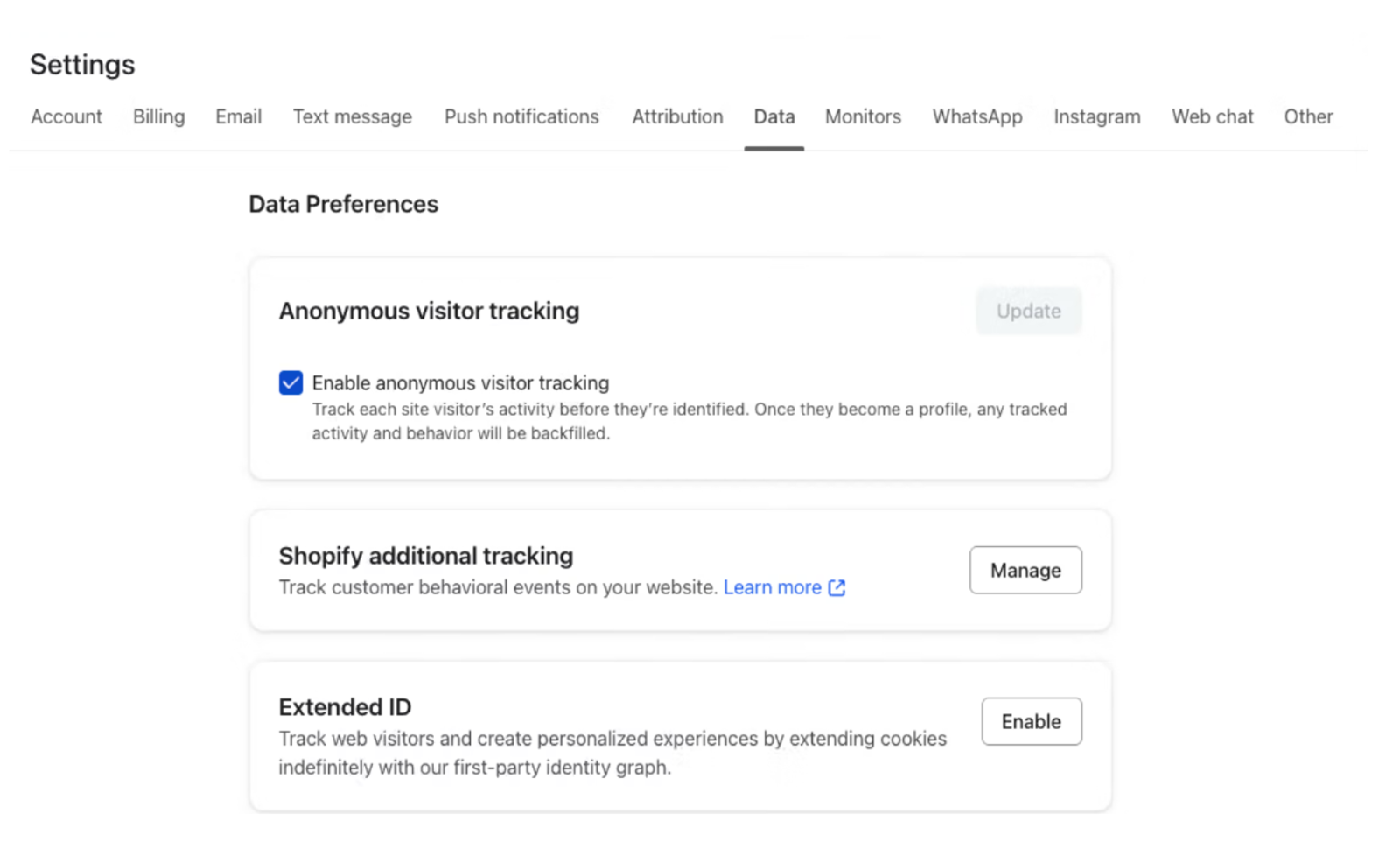
Extended ID uses identifiers other platforms already set on your site, like Shopify, Google Analytics, and TikTok, to recognize returning shoppers even after your own cookie has expired, as long as the browser hasn't cleared the other platform's identifier yet.
In Klaviyo testing, Extended ID lifted identified visitors 15–20% on average, for Shopify and non-Shopify brands alike. Set-up is very straightforward inside your Klaviyo account.
First-Party ID: your cookie, on your domain
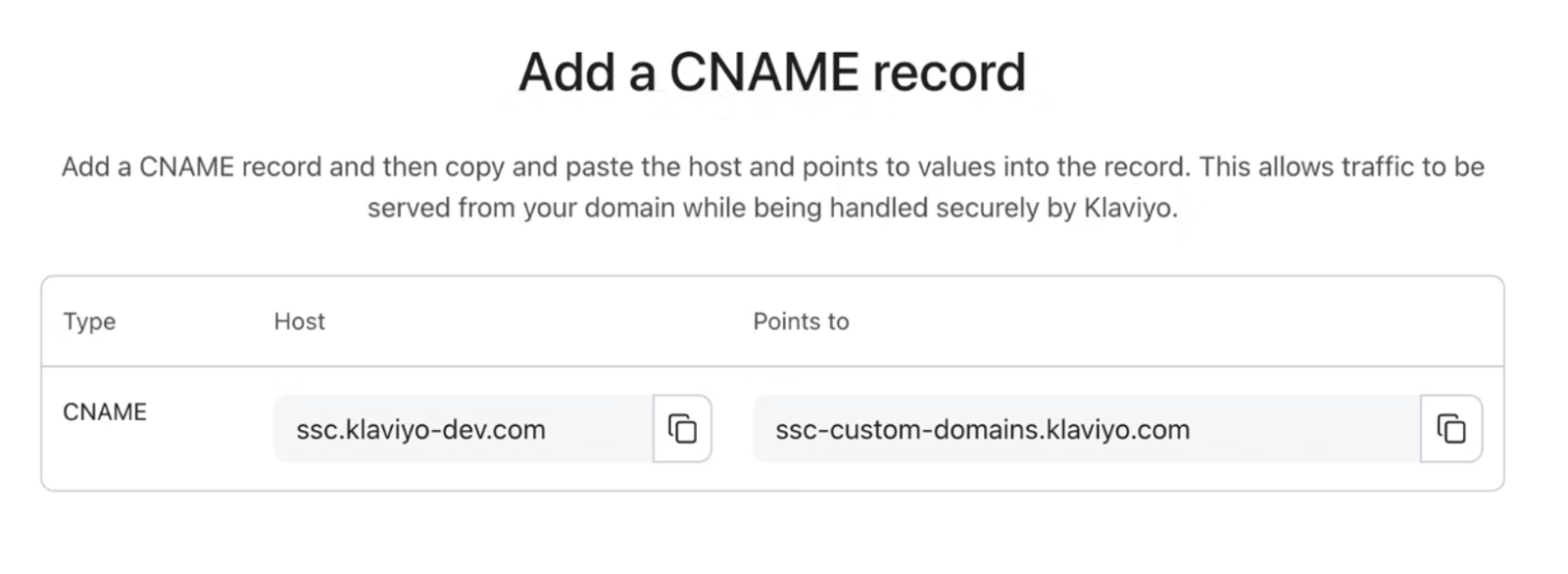
First-Party ID sets its own server-side cookie from a subdomain of your site, which Safari lets live much longer than the standard Klaviyo cookie. After turning it on, a notable swimwear brand saw a 44.5% lift in active on-site session identification rate in the first 140 days. Another brand went from 10.06% to 13.76% in two months. Set-up requires a single CNAME record.
What’s the difference?
Extended ID needs a matching identifier from another platform. First-Party ID doesn't, but it only helps browsers that picked up the cookie after you turned it on.
When both are on, First-Party ID goes first and Extended ID backs it up. Think of them as two keys to the same front door: if one doesn't fit, the other usually does.
Extended ID is available on all Klaviyo paid plans. First-Party ID is currently in limited availability.
What this means for BFCM and other major campaign moments
Every shopper you recognize is one you can market to during high-intent moments throughout the year. Here’s what happens when Klaviyo recognizes a known shopper:
- More flows fire. Browse, cart, and check-out abandonment flows only trigger for shoppers Klaviyo recognizes.
- Segments get bigger. “Viewed but didn't buy” and “Added to cart in the last 30 days” depend on activity landing on the right profile.
- Ad audiences grow. Sync those segments to Meta, Google, and TikTok to retarget. Then suppress buyers, so you're not paying peak ad prices to reach them twice.
- Personalization gets smarter. Recently viewed products, recommendations, and no sign-up pop-up for people who are already on your list.
What to do this week
Both of these features live in your Klaviyo account in Settings > Data > Onsite identification. Follow these steps to activate them:
- Turn on Extended ID.
- Set up First-Party ID. Add one DNS record. If someone else owns your DNS, loop them in today, before code freeze. Note that First-Party ID only recognizes browsers that visit after it's on, so every day you wait means fewer shoppers recognized on Black Friday.
- Update your cookie notice and privacy policy. Klaviyo recommends it. Check with your legal team.
- Measure it. In “Active on Site,” filter by extended_id and ssc_refresh and compare before and after.
Sending more messages doesn’t automatically make for a successful marketing campaign. What makes a campaign successful is knowing your subscribers well enough to send the right messages.
These two Klaviyo settings make sure you don't lose track of the shoppers who already raised their hand.
Your shoppers already told you who they are. Don't let their browser make you forget.

Related content