How DÔEN balances AI and community-led marketing
Generated by Klaviyo AI
DÔEN keeps creative work human-led while using AI to analyze performance and personalize message timing. The brand prioritizes genuine audience interest over sign-up incentives, features real customers in its marketing, and supports clothing resale through Hand Me DÔEN.
- Human-led creative: AI analyzes imagery performance by product category and channel, but the creative team retains control over creative decisions.
- Personalized message timing: DÔEN reports higher open rates after adopting Klaviyo’s personalized send time and is testing it for text messages.
- Genuine audience growth: DÔEN avoids sign-up discounts and free shipping incentives to prioritize engaged subscribers and cleaner customer data.
- Customer representation: Marketing spotlights how real customers wear and style DÔEN pieces to help shoppers feel represented and confident.
- Responsibility beyond sales: Hand Me DÔEN lets customers trade in pre-loved pieces for credit toward full-price clothing and offers authenticated resale items to the community.
Sisters Margaret and Katherine Kleveland founded DÔEN in 2016, and the brand’s romantic, coastal California inspired clothing has drawn a loyal following since.
“I think it’s that sense of community that’s continued to draw people to our brand,” says Ashley Kick, VP of ecommerce at DÔEN. “It's a brand based around the transitions women go through with their bodies, and how to help people feel beautiful in the clothes we make.”
Their marketing philosophy is to feature real customers front and center, spotlighting how the brand’s community wears and styles each piece. “Being able to see themselves represented can help people feel confident in what they're buying,” Kick says.
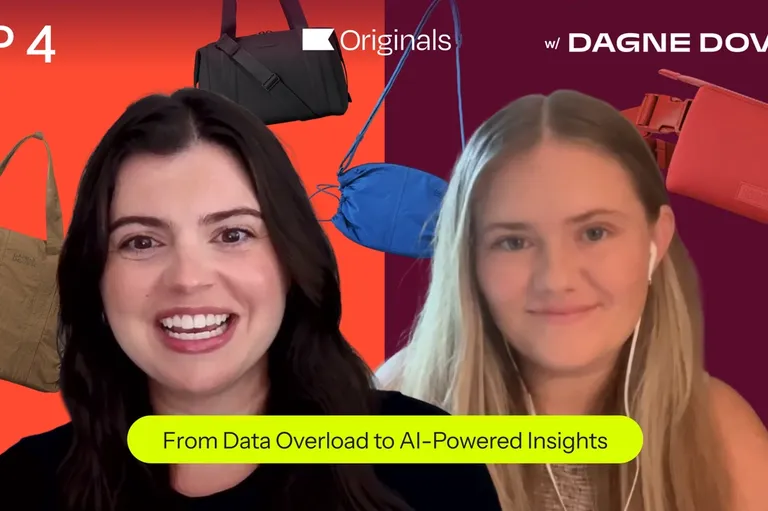
In our latest episode of Klaviyo Originals, Kick explains how that philosophy extends to where she draws the line on AI, why the brand doesn’t offer discounts, and how the creative team uses performance data without losing sight of their core mission.
Why DÔEN keeps AI out of their creative work
Kick has never considered handing creative over to AI. “We create beautiful things, and we create beautiful imagery around the things that have been created,” she says. “Looking to AI in that regard was never a part of the conversation.”
Her instinct is warranted. 32% of consumers say AI-generated content in brand marketing makes them trust brands less, according to Klaviyo’s 2026 AI Consumer Trends Report. Only 7% say it increases trust.
Kick is a big supporter of her creative team. “My content team is nothing but inspiration over there,” Kick says. Her guiding philosophy is to let them “be out in the world creating their thing.”
AI for analysis: “If you don’t know your history, you’re doomed to repeat it”
Kick’s role is to assess performance and give the creative team evidence-based guidance on how to improve moving forward. She uses AI to analyze which types of imagery (e.g., studio, campaign, user-generated content, or tastemaker shoots) earn higher engagement for each product category and channel.
Kick’s goal is to equip her team with knowledge about what worked before, so they can learn from it when trying new things. “If you don’t know your history, you’re doomed to repeat it,” she says. “We want to provide the best look-backs so that the people doing the look-forwards have the most information and the best tools.”
AI-informed insights turn into requests for the creative team, but creative decisions are ultimately made by creative. “That’s how we feel we’re being the best partners we can be to all of our beautiful creative minds here at DÔEN,” Kick says.
AI for timing: “We have this beautiful thing, but what’s the best way to disseminate it?”
Beyond analysis, Kick thinks AI is valuable for getting the timing right on each of their messages.
“We've absolutely been more open to how technology can help us get our message out there to the right person at the right time in the right way,” Kick says. “It's something we've always been okay with, as long as the origin of that content has stayed with us. We have this beautiful thing, but what’s the best way to disseminate it?”
Kick uses Klaviyo’s personalized send time to send each campaign at the moment each subscriber is most likely to engage. “Once my account rep let me know this was an option, it was a no-brainer for me,” she says.
DÔEN’s audience spans time zones, and Kick wants a subscriber in Australia and a subscriber in Germany to get as well-timed an email as one in Boston. “We want our messaging to get to people when it’s most meaningful for them,” she says. “Nobody wants their messaging to get lost in the pile that can become our inboxes.”
“We did see a material lift in open rates,” Kick adds. “And our open rates were already pretty incredible, just because we have such an amazing engaged audience and customer base.”
DÔEN has rolled out personalized send time for all messaging that isn’t tied to a specific event and is now testing it for text messages.
On sign-up discounts: “That’s not your brand. That’s just a lever.”
DÔEN doesn’t offer discounts or free shipping in exchange for a sign-up, believing a list built on genuine interest gives a more authentic picture of who’s engaged.
Part of Kick’s reasoning is clean data. A shopper chasing 15% off might leave the brand with “5 email addresses attached to one billing address,” she says, which inflates the list without adding engaged customers.
Kick has also seen how a quick win can turn into a habit. Brands try something, it works, and the instinct is to do it again. “A lot of times the lowest hanging fruit is a discount,” she says. “When you keep giving those things away, that’s not your brand. That’s just a lever.”
Instead, DÔEN makes their clothing more accessible through their Hand Me DÔEN resale program, which makes it easy for customers to trade in pre-loved DÔEN pieces for credit toward full-price clothes. Once a quarter, the brand sells a curated selection of those pieces back to the community through a program run with resale partner Treet. Kick says the program has been running for 3–4 years, and it’s still growing.
Kick notes that “dupe culture really has become something,” so each item sold through the program is certified authentic. The goal, Kick says, is creating “trust that what they’re buying is truly a DÔEN product.”
The program also reflects how founders Margaret and Katherine think about a garment’s life after the sale. “There’s so much fast fashion out there, and you’ll wear something, and you wash it, and then it just falls apart,” Kick says. “Textile waste is a scourge on the earth. And it’s something that, being a part of the fashion industry, we want to maintain a level of responsibility for.”
3 lessons for fashion brands using AI in marketing
Kick’s advice for brands comes back to protecting “the thing your customers fell in love with in the beginning, which is your mission, your founder story, the product.” Her approach comes down to a few habits:
- Watch list quality as closely as list size. “We’re focused around truly understanding how various metrics are evolving over time through natural growth,” she says.
- Give your creative team the data. “We make sure our team is educated, that they understand what aspects of what they’ve built have been working for particular types of mediums,” she says.
- Take responsibility past the sale. “It’s something that I do hope other brands in this industry continue to lean into, is having responsibility for additional things that you’re putting into the world,” she says.
By holding firm on discounts and drawing a clear line around what AI touches, Kick keeps DÔEN’s marketing team focused on the brand’s story, the clothes, and the customer community.

Related content