How Gen Z really uses AI
Generated by Klaviyo AI
The article analyzes Klaviyo’s 2026 AI Consumer Trends data to explain how Gen Z discovers, researches, and buys with AI—and where they draw the line on “AI slop.” It outlines how Gen Z’s high trust, high expectations, and contextual queries should shape B2C marketers’ content, personalization, and AI-powered customer experiences.
- High but fragile trust: Gen Z is the most trusting of AI yet is significantly more likely than average to lose trust in brands that rely on obvious AI-generated marketing content.
- AI-driven shopping behavior: Nearly half of Gen Z has used AI to shop in the past 6 months, primarily for recommendations, comparisons, and deals, and many are open to buying directly through AI agents.
- Conversational, contextual queries: Gen Z favors long, goal-based prompts that include personal and emotional context, pushing brands to create detailed, question-focused product and review content.
- Low tolerance for AI slop: Gen Z frequently spots low-quality AI content, feels confident distinguishing AI from humans, and reduces trust when marketing looks clearly AI-generated.
- Demand for deep personalization: Gen Z expects AI to synthesize data and deliver precise, timely recommendations, rewarding brands that combine traditional and predictive personalization to create “aha” moments.
In November 2025, Jacob Novak, CEO of video game company Genvid and former director at Square Enix, gained some attention when he posted on X: “For all the anti-AI sentiment we’re seeing in various articles, it appears consumers generally do not care…Gen Z loves AI slop.”
As proof, Novak cited Steal a Brainrot, a video game released on Roblox that is heavily based on AI-generated content. It was the biggest game of 2025 and the first ever to surpass 25 million concurrent players.
Steal a Brainrot may have been huge, but research from Klaviyo’s 2026 AI Consumer Trends Report challenges Novak’s broader assertion.
Gen Z is the most trusting of AI, but they’re also more likely to lose trust because of AI-generated content.
Our research found that 44% of Gen Z somewhat trust AI, compared to 36% of overall respondents. But Gen Z are also 28% more likely than the average consumer to lose trust in brands that use AI-generated content in marketing.
Those preferences have direct implications for how brands should and shouldn’t use AI. Keep reading to find out how Gen Z uses AI, according to our research—and what it means for marketers.
Trend 1: Gen Z uses AI to shop, but slightly less than millennials
Nearly half (46%) of Gen Z has used AI to purchase a product or service in the past 6 months. That’s high, but it’s actually a little less than millennials (49%).
Here are the top AI use cases for Gen Z shoppers:
- To get general product recommendations
- To compare or research products or brands
- To find the best product or deal
- To ask for alternatives to a product they were considering
- To understand product features or specs
31% of Gen Z also completely trusts AI to provide personalized and accurate shopping recommendations, which is more than any other generation.
What this means for B2C marketers
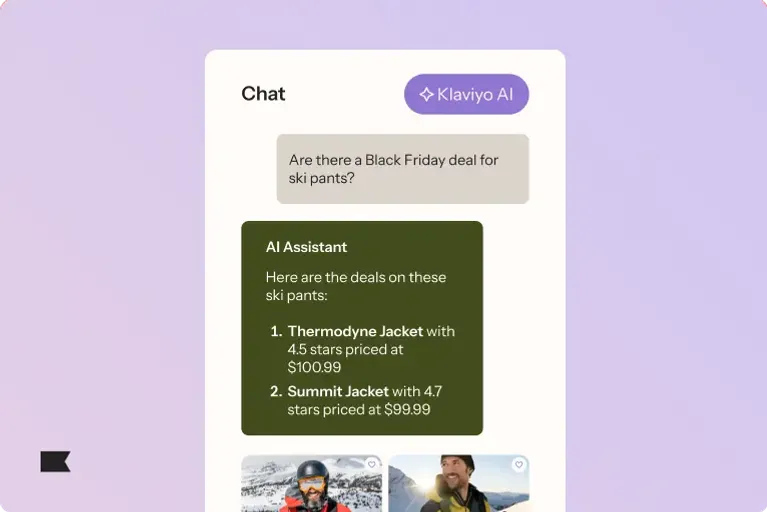
Make sure you’re ready to serve younger shoppers who discover, research, and even buy products through AI. One way to do that: an AI customer agent that’s trained on your customer data, product catalog, and brand guidelines to help people find exactly what they’re looking for.
Unlike a generic chatbot, an AI customer agent can:
- Assist customers across channels, from email and text messaging to web chat and WhatsApp.
- Recommend products based on a customer’s historical preferences and behaviors, as well as real-time context, such as the page they’re currently browsing.
- Address common buyer hesitations, add items to cart, and allow people to buy products without leaving the chat interface.
- Resolve common issues, like tracking orders, initiating returns or exchanges, managing subscriptions, and explaining store policies.
- Escalate to a human support agent when necessary, with complete conversation context preserved.
Many Gen Z and millennial consumers already research and compare products with AI. An AI customer agent closes the loop and allows them to buy with it, too.
Trend 2: Gen Z consults AI first to understand complex topics
When they want to understand something complex, 41% of Gen Z turns to AI over traditional search engines (34%), social media (16%), and friends and family (6%).
And when they want to plan an activity or an experience, while 31% still turn to Google or other search engines, 30% of Gen Z turns to AI first.
What this means for marketers
If you sell experiences or products that require a lot of education, AI may soon become your best channel for product discovery among Gen Z.
That means you’ll want to invest in creating more in-depth educational and product content that’s cited by AI search: FAQs, buying guides, comparison tables, and “best of” lists.
If your content can help younger consumers understand something complex or plan an activity with a lot of steps, you can start to position yourself as an authority in your category.
Trend 3: Gen Z uses long, contextual AI queries
Gen Z is 27% more likely to use 8+ keyword paragraph-length queries when interacting with AI (38% vs. 30% average). Rather than searching terms like, “yellow sundress under $100,” for example, Gen Z might ask an LLM, “What should I wear to my friend’s rooftop birthday in July? She’s into vintage.”
Compared to all consumers, Gen Z is also 70% more likely to often include personal or emotional context in their prompts. Daily AI users and respondents who completely trust AI are also more likely to include this context, indicating a correlation between level of trust and contextual AI use.
All of this suggests that Gen Z might also be goal-based shoppers, which means they’re more likely to share context about what they want from the purchase and leave the product recommendations up to AI.
What this means for marketers
As search becomes more conversational and more specific, your product content needs to directly address the questions customers are asking.
More educational content can help meet this need, and so can detailed customer reviews. Incentivize customers to leave reviews that offer up more context, so AI can summarize them as a deep dive into how your products work and what customers love about them.
Trend 4: Gen Z is sensitive to AI slop
42% of Gen Z has purchased a product they didn’t previously know about because AI recommended it. This is good news for brands investing in agentic commerce, but it also has a downside.
Gen Z sees AI-generated content constantly, and they’ve developed a high bar for what’s good and what isn’t. They’re 60% more likely than average to say they’re very confident in their ability to distinguish whether they’re interacting with AI vs. a human.
Gen Z is also 63% more likely to notice AI slop multiple times per week (26% vs. 17% overall). And 41% say they trust brands less when they see clearly AI-generated content in marketing.
What this means for marketers
Don’t post slop. In practice, this means using AI to complement human creativity instead of replacing it. For example, instead of using AI to generate images from scratch, use it to edit creative or replace background colors, using real photos of real subjects.
When generating written content with AI, provide extensive brand, voice, and tone guidelines so the content sounds like your brand. And always make sure a human reviews the writing before launching it.
Trend 5: Gen Z wants AI to personalize their experiences
Nearly half (47%) of Gen Z has had an “aha” moment with AI when it provided a recommendation that “perfectly matched my needs or preferences.” 1 in 3, meanwhile, say they feel understood by AI when it gives clear, relevant answers to their questions, which is 21% more than the average consumer (34% vs. 28% overall).
Gen Z AI users understand that AI has access to a wealth of information across sources, and they expect LLMs to sift through all that information to address their highly specific needs.
What this means for marketers
Traditional personalization combined with predictive personalization can earn “aha” moments with Gen Z. Use predictive analytics to anticipate shoppers’ needs and surface the right product before they search.
For example, send a replenishment reminder around the time when someone is likely to run out of a product, or send an exclusive early-access offer to someone who’s likely to spend a lot with your brand in the future while reserving discounts for lower-value subscribers.
Meet Gen Z where they shop with Klaviyo
The agentic AI built into Klaviyo B2C CRM uses your real-time customer data to launch marketing messages, personalize every send, and resolve customer requests, all on the same platform. Here’s how Klaviyo AI (K:AI) works:
- Klaviyo Composer uses Klaviyo’s 14+ years of experience, signal data, and billions of consumer interactions to build entire on-brand campaigns, from audience suggestions to every email, text, and message.
- K:AI Customer Agent is a personalized shopping assistant that works 24/7 to resolve issues, answer questions, and recommend products.
Reach each customer where they are with Klaviyo. Sign up

Related content