Faster, practical personalization at scale
Generated by Klaviyo AI
The article explains why many enterprise brands overpay for complex platforms that make true personalization hard to execute. It outlines how Klaviyo’s real-time data architecture, unified customer view, integrated analytics, and marketer-friendly UI reduce reliance on technical teams and shorten the path from data to personalized campaigns.
- Hidden cost of complexity: Legacy enterprise platforms often require developers, consultants, and long implementation cycles, causing teams to fall back on batch-and-blast tactics despite paying for advanced personalization features.
- Real-time unified data: Klaviyo’s architecture updates profiles and events in real time and supports a single customer view, enabling personalization based on current behavior rather than day-old, fragmented data.
- Integrated data and analytics: Klaviyo Data Platform and Marketing Analytics bring data unification, attribution, cohort analysis, and revenue reporting into the same environment where campaigns are built, removing common reporting bottlenecks.
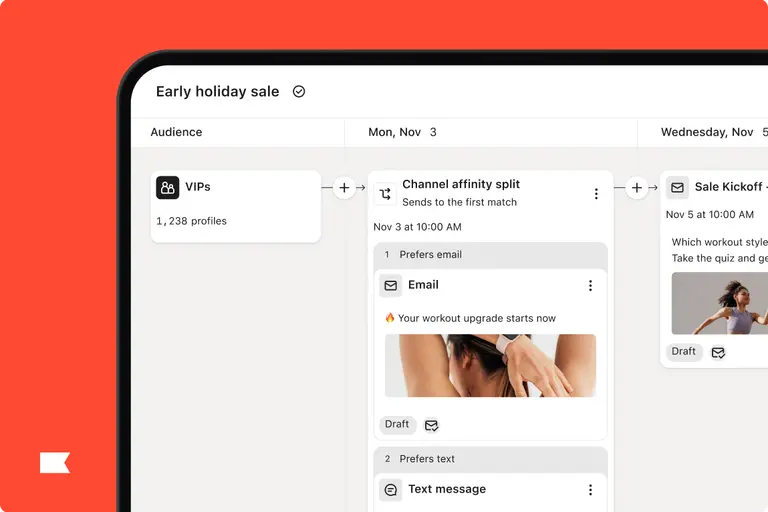
- Marketer-first usability: A UI designed for marketers lets CRM teams build segments, flows, and reports without constant IT support, increasing speed and autonomy compared with legacy tools.
- Measured efficiency gains: Brands like Dollar Shave Club and Daily Harvest report large reductions in campaign setup time and developer hours after consolidating on Klaviyo and more agile ecommerce infrastructure.
In my role as founder of Zettler Digital, I've spent a lot of time over the last decade working inside enterprise marketing platforms and migrating brands away from one and onto another.
The pattern I keep seeing is consistent enough that I think it's worth naming directly: most enterprise brands are dramatically overspending on platforms that underdeliver. And the thing they're overspending on most is the promise of personalization.
That's not a knock on the ambition. Personalization at scale is genuinely hard. But the version of it that these platforms have been selling for years (and continue to sell) has rarely materialized in the way brands expected when they signed the contract.
The shiny object problem
Here's what I've seen happen, more times than I'd like: a brand is evaluating platforms. One option is familiar, capable, and reasonably priced. The other is 3x more expensive and comes with a long list of advanced features. And there's this assumption that cost equals capability. If it's more expensive, it must be better.
I lived this. At my previous company, we were locked into a two-year contract with a platform we'd outgrown almost immediately. We eventually moved to Klaviyo and were spending roughly a third of what we had been, while being meaningfully more capable.
The same thing happened when we evaluated our ecommerce infrastructure. We were paying $30,000 a month on a custom platform where you couldn't change a product price without a full hour-long build and launch cycle. We eventually moved to Shopify Plus, cut that cost by 80%, and became dramatically more efficient.
The thread connecting these two experiences is the same: shiny object syndrome. The expensive platform says it can do all these things. There's impressive-looking documentation, a sophisticated sales cycle, and a long list of enterprise features. So leadership assumes it must be better. It takes 18 months of internal advocacy, and a lot of patience, to get the people with the budget to look at the actual evidence.
But once you do look at the actual evidence, the story changes quickly.
“Platform complexity has a hidden cost that rarely shows up when evaluating new technologies,” says Liz Hayes, CRM specialist at MESHKI, a women’s apparel brand. “Every month, we run 80+ active flows and 20+ campaigns, implemented across 3-4 channels, and our CRM team owns that entirely without developer dependency.”
“Our autonomy is only possible when the platform is genuinely built for marketers to implement, not just for enterprise companies to buy,” Hayes explains.
Our autonomy is only possible when the platform is genuinely built for marketers to implement, not just for enterprise companies to buy.
What "advanced" actually costs you
The features that enterprise platforms use to justify their pricing (advanced segmentation, behavioral triggers, hyper-personalization) are real capabilities. I'm not saying they don't exist. What I’m saying is that the gap between what's in the sales deck and what a typical marketing team can actually implement is enormous.
The reason is almost always the same: these platforms require a technical supporting cast just to operate. Hayes says it well: “Capability on paper means very little if the day-to-day implementation still requires a technical resource at every step.”
With the wrong enterprise platform, you’d need:
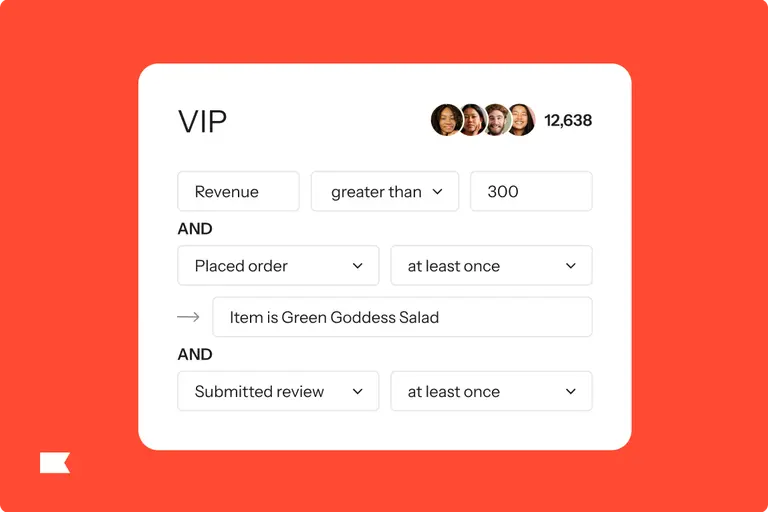
- Programming expertise to build a segment
- Developers to set up integrations and maintain data pipelines
- Outside consultants to manage the implementation
And because all of that is expensive and slow, teams end up reverting to the same batch-and-blast approach they were running before, just with a much larger invoice.
When I’m helping a brand choose their enterprise CRM, I encourage them to think about the person who actually has to do the work every day. Even if a high-ranking executive makes the platform decision, there's still someone on the team (often a marketer in their mid-20s who is talented and capable) who has to open that platform on a Monday morning and build something.
- What does that experience look like for them?
- Is the tool something they can actually operate, or is it something they need to call IT to use?
Whether your internal team (or an outsourced provider) can capably do the work without a bloat of other resources also contributing is what many teams figure out too late when evaluating software. That matters a lot when you're thinking about what "personalization" actually requires in practice.
Capability on paper means very little if the day-to-day implementation still requires a technical resource at every step.
What makes Klaviyo different, and where things are genuinely starting to shift
I want to be honest about something here: true hyper-personalization, the kind where every message a shopper receives is meaningfully tailored to their specific behavior, preferences, and history, has been a promise the whole industry has been working toward for a long time.
It's only starting to become theoretically possible recently. Tools that can actually activate data in real time and with AI capabilities are starting to close the gap between what's theoretically possible and what a team can actually execute.
That's the context in which I think about what Klaviyo is doing differently.
The core advantage starts with customer data. Most legacy platforms operate on fragmented data models: separate products, separate schemas, and batch processing that introduces latency. What that means in practice is that your data isn't current when you go to use it. You build a segment and it reflects where your customers were 24 hours ago, not where they are right now.
Klaviyo's architecture handles this differently. Profiles and events update in real time, which means the segment you build today reflects what your customers are doing today. That sounds like a technical detail, but for personalization, it's foundational. You can't send a message that feels timely and relevant if it's based on data that's even one day old.
“The biggest misconception we see with enterprise brands is that personalization is primarily a content challenge,” says Zac Fromson, co-founder of Lilo Social. “In reality, it’s a data and activation challenge. The brands that achieve better personalization are operating on data that’s unified, accessible, and actionable in real time.”
The brands that achieve better personalization are operating on data that’s unified, accessible, and actionable in real time.
What it looks like when you add data and analytics into the mix
When I'm having enterprise-level conversations about Klaviyo, the capabilities that come up most consistently, beyond core email and SMS, are Klaviyo Data Platform (KDP) and Klaviyo Marketing Analytics.
KDP matters because enterprise brands almost always have data living in multiple places:
- An ecommerce platform
- A data warehouse
- Customer support tools
- Loyalty programs
Getting all of that into a single customer view used to require an engineering team and a significant amount of custom work.
Not with Klaviyo. Hayes identifies the single customer view as the feature that brands underestimate in Klaviyo the most: “That kind of unified data is what makes personalization feel genuine and easy to implement regardless of team size,” she says.
Klaviyo's native integrations (there are 350+ of them) do a lot of that work without the custom plumbing. And for brands that do have a data warehouse and want to do more advanced work with it, that path is there, too, with Advanced KDP.
You do need a development resource for some of those heavier integrations, but at the enterprise level, that resource typically exists. The difference is that you're using them for strategic work rather than basic platform maintenance.
Marketing Analytics is the other piece that I think gets underappreciated. One of the consistent frustrations I hear from brands on legacy platforms is that reporting requires jumping between tools, or, worse, requires another platform entirely just to see the data you need.
Having attribution, cohort analysis, and revenue reporting inside the platform where you're actually building out your marketing removes a bottleneck that a lot of teams don't even realize is slowing them down until it's gone.
The combination of those two things (data that unifies in real time, and analytics that live inside the activation environment) is what starts to close the gap between what personalization could be and what a team can actually ship on a Tuesday.
The UI still matters more than people want to admit
I hear this occasionally from people who haven't spent a lot of time inside multiple enterprise platforms: the trend is toward agentic AI, so the interface becomes less important over time. That's probably true in the long run. But right now, especially at the enterprise level, the teams actually operating these tools day to day are still very much in the product, building segments, editing flows, and pulling reports.
I've worked inside legacy enterprise platforms and I've worked inside Klaviyo, and the difference is how easy it is to actually build something. That matters not because the other platforms are bad, but because ease of use and autonomy compound over time.
A team that can orchestrate marketing independently moves faster. A team that has to file a ticket every time they need a segment built moves more slowly. And at the scale most enterprise brands are operating at, that difference in speed shows up directly in revenue.
Fromson agrees. “People love to talk about AI, but most enterprise marketing teams are still spending their days building audiences, launching campaigns, and analyzing performance. “We’ve seen firsthand that when marketers can implement without opening tickets, waiting on developers, or stitching together reporting across tools, the impact on revenue is immediate,” he says.
Brands that have made the switch have measured it. Dollar Shave Club, for example, cut campaign set-up time over 60% after consolidating on Klaviyo. Daily Harvest saved over 50 developer hours per month by switching to Klaviyo and Shopify.
I want to close with something direct: if you're on a legacy enterprise platform and the reason you haven't moved is that it feels like too big a lift, that concern is legitimate. Migrating a large CRM is genuinely complex, and anyone who tells you otherwise isn’t being straight with you.
But the cost of staying also compounds. Every month you're spending time and money keeping a platform running instead of orchestrating is a month where your competitors, especially the ones on more agile infrastructure, are getting further ahead.
The shift toward more autonomous, AI-driven personalization is real, and it's accelerating. The question is whether the platform you're on right now has the architecture to get you there, or whether it's going to require you to rebuild everything again in 3 years to keep up.
That's the conversation I keep having with brands. And more often than not, the answer they arrive at on their own is the same one I arrived at years ago: the expensive platform that promised everything delivered a lot less than the one that was built to let your team actually do the work.

Related content