AI-driven personalization consumers expect
Generated by Klaviyo AI
The article explains how rising consumer use of AI is reshaping expectations for personalized marketing and what happens when brands fall short. It outlines the data, tools, and strategies needed to deliver accurate, consent-based 1:1 experiences, illustrated with three B2C case studies.
- Rising AI expectations: As consumers grow accustomed to highly contextual AI experiences, they increasingly expect the same level of personalization from brand interactions across channels.
- Trust and consent: Because consumer trust in AI varies and overly humanlike automation can feel invasive, brands must tailor personalization approaches and rely on explicitly consented data.
- Cost of poor personalization: Generic, repetitive, or inaccurate messages lead many consumers to disengage or lose trust, making quality and relevance critical as teams experiment with AI.
- Core personalization stack: Effective personalization depends on integrated customer data, AI-driven segmentation, predictive analytics, and agentic AI that can respond in real time across touchpoints.
- Proven B2C outcomes: Examples from Thirdlove, Half Magic, and Every Man Jack show how personalized hubs, RFM-based loyalty messaging, and predictive flows can drive revenue and retention growth.
In 1967, direct marketing pioneer Lester Wunderman said, “A computer can know and remember as much marketing detail about 200 million consumers as did the owner of a crossroads general store about his handful of customers. It can know and select such personal details as who prefers strong coffee, imported beans, new fashions, and bright colors.”
Nearly 60 years ago, Wunderman saw the potential for marketing personalization to respond to each customer’s personal preferences. Today, AI makes it possible to tailor messages to every customer, on their preferred channel, so that every interaction feels 1:1.
But this also puts more pressure on your brand to make sure every experience you deliver is accurate, helpful, and reflective of each customer’s preferences and behaviors.
Why marketing personalization matters more for brands in 2026
60% of consumers interact with AI at least weekly, according to Klaviyo’s 2026 AI Consumer Trends Report. AI platforms like ChatGPT and Gemini are setting a new standard for personalization in shopping.
For example, a consumer may prompt Google AI Mode to help them find a moisturizing, colorful lip product. The AI model suggests a Rare Beauty item because the consumer has searched for that brand before.
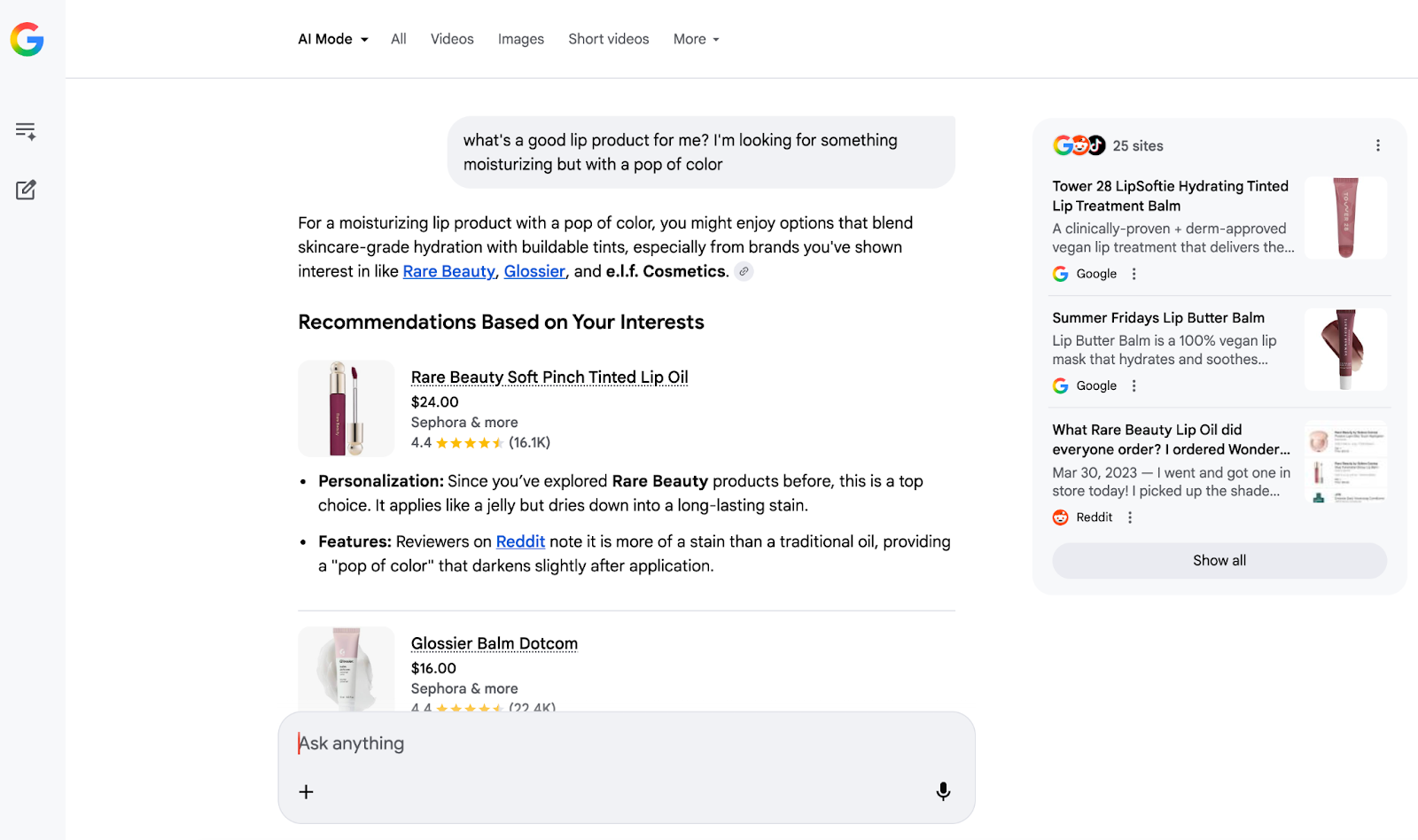
As agentic commerce becomes more mainstream, shoppers will begin to expect this level of contextual personalization wherever they interact with brands, not just on AI platforms.
When you do it well, marketing personalization builds a 1:1 relationship with customers, even as more shoppers discover and learn about your products through AI platforms rather than your owned channels.
With all that in mind, marketing personalization can translate to:
- Higher conversion rates: Across B2C industries and product types, exclusive discounts or offers tailored to a consumer’s personal preferences are the No. 1 form of personalization that influences which brands people buy from, according to Klaviyo’s 2025 Future of Consumer Marketing Report.
- Higher retention rates: Brands that excel at personalization are 71% more likely to report improved customer loyalty, according to Deloitte research. This is critical for B2C marketers, who say their top priority in 2026 is increasing customer retention, loyalty, and lifetime value, according to Klaviyo’s 2026 B2C marketer research.
- Better ROI: Research from McKinsey found that an AI-powered next best experience—the ability to detect when a customer needs help—can reduce the cost to serve by 20–30%. With mass outreach, you’re spending money on messages or channels that certain customers will never engage with. Matching each message, channel, and offer to someone’s predicted preferences can save your team time and budget.
How AI is changing marketing personalization
73% of B2C marketers are already using or exploring AI to personalize messaging, and 66% are using or exploring it to personalize product recommendations, according to Klaviyo’s recent B2C marketer research.
But with varied trust and usage levels across customer segments, you need to think carefully about how you implement AI for personalization. Here’s what to keep in mind:
1. Shoppers have a low tolerance for generic experiences
Consumers can easily distinguish between brands who invest in a personalized customer experience and those that phone it in.
For example, marketing emails or texts that sound generic or repetitive are one of the top brand experiences consumers feel are “too automated,” according to our 2026 AI consumer trends research.
When consumers are used to getting exactly what they’re looking for through an AI platform, sitewide sale emails or flash sale texts for products they’ve never viewed can feel jarring. A thoughtful personalization strategy shows customers you care about them individually.
2. Consumer trust of AI varies widely
Even though most consumers are using AI to some extent, only 13% completely trust it, according to our 2026 AI Consumer Trends Report.
When they’re shopping, only 27% of consumers trust AI completely to provide accurate, personalized product recommendations. And only 12% completely trust AI to deliver satisfactory customer service.
Each of your current and future customers trusts AI to varying degrees, which influences how they perceive your marketing personalization efforts. In other words, yes, you even need to personalize your personalization strategy.
A blanket approach to personalization with AI is bound to turn off part of your audience. Our 2026 AI consumer trends research found that 21% of consumers say that AI that sounds too human or "pretends" to know them makes them feel uncomfortable.
To avoid being invasive, and stay compliant with privacy regulations, personalize your marketing only with data you’ve gathered with explicit consent.
3. Poor personalization has tangible consequences
Just as mass outreach with personalization leaves consumers feeling like a number, sloppy or inaccurate personalization is equally damaging.
When consumers receive poorly personalized messages, around 1 in 5 stop opening or reading future communications from that brand. Or, maybe even worse, they lose trust in that brand’s ability to use their data responsibly.
Most B2C teams are still exploring how AI can help them personalize their messaging and product recommendations, according to our 2026 B2C marketer research. But experimentation can’t coincide with a sacrifice in quality.
What brands need for effective marketing personalization
At this point, marketing personalization should almost disappear into the background because it’s a standard part of the customer experience.
Creating this kind of experience starts with:
- Integrated customer data: The quality and organization of your data dictates your ability to deliver a personal customer experience. All customer information—from zero-party data shared through quizzes, forms, and surveys to first-party data you observe via people’s online behavior, purchase history, etc.—should live in one place. That way, humans and AI can draw on the same customer data to demonstrate a deep knowledge of customers across multiple channels.
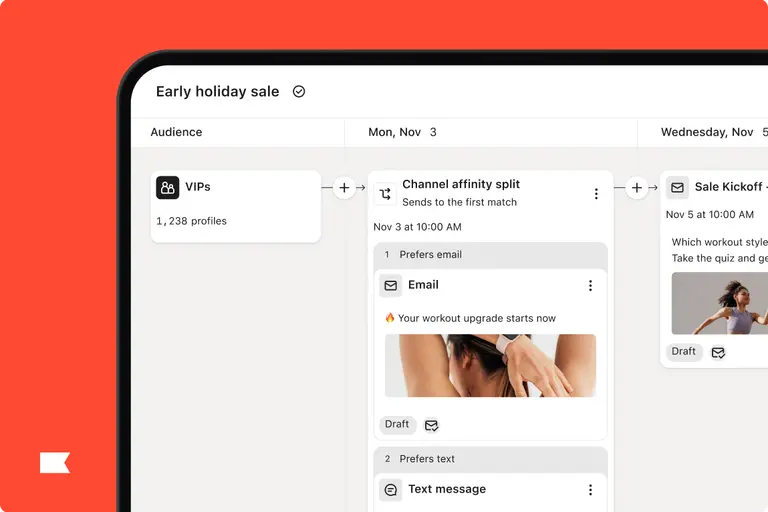
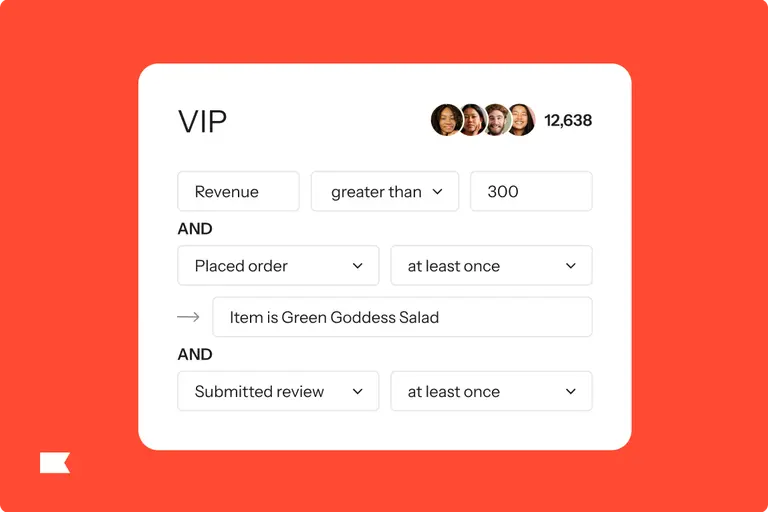
- AI customer segmentation: AI makes it possible to create complex customer segments based on a descriptive prompt. For example, ask AI to build you a segment of “customers in these few zip codes who favorited specific products in their self-serve portal.” Then, ask AI to break down the segment even further to send different messages to high spenders vs. discount shoppers. The more parameters you introduce with AI, the more personal and relevant your messages become.
- Predictive analytics: Predictive analytics uses AI and machine learning to identify trends and patterns in your existing customer data. These insights can help you anticipate the needs of your individual customers right down to the profile level. For instance, you might proactively send an offer to a particularly high spender who’s also likely to churn soon.
- Agentic AI: AI customer agents can deliver real-time support, make personalized product recommendations, and surface exclusive offers, all based on real customer data. When new products launch, for example, these agents can act as shopping assistants and share relevant details with customers based on what they’ve browsed or bought before. AI marketing agents, meanwhile, can help you brainstorm, generate, and personalize your marketing messages across channels.
3 B2C marketing personalization examples to learn from
These real-life brands are creating 1:1 experiences that have a direct impact on revenue:
1. Thirdlove drives revenue with a personalized self-serve hub for customers
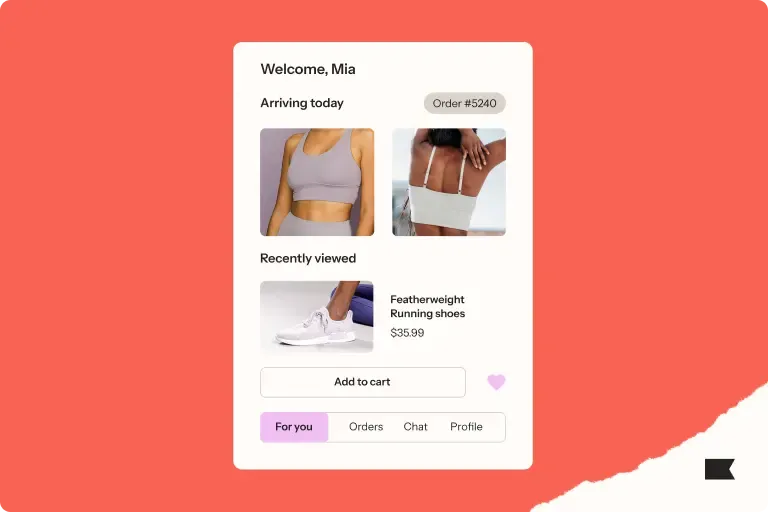
With a self-serve customer portal, Thirdlove’s customers manage their entire relationship with the intimates brand in one place. Every shopper has a custom “For You” page where they can not only track orders and get support, but also wishlist items, receive personalized product recommendations, and track and redeem loyalty points.
In 2025, Thirdlove drove $200,000+ in revenue from their customer hub. Thirdlove also uses AI-powered channel affinity to reach customers where they’re most likely to engage.
2. Half Magic personalizes loyalty messaging with RFM analysis
When Half Magic wanted to improve customer retention and deliver a more personalized experience at scale, they consolidated their existing tech stack into an all-in-one B2C CRM. Now, the beauty brand uses recency, frequency, and monetary value (RFM) analysis to segment customers based on their buying patterns. They send nurture automations when a customer switches to a new RFM segment, for example, incentivizing repeat purchases by highlighting loyalty rewards like free shipping.
In 12 months, Half Magic grew revenue from automations 110% YoY.
3. Every Man Jack uses predictive analytics to increase conversions
Every Man Jack uses a B2C CRM to generate personalized predictions about each subscriber. Now, the men’s grooming brand can set their reorder flow to send on—or slightly before, or after—each customer’s unique predicted next order date.
The team also noticed that when they send campaigns to subscriber segments with high predicted lifetime values, they see the most purchases. Thanks to these and other personalization efforts, Every Man Jack saw 25% YoY growth in revenue from flows.
Personalize every interaction with Klaviyo
The foundation of a successful personalization strategy is an all-in-one B2C CRM that brings together marketing, customer service, and analytics, all powered by AI and a built-in CDP.
That’s Klaviyo B2C CRM: the AI-first CRM that learns from your customer data in real time.
Klaviyo helps you automate 1:1 personalization at scale, so all your customer interactions retain the human quality shoppers value so much.
Meet your audience where they are with 1:1 customer experiences powered by Klaviyo. Sign up

Related content