8 low-maintenance BFCM emails that converted (and took almost no time to build)
Generated by Klaviyo AI
Email and retention leaders from Defiant Digital, TATCHA, New Standard Co., YOCTO Agency, and Zettler Digital share eight BFCM sends that took minutes to build but drove some of their best results of the season. The common thread: casual, human, unpolished messages consistently outperformed heavily designed campaigns.
- Plain, unscheduled notes outperformed polished campaigns: A casual last-minute sale note from Geedup and a plain-text CEO email from Sand Cloud both ranked among their brands' top-performing BFCM sends, precisely because they looked different from typical promotional emails.
- Re-sends and repurposed content captured revenue that would have otherwise gone uncaptured: Forwarding an existing email (Mitch Cactus), re-sending to non-openers at a different hour (Tabuu), and recycling a launch email into an always-on flow (TATCHA) all required little new work but reached audiences the original send missed.
- Smart structure beat manual segmentation: Bari Life's tiered gift-with-purchase offer let spend thresholds do the segmentation automatically, becoming the account's highest-revenue message of BFCM without the team building separate campaigns for different customer groups.
Sometimes, a Black Friday Cyber Monday (BFCM) debrief turns into a confession: the email nobody planned outperformed the one the team spent 3 weeks building.
As head of email and SMS at Defiant Digital, Australia's leading creative performance and ecommerce growth agency and a Klaviyo Platinum Master partner, I've watched this happen enough times to stop being surprised by it. So this year, I asked around for the sends that took almost no time to build and still moved real revenue.
Everyone I spoke to was optimizing for the same thing: speed to send, not polish.
Shannon Jörgenfelt, senior manager of email and retention at luxury skincare brand TATCHA, re-used an existing campaign creative as an automated flow trigger. "It took just a few minutes to set up" because the framework already existed, she says.
Marina Carroll, head of CRM at retention agency New Standard Co., built her team's send around a single screenshot of a note from the CEO, plus 5 links. "I spun it up in about 15 minutes," she says. She points out that plain-text sends "look different and unique to users in their inboxes," which is a big part of why they perform.
With those tips in mind, here are 8 low-maintenance BFCM emails that worked well, without a lot of work.
1. Send a low-effort note, and let it look like one
One of the lowest-effort sends Defiant Digital ran all November 2025 was for apparel brand Geedup. On Sunday, November 30 at 6:42 p.m., the team sent a casual note about a last-minute sale. There was very little design and no polish, just a note that read like it came from a person, because it did.
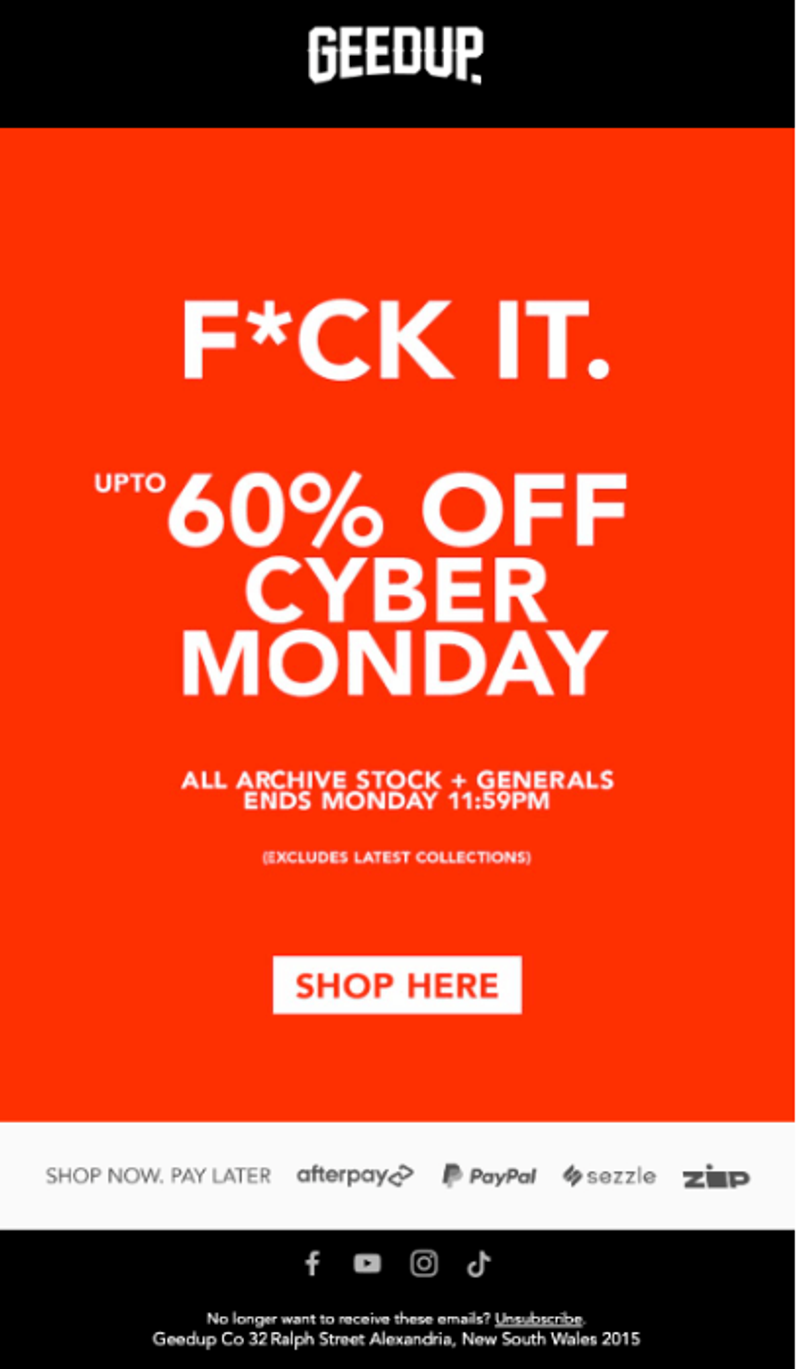
Image source: Geedup
Geedup doesn't normally run sales or follow typical seasonal sale periods, which made the informality land even harder. Subscribers could tell this wasn't the usual BFCM script. It became the second best-performing email of the entire November campaign, generating over $60,000.
2. Let your CEO send the email for once
Here’s the plain-text email Carroll's team at New Standard Co. sent out for their client Sand Cloud, on the afternoon of Black Friday at 12:22 p.m. PST.
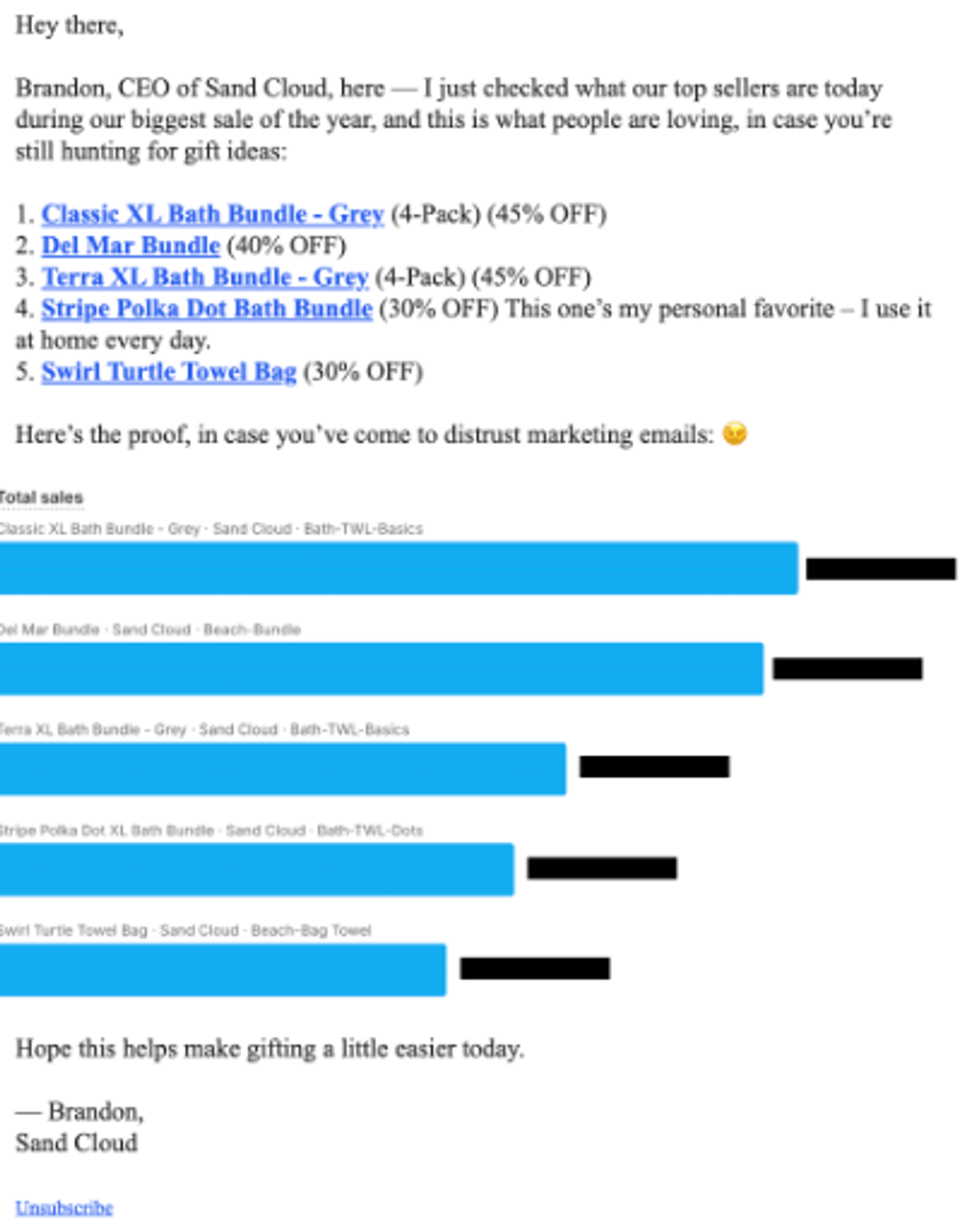
Image source: Sand Cloud
"It's plain text, so there was no design effort required for this," Carroll says. "It's also a unique view from the CEO, who we don't send emails out from very often."
The whole thing was just one screenshot pulled from their Shopify database, plus 5 links. It only took about 15 minutes to spin up.
Because it looked so different from the brand's usual sends, and came from a name subscribers rarely see, it stood out in the inbox. The campaign's open rate came in 36% above the account's average for BFCM, and it ranked among the brand's top 5 best-performing sends of the sprint.
It's plain text, so there's no design effort required for this.
3. Forward the email you already wrote
For gaming company Mitch Cactus, we re-sent the original Cyber Monday surprise-sale email a couple days later, on Monday, December 1, 2025 at 8 p.m. We framed it as a forwarded note from the founder, with a personal line up top: "Just making sure you didn't miss this." It only went to non-buyers who hadn't converted on the first send.
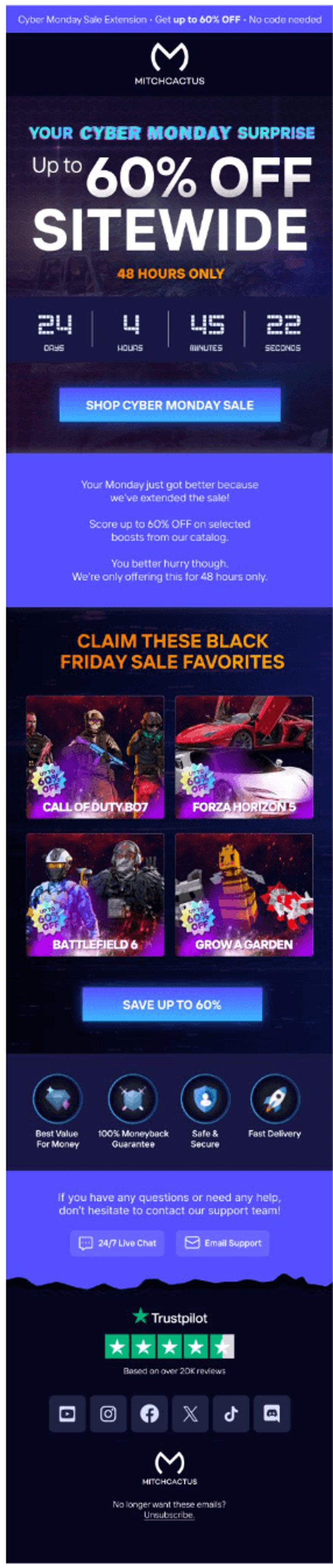
Image source: Mitch Cactus
The copy change from the original was minimal, which is exactly the point. This low-effort recovery send, not a new campaign. It became the third best-performing email of the whole BFCM campaign, trailing only the launch and last-chance sends, with roughly 20% higher open and click rates than the period's average sale email.
4. Re-send to the people who missed it, at a different hour
For Tabuu, an Australian service that helps people quit smoking, we did a Black Friday express shipping campaign. We sent the same message twice on the day: once at 7 a.m., then again at 7 p.m. to people who hadn't opened or clicked the first time, with a fresh subject line and no new design work required.
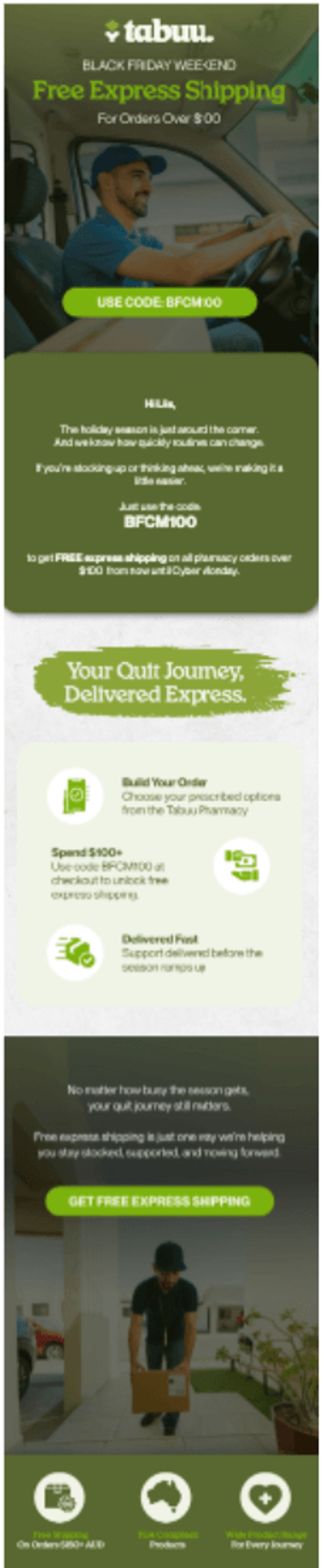
Image source: Tabuu
The point of a re-send like this isn't to outperform the original. It's a safety net for the people who simply weren't looking at their inbox at 7 a.m. The morning send pulled a 1.25% click rate, while the evening re-send to non-openers hit 1.6%.
Absolute revenue on the re-send was lower than the original, but that revenue would have gone uncaptured entirely without it. The evening audience just wasn't reachable any other way.
5. Turn a real mistake into your best-performing email
This plain-text apology email from fidget toy brand Kaiko's founder, sent Friday, November 21, 2025 at 12 p.m., reacted to a real moment of chaos. It’s the kind of thing that results from BFCM traffic, whether it's a site outage, a broken discount code, or a bestseller selling out.
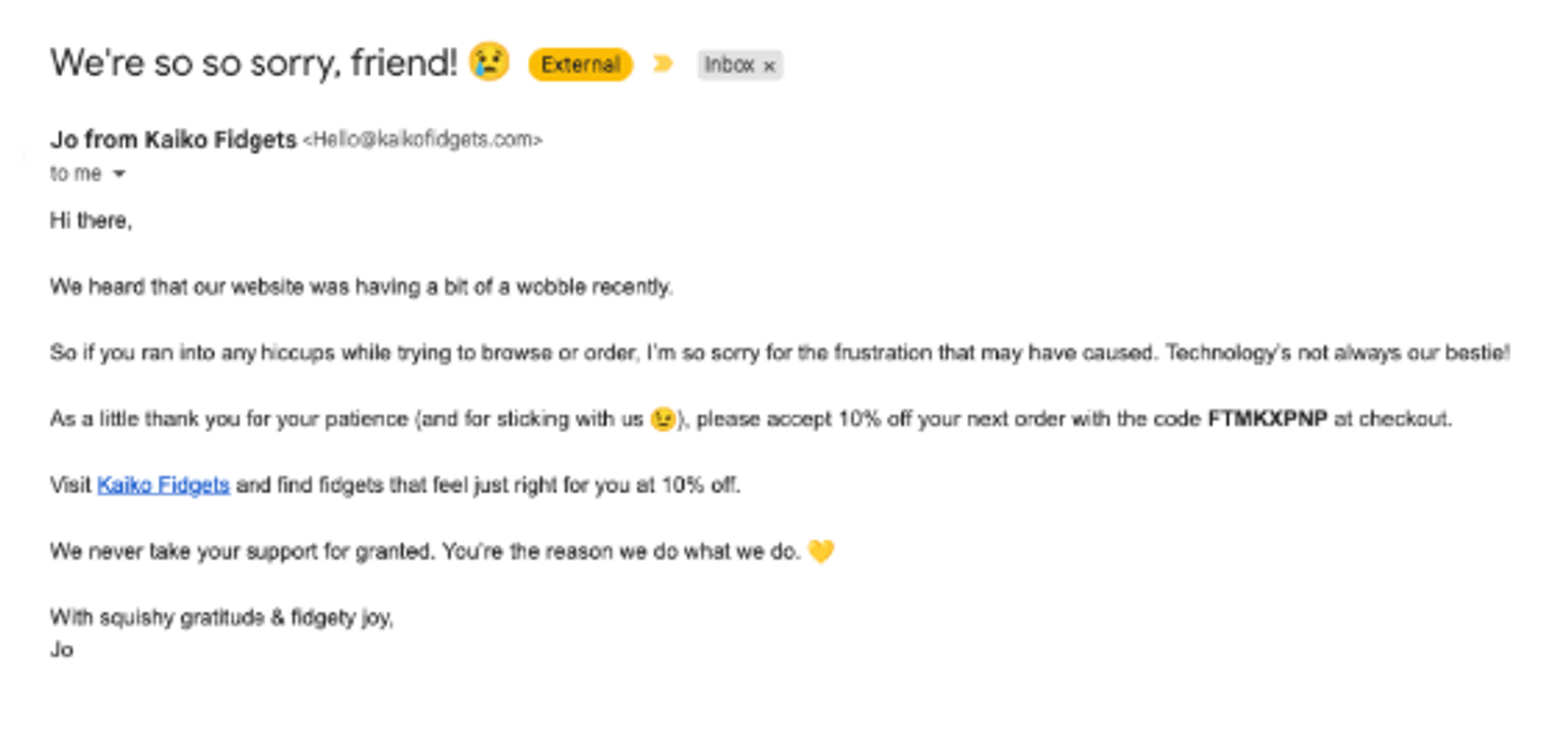
Image source: Kaiko
This was the top revenue-generating email of the quarter, with some of the highest open and click rates we saw all year. What made it work is that it felt unscheduled and human, which is rare during BFCM. The urgency came from a real story, not sales copy.
Note that this kind of strategy only works if you don't overuse it.
6. Make a "secret list" out of products you were already discounting
George Kapernaros, founder of YOCTO Agency, an elite email and retention agency for fast-growing DTC brands, sent a campaign for fertility app Mira on November 13, 2025, a full week before Thanksgiving, in each recipient's local morning. It’s built around an exclusive list of discounted products, framed to subscribers as a "secret list."
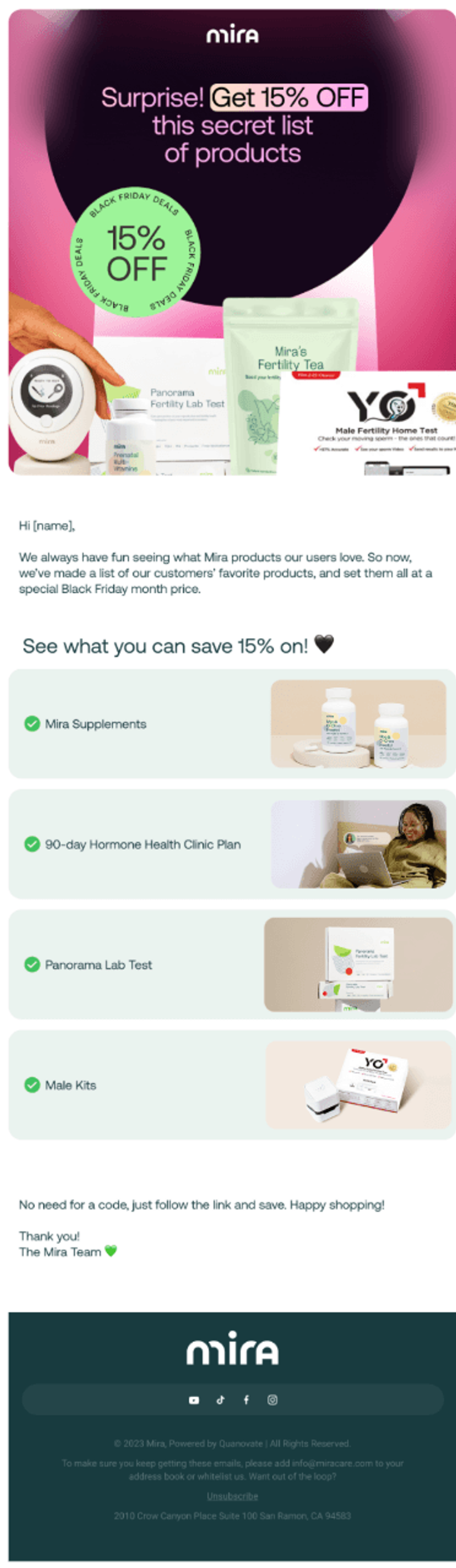
Image source: Mira
The email landed before the actual BFCM rush kicked in, and it became the brand's highest-performing email of the entire lead-up period.
7. Improve your offer when people spend more
Ben Zettler, founder of Zettler Digital, sent a site-wide offer for pharmaceutical brand Bari Life at 8 a.m. on Black Friday, structured as a dynamic tiered deal. The more a shopper spent, the more valuable their free gift became.
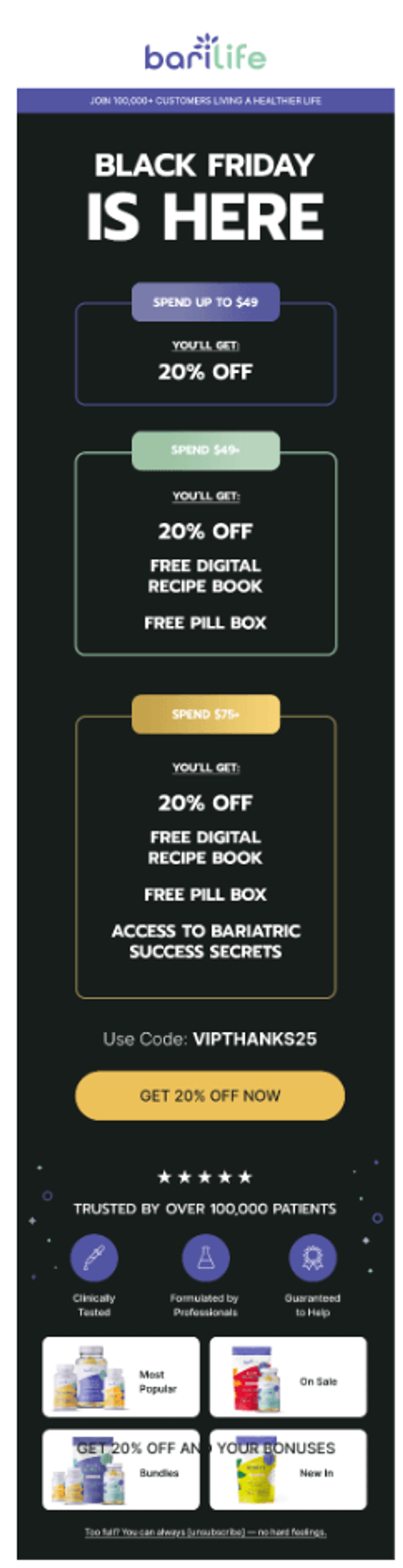
Image source: Barilife
“The offer itself did the segmentation work,” Zettler explains. Instead of creating separate offers or campaigns for different customer groups, he used one sitewide promotion with spend thresholds that automatically increased the value of the gift as average order value increased.
“Once the tiers, creative, and on-site experience were set up, we could send the same core offer broadly without needing to manage multiple discount structures or constantly adjust the campaign during BFCM,” Zettler says.
Of the account's tracked messages, the email became the highest Klaviyo-attributed-revenue message of the entire BFCM period.
The offer itself did the segmentation work.
8. Recycle your launch email into an always-on flow
Here’s the TATCHA BFCM launch email Jörgenfelt repurposed as a site-abandonment flow: an ongoing send that didn't require new creative to stand up.
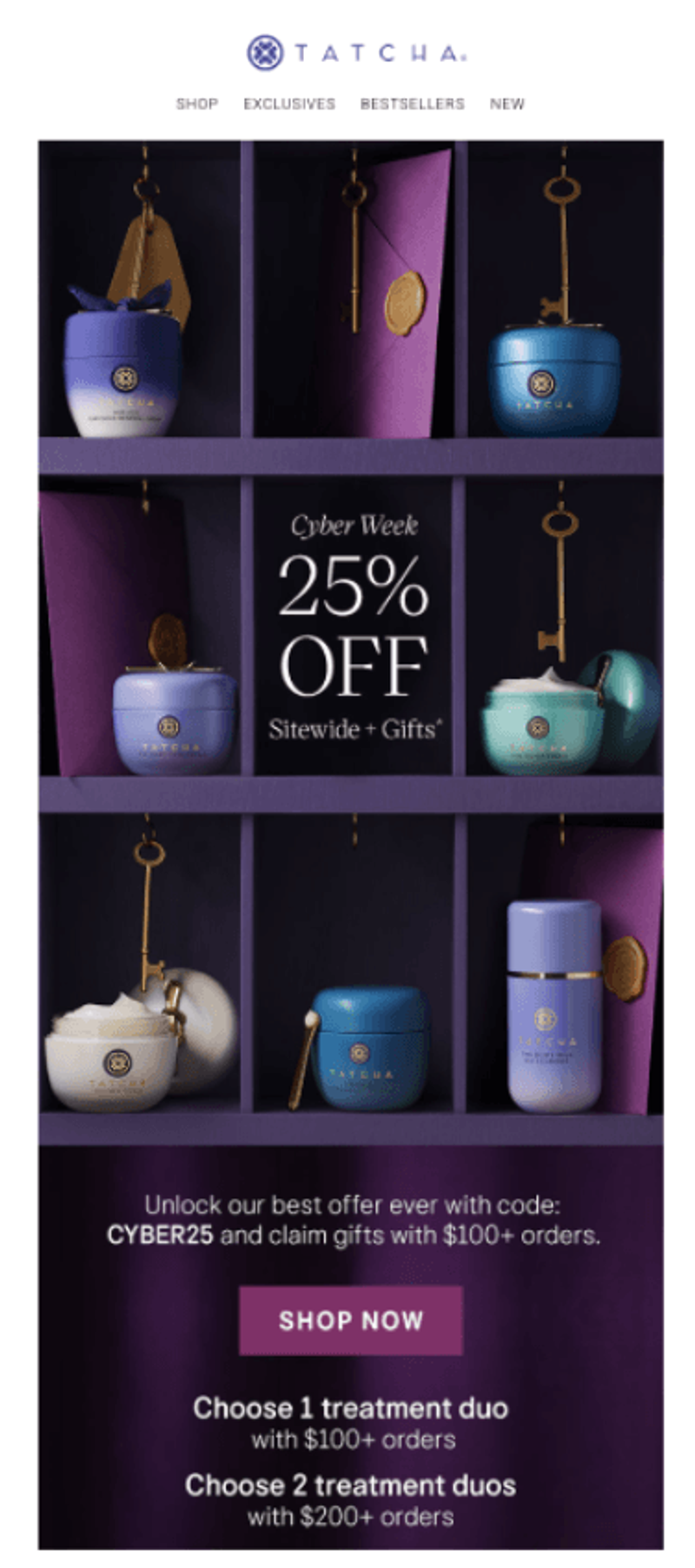
Image source: TATCHA
"Once you have the framework built, you can swap out the creative for future events," Jörgenfelt explains.
Site abandonment isn't normally part of TATCHA's abandonment series, which usually covers check-out, cart, and browse. But adding this touchpoint during a high-traffic period made a real difference: it drove nearly $5 per recipient and was the second-highest revenue-driving flow of the entire BFCM period.
If any of these sound like something you could build in the next 24 hours, that's the point. Try one, and let us know what happens.

Related content