Turn cultural vibes into revenue
Generated by Klaviyo AI
The article explains how “vibe marketing” uses AI to quickly create culturally relevant, emotionally resonant campaigns without being limited by creative resources. It outlines six practical ways brands can tie real-time events, fandoms, social trends, UGC, and local context to personalized, revenue-driving activations.
- Leverage cultural moments: Plan and pre-build AI-generated variants for holidays, festivals, and real-time events like the World Cup so you can send timely, relevant campaigns as outcomes unfold.
- Activate fan communities: Use collected fan preferences for teams, sports, or artists to personalize messaging and product recommendations around seasons, collaborations, and year-round fandom.
- Move fast on trends: Rely on AI to rapidly produce on-brand creative that taps into viral conversations with authentic product tie-ins before the cultural moment passes.
- Curate drops and UGC: Combine AI-enhanced imagery for limited product collections with social listening and user-generated content to showcase trending items and real customer use cases.
- Localize with context: Tailor campaigns to local weather and events using customer profile data, and let AI explore patterns so hyperlocal offers feel timely and personally relevant.
We’re in a new era of marketing.
For a long time, marketers’ resources have constrained their creativity. You could dream up elaborate launches and activations all day, but without the headcount to make your ideas a reality, they would stay on the drawing board.
Now, “vibe marketing” is closing the resource gap. Just describe what you want, like “a playful and flirty Valentine’s Day launch highlighting our line of engagement rings,” or “a lighthearted and fun activation to launch our annual summer sale,” and AI builds it. You’re there to ideate, iterate, and approve, but you’re no longer limited by how many developers or designers are currently available.
Vibe marketing also helps you move faster. Real-time creative can get your brand in front of massive audiences. Nutella jumped on their accidental cameo in footage from NASA’s Artemis II space mission, and IKEA capitalized on a viral conversation about Punch, a baby monkey who dragged around a stuffed monkey toy for comfort.
By using AI to accelerate asset creation, you can focus on the ideas and strategy behind activations that are creative, emotionally evocative, and culturally relevant.
Here, we’ve rounded up 6 examples of quick-turn or culturally relevant marketing moments to serve as inspiration for your next vibe marketing-created activation.
1. Highlight cultural moments
Tying marketing to special occasions shows customers you’re part of the same cultural spaces and conversations they are, while also giving your marketing a timely hook. This summer, 56% of brands are planning time-sensitive offers or discounts triggered by FIFA World CupTM match results or milestones, according to the survey behind Klaviyo’s 2026 Match Day Ready Report.
In some instances, you can plan ahead, like for major and minor holidays, seasonal moments, or annual events. But in cases like the World Cup, results happen in real time.
Instead of manually creating assets for dozens of possible outcomes, use vibe marketing to create different variants ahead of time and send the right one when you know what’s actually happened.
PATH Water, a brand that sells refillable aluminum water bottles, sent this recap email right after the Coachella and Stagecoach music festivals ended. The email features PATH’s various brand collaborations at the festivals plus a new bottle design launched at Stagecoach, and includes CTAs to follow PATH on Instagram and explore their water bottles.

2. Create personalized fan messaging based on a team, sport, or musical artist
We’re all fans of something, and the fan economy presents major opportunities for brands to generate both attention and revenue.
According to Vogue, Gap’s summer 2025 collaboration with global girl group KATSEYE generated 8 billion media impressions on a single music video and contributed to double-digit growth in the denim category, plus a 7% YoY bump in comparable sales.
This year, 32% of brands are planning personalized messaging based on customers' team or sport preferences, according to Klaviyo’s 2026 Match Day Ready research. If you collect fan preferences (like favorite teams) through quizzes or sign-up forms, you can create personalized marketing during the sports season or share personalized recommendations for celebrations like customers’ birthdays.
Timing for these kinds of messages is flexible. You can (and should) send fan-related messaging around relevant events or occasions. But fans are fans year-round, giving you lots of opportunity to tap into different fanbases and connect with your customers.
AI makes this targeted outreach easier. Let’s say you want to promote team apparel at the start of basketball season. Instead of creating 30 emails featuring various items and 30 segments of buyers who have purchased specific team gear, use vibe marketing to create the segments and design the assets.
Consider this example from international apparel brand Culture Kings. Their “Battle of the States” email highlights the legendary rivalry between the New South Wales Blues and the Queensland Maroons rugby squads, prompting fans to shop the product lines for each team.

3. Capitalize on viral moment
As marketers, we’ve all been there: a viral trend blows up, you come up with an idea, work on creative, and get approval, only to find that the moment is over and pop culture has moved on.
Only 16% of marketing teams can react to an unexpected viral moment or cultural flashpoint within 2 hours, while another 25% can react in 6 hours, according to Klaviyo’s 2026 Match Day Ready Report. That leaves nearly two-thirds of teams at risk of moving too slowly to participate in trends that can get their brand in front of a new audience.
Once you have an idea for a good hook that connects your brand to a cultural moment, AI can help you quickly create specific on-brand, in-voice copy and pull together creative assets.
The best viral conversations to participate in are those that have a natural tie-in to your brand and products. Customers are savvy, and can sense when you’re trying to force a connection that isn’t there.
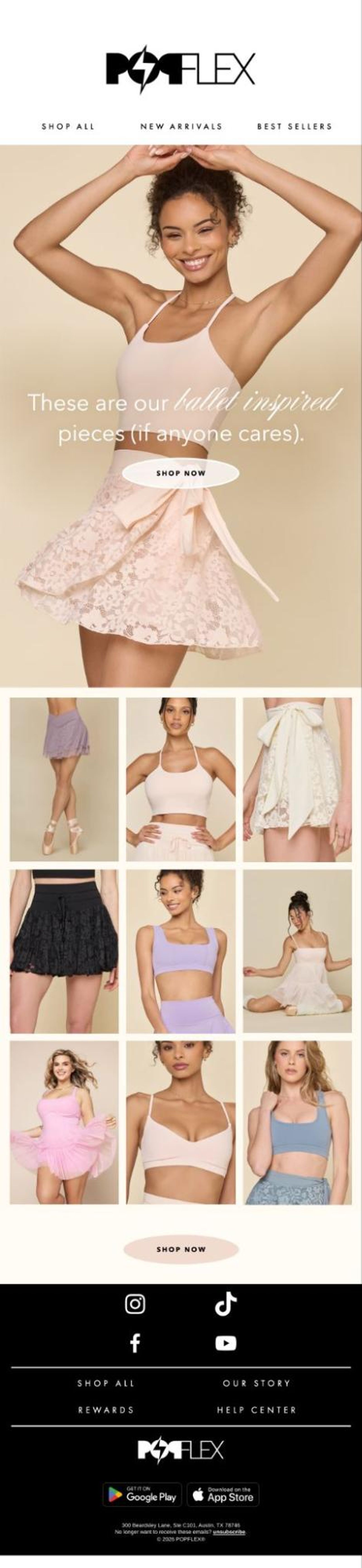
That’s why this email from activewear brand POPFLEX works. When Timothée Chalamet said at a Variety & CNN town hall, “I don’t want to be working in ballet or opera, or things where it’s like, no one cares,” his comments sparked multiple days of pop culture discourse. POPFLEX jumped into the fray with an email promoting their ballet-inspired pieces, cheekily referencing Chalamet’s comments in a way that feels natural and organic.
4. Promote curated product drops tied to teams, events, or seasons
New product lines are a great opportunity to get creative with marketing assets. 51% of brands are planning curated product collections or limited-edition drops tied to matches or teams, with apparel and fashion brands 37% more likely than average to plan this type of activation, according to Klaviyo’s 2026 Match Day Ready research.
87% of retail brands use AI for product content or imagery in their merchandising, according to McKinsey research. You can apply the same tactics in your digital marketing. Use an AI photo editor to punch up or create images for special product drops, then include those images in vibe marketing activations.
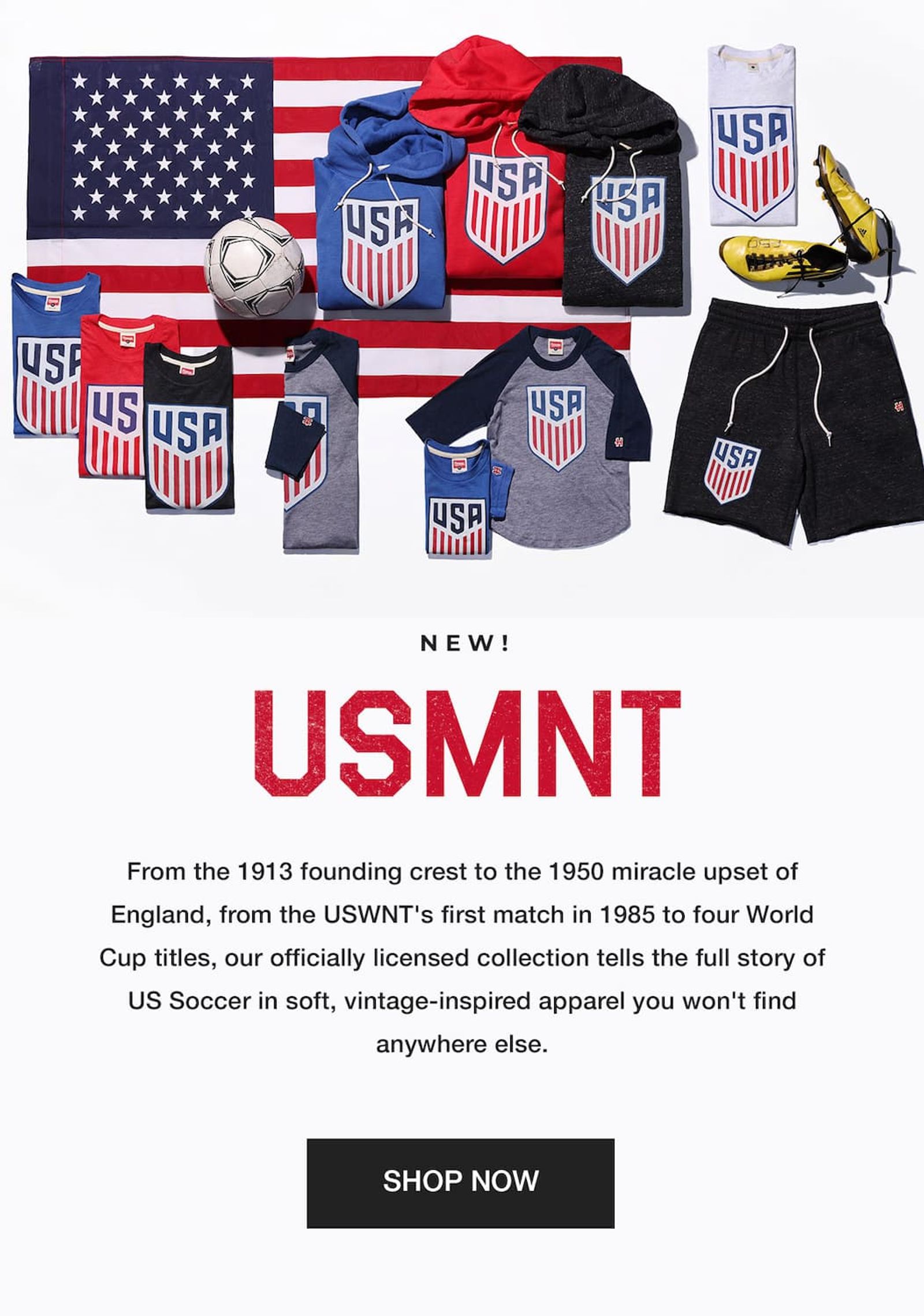
Leading up to the World Cup, sports and pop culture merchandise brand HOMAGE promoted their new US Soccer and World Soccer apparel lines. To make their emails feel even more vibrant and exciting, HOMAGE could use an AI photo editor to feature their products on models, or against relevant backgrounds like a soccer stadium or sports bar.
5. Use social listening to react to customer moments or UGC
While 93% of marketers think social intelligence is important, only 36% use it on a regular basis to guide business decisions, according to Sprout Social.
Customer sentiment is one of the most valuable sources of marketing inspiration. Whether customers are sharing what they love about your brand, creating user-generated content (UGC) to show off how they use your products in their everyday lives, or talking about what they wish your brand did better, listening to customers provides built-in authenticity, education, and a mark of approval from real people.
Let’s say your customers often return a particular mascara. Your AI marketing agent could analyze internal data to identify that many customers return the mascara because they have difficulty removing it. Then, you could create an activation featuring a relevant social post or support ticket, and explain exactly what kind of makeup remover to use.
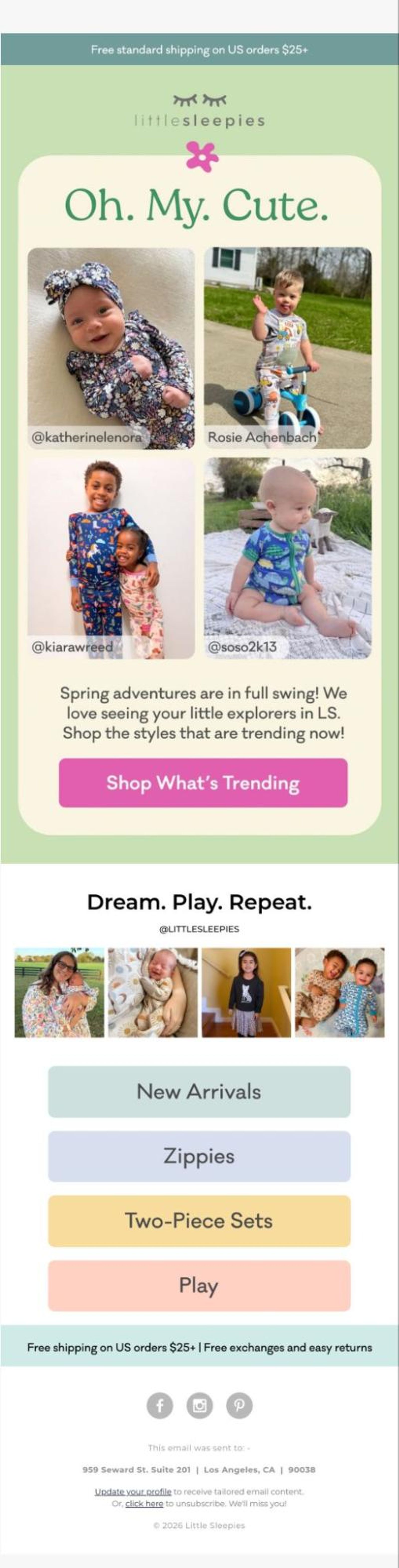
Children’s sleepwear brand Little Sleepies sent this email featuring their products trending on social media. The email showcases UGC posts of children wearing the brand’s clothing, and prompts recipients to shop trending products.
6. Comment on local weather or events
Get hyperlocal and tailor messaging to what’s going on in your customers’ communities. Whether it’s a local festival, town milestone, or even the weather, getting granular makes your audience feel like you actually know them.
When prompting your AI marketing agent to create a local marketing activation, consider the customer profile data you’ll use to guide your messaging. Does it make the most sense to use their most recent in-store purchase location, their shipping address, or their preferred shopping location? Ask your AI agent to explore patterns in your data, like where customers shop most frequently, to make sure you’re sending relevant promotions.
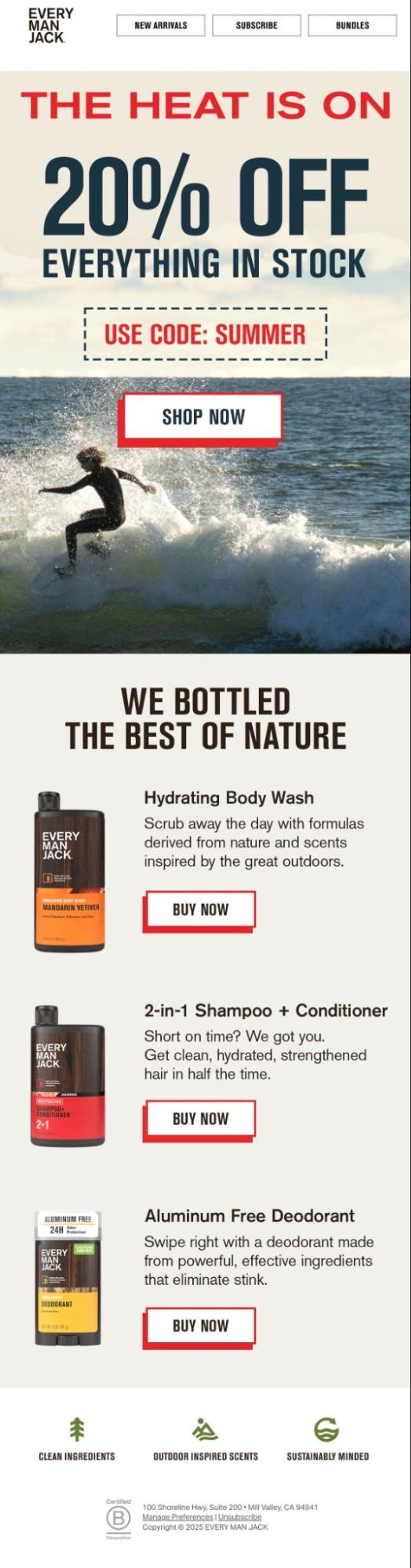
Men’s personal care and grooming company Every Man Jack sent this email promoting a sale during a summer heat wave. The “heat is on” hook is a clever way to make their offer feel targeted and relevant to the moment rather than like a generic sale.
With vibe marketing, your team is no longer limited by headcount or availability. Creativity, not resources, becomes your competitive differentiator.
In the years ahead, brands that use vibe marketing to experiment, join conversations, and personalize communication will quickly outpace those that don’t.
Klaviyo Composer is the B2C CRM’s built-in AI marketing agent that builds complete cross-channel campaigns and flows, sequencing and timing logic, and creative assets through natural-language conversation.
Powered by your data to create and improve high-performing marketing content across channels, Composer is the AI partner that gets you from idea to launch, faster.
Turn your ideas into marketing activations, fast.
Try Composer
Related content