Turn Olo data into direct orders
Generated by Klaviyo AI
The post explains how connecting Olo with Klaviyo lets restaurants use detailed order data to encourage customers to order directly instead of through third-party delivery platforms. It outlines how segmentation, automations, and reporting on order behavior help increase engagement, loyalty, and direct revenue.
- Reduce third-party reliance: Using Olo order data in Klaviyo helps shift repeat customers from high-fee delivery apps to direct ordering channels.
- Behavior-based segmentation: Restaurants can group customers by behaviors—such as lapsed buyers, new third-party app customers, or habitual late-night pizza orders—and tailor messaging accordingly.
- Automations and templates: Klaviyo provides automations and email templates that use Olo data to send personalized, targeted email and SMS campaigns with minimal technical effort.
- Comprehensive customer profiles: The integration syncs two years of historical data and real-time orders, creating or updating profiles with contact details and order activity in one place.
- Actionable revenue insights: Dashboards and reports reveal Olo revenue streams, channel mix, order timing, and top menu items by location to inform marketing and menu decisions.
Between the COVID pandemic and the labor shortage, online ordering has never been more vital to a restaurant’s success. But while third-party delivery platforms like Uber Eats, Grubhub, and Doordash bring in business, they also take a serious bite out of the profits.
Getting repeat customers to order directly through your own website can make a big difference — but to make that happen, you need to leverage the full potential of your customer data. That’s where Klaviyo comes in. To help restaurants survive and thrive, we’ve just made pulling in customer data from Olo — a leading commerce platform for the restaurant industry— a whole lot easier.
Every day, Olo’s platform processes data on millions of orders, but before, there was no way to access it or put it to use. Restaurant operators were stuck paying increasingly high fees to third-party delivery platforms to drive additional orders. With our new Klaviyo-Olo integration, you can now pull that order data into Klaviyo, and use it to better understand your customers and reach them directly through email and SMS.
And don’t stop there: According to data from McKinsey, if you want to activate your customer base, tailoring your messaging to specific customer segments is key. Klaviyo helps you group customers by behavior — like unengaged customers who haven’t placed in order in months, new customers who found you on a third-party delivery app, or customers who order pepperoni pizza at 10 p.m. every Friday night – and then message those groups based on what you know about them, so you can boost engagement and loyalty in the long term.
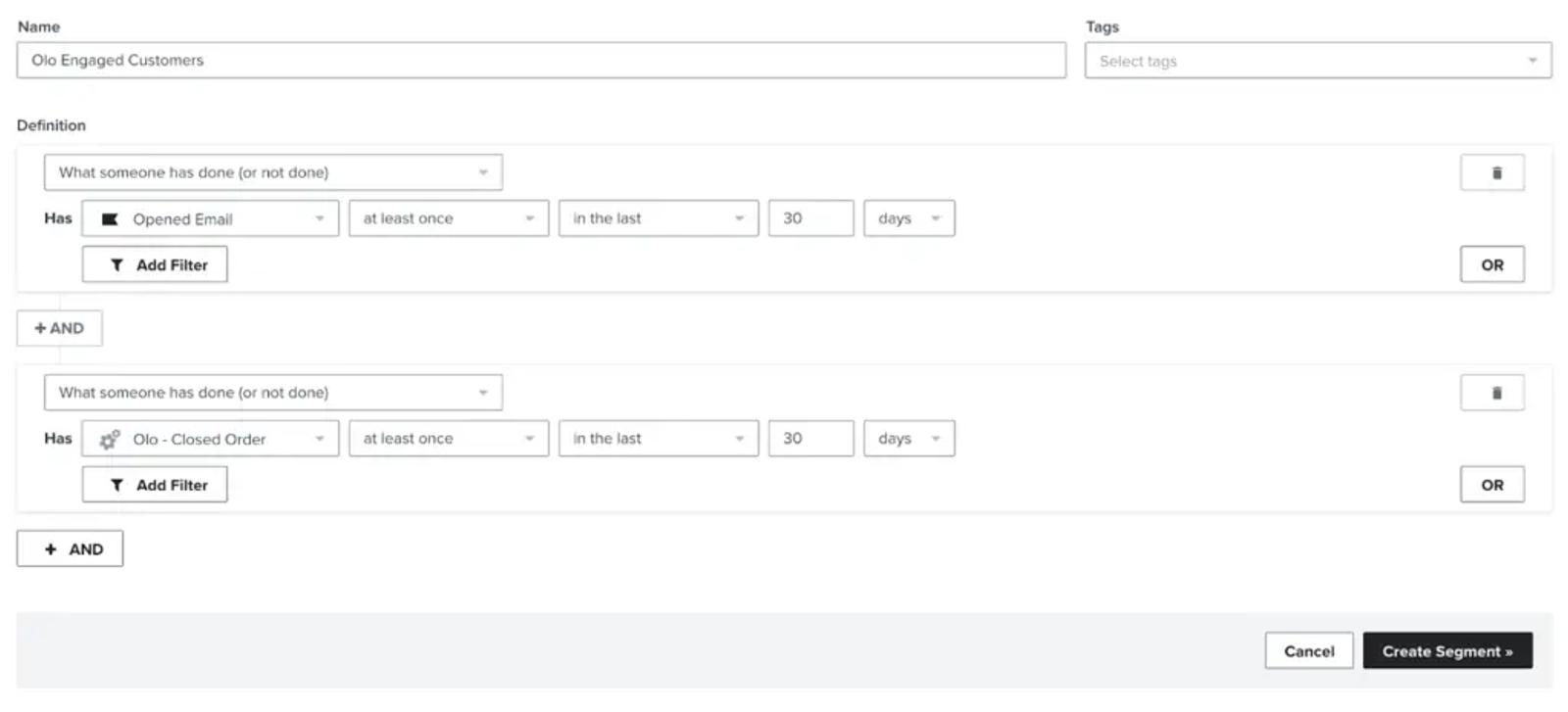
Beyond segmentation, using Olo with Klaviyo gives you access to features like automations and tried-and-true email templates, so you can send those super-personalized, targeted messages to your online customers, building loyalty and boosting those direct orders — even if you don’t have much technical know-how or extra time.
At installation, Klaviyo will automatically pull in your past two years of data, while syncing new customer and order data in real time. You’ll be able to see data on placed orders, canceled orders, adjusted orders, and more, all in one place. Plus, Klaviyo also creates or updates a profile for every Olo customer with their email, first and last name, and phone number.
Want to better understand your Olo revenue stream and purchase behaviors, including the overlap of your online and brick-and-mortar customers? Would it help to have easy-to-read dashboards and reports on when orders are placed, and what platforms they’re coming in from? How about getting a clearer read on your most popular menu items, broken out by specific location, and then build that knowledge into your marketing plan?
To get started, drop us a line at restaurants@klaviyo.com and chat with our restaurants team directly.

Related content