Building Welcome Emails That Convert
Generated by Klaviyo AI
Welcome email series can establish credibility, introduce products, collect subscriber preferences, and encourage purchases. Effective sequences combine concise subject lines, on-brand copy and design, promised offers, clear calls to action, and personalization based on customer data.
- Early engagement: Send emails throughout the period when new subscribers are most likely to purchase.
- Relevant value: Prioritize subscriber benefits through education, product information, useful content, or a compelling offer.
- Clear action: Use prominent CTAs to encourage purchases, quizzes, surveys, product exploration, or mobile messaging sign-ups.
- Customer data: Gather preferences and behavioral signals to personalize future content, offers, and product recommendations.
- Trust foundations: Deliver promised incentives, communicate brand values, and provide accessible support and unsubscribe links.
A welcome email series is your first impression with new subscribers, and it sets the tone for someone’s customer journey with your brand.
Most important, welcome emails drive higher engagement than average flows and campaigns. According to Klaviyo’s 2026 Omnichannel Benchmarks Report, they boast an average click rate of 6.5%, while top-performing welcome emails earn click rates of 13.3% and a revenue per recipient of $13.27.
Welcome emails are also one of your first opportunities to personalize your brand experience, which, according to Klaviyo’s 2025 Future of Consumer Marketing Report, 74% of consumers have now come to expect.
As a customer data-gathering engine, your welcome series is a vital part of your overall CRM strategy. When automated welcome emails are firing from the same place where your brand houses its customer data, personalization at scale becomes automatic, too.
Here, we walk you through the process of creating welcome emails that convert because they’re tailored to the preferences and behaviors of each subscriber.
What is a welcome email series?
A welcome email series is a sequence of automated emails sent to new subscribers after they sign up to join your list. Welcome emails introduce people to your brand after they’ve signaled interest, making them a great opportunity to establish credibility, build trust, introduce products, and gather more information on subscribers.
Alexa Maltzer, vice president of client strategy at Power Digital Marketing, advises brands not to underestimate the conversion power of an effective welcome email series. “Don’t be afraid to be aggressive,” she says.
“We’ve found that most people make a purchase within 10 days of subscribing to a mailing list,” Maltzer explains. “Make sure you have emails sending throughout that 10-day window when people are most likely to purchase.”
During your welcome series period, focus on sending emails that:
- Establish subject matter credibility and authority.
- Introduce your products.
- Gather subscriber preferences.
- Encourage conversion with special offers, coupons, and discount codes.
Why create a welcome email series?
By proactively encouraging new subscribers to take specific actions, such as making a purchase, signing up for text message updates, or engaging with social media channels, your welcome email series helps turn passive subscribers into active, engaged customers.
A strong welcome series makes it easier for your brand to:
- Set clear expectations about the frequency and value of subsequent emails, which establishes trust.
- Gather valuable feedback and customer data to help your brand personalize future content and offers for each subscriber, like segmenting based on lifecycle stage or responding effectively to customer service inquiries.
- Educate new subscribers in your category about products that may require more research before buying.
- See immediate revenue after someone has expressed fresh excitement about your brand.
5 universal components of a great welcome email series
A lot goes into a great welcome email series. Kevin Orbach, CEO of a marketing agency with the same name, sums it up best: “Create a desired action. Nobody wants to get the introduction experience again. It’s critical to think about the customer journey as an event in a series. Include an activity, an engagement opportunity, something, anything, for the customer to continue to interact with.”
Here, we break down the components that create this interaction, from your subject line to an enticing offer you can send to new subscribers:
1. An intriguing subject line
To understand what makes a great email subject line, Klaviyo’s business intelligence team scoured some of the top-performing email subject line examples from our customers. Here’s a rundown of the tactics we found work the best:
- Personalize your subject lines. Using a first name won’t do much for open rates. An offer tailored to acquisition channel, however, just might.
- Keep it clear and brief. Standard subject line length across all business sizes is about 7 words long (including emojis).
- Evoke curiosity. Experiment with teaser-style subject lines that encourage people to open your email just to find out what’s inside.
- Use emojis sparingly. Emojis in subject lines are popular, so you may not be standing out as much as you think. Use emojis to amplify the message, not replace words.
- Use preview text. Preview text is additional text that appears under your subject line. It’s important for providing more context, so don’t waste the real estate. Put some thought into how your preview text expands on your subject line.
2. On-brand email copy
“Great copy” for a welcome series is hard to define. It could mean describing the value of your products in a compelling way, or introducing your brand with language that makes it memorable, or using social proof to build credibility and trust.
But now, with AI, there’s no need to guess what copy that might be effective for your brand. An AI marketing agent built into your CRM can draw on your existing customer data and product catalog to suggest welcome offers you may not have thought of.
Within one prompt conversation, you can describe your goals for your welcome series and an AI agent can build the subject line, preview copy, and body copy, with images from your product catalog.
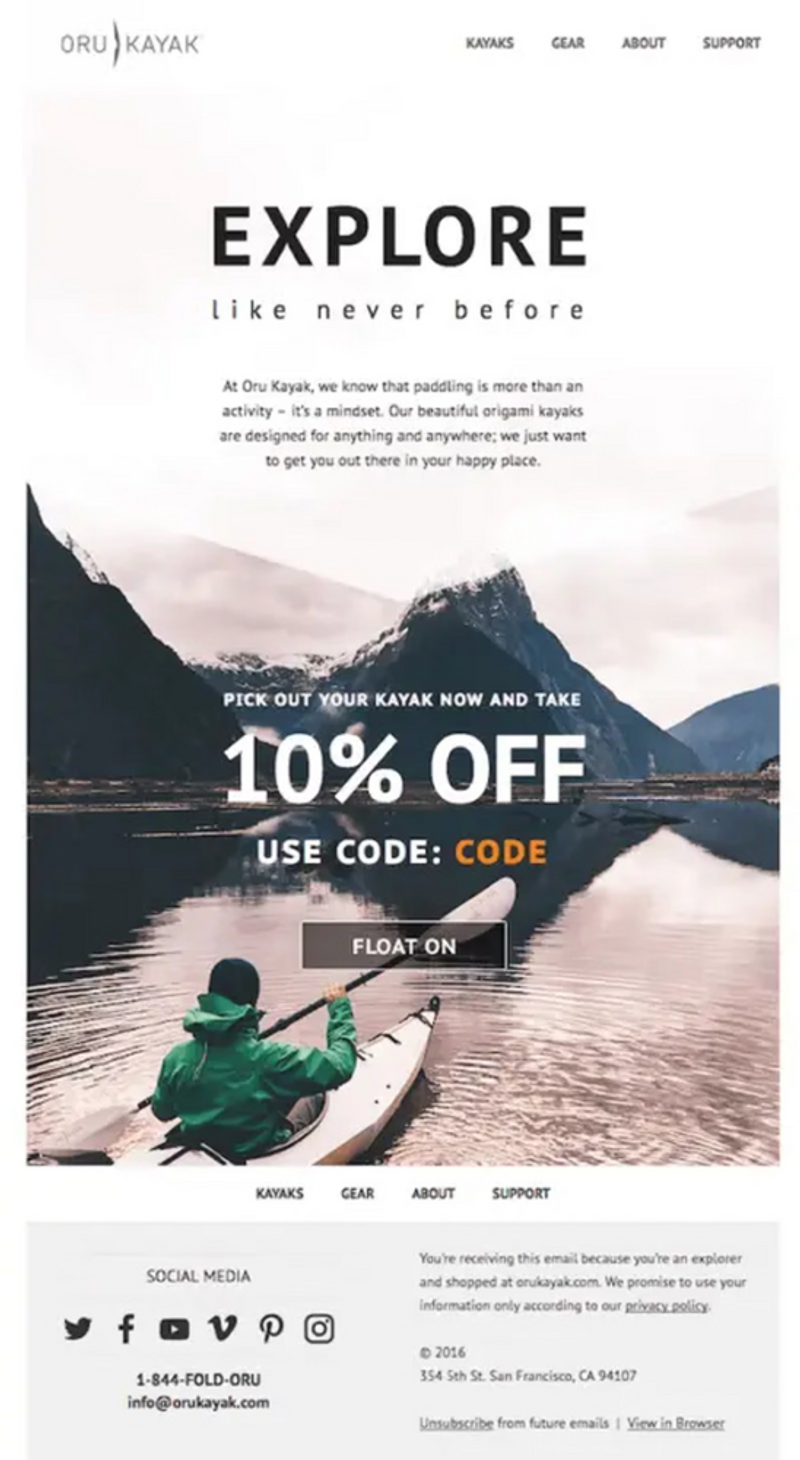
In this welcome email example, see how Oru Kayak’s header copy, “Explore like never before,” is supported by a peaceful product image of their “beautiful origami kayaks designed for anything and anywhere.” The clear CTA, “Float On,” ties it all together to make their value proposition clear.
Welcome email tip: If you want to talk about your brand in your email copy, Morgan Mulloy, strategic account director at Avex Designs, advises balance. “You want to highlight your brand and the ethos behind it,” she says, “but you don’t want to provide a lengthy biography that most won’t engage with. Bite-size information that will speak to your brand will be extremely effective.”
3. Snazzy welcome email design
What constitutes a strong welcome email design depends on your goals. If your goal is to showcase your products and give readers a lot of choice, you need an image-heavy design with beautiful product shots to compel people to click.
If you have the product shots but need help with copy, you can ask an AI marketing agent to create your welcome flow from product images alone. This is especially helpful for image-heavy welcome flows, where you want a solid offer built around your products in action.
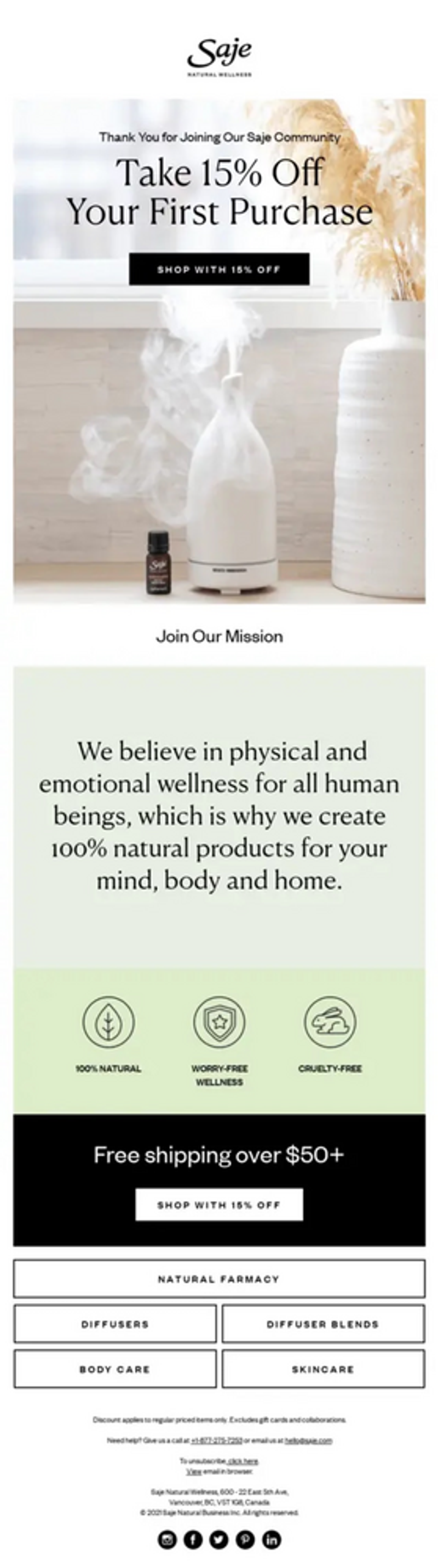
Your email may look something like this one from natural wellness brand Saje:
4. The offer you promised at sign-up
When someone subscribes to your list, they’ve participated in an exchange with your brand. They’ve done their part in handing over their email address, and now it’s time for you to do yours.
Your welcome email is only as compelling as the perks you’re offering the subscriber, whether that means an actual discount or product benefits. If you can answer this key question for the reader, your email is well on its way to generating ROI: “What’s in it for me?”
Consider offering a limited-time promo code or exclusive first-purchase discount to create a sense of urgency, and be strategic in your messaging. Rather than framing it as just a discount, position it as a special thank-you for joining your brand’s community. Combine the offer with product recommendations or a call to action (CTA) to shop now to further drive conversions.
And remember, while special offers in welcome emails convert well, that doesn’t mean you’re bound to the discount. Ben Zettler, founder of Ben Zettler Digital, advises testing your offer first. “The ‘tried and true’ XYZ% off doesn’t have to be the way just because everyone else is doing it. Have you tried testing a gift with purchase? Or dollars off vs. a percentage off?”
If you know what incentive you want to offer as part of your welcome series, you can ask an AI agent to build your welcome flow around that incentive. If you’re already offering an incentive in your welcome series but it’s not converting as much as you’d like, you can ask your AI marketing agent to run an audit on the flow and suggest revenue opportunities you may be missing.
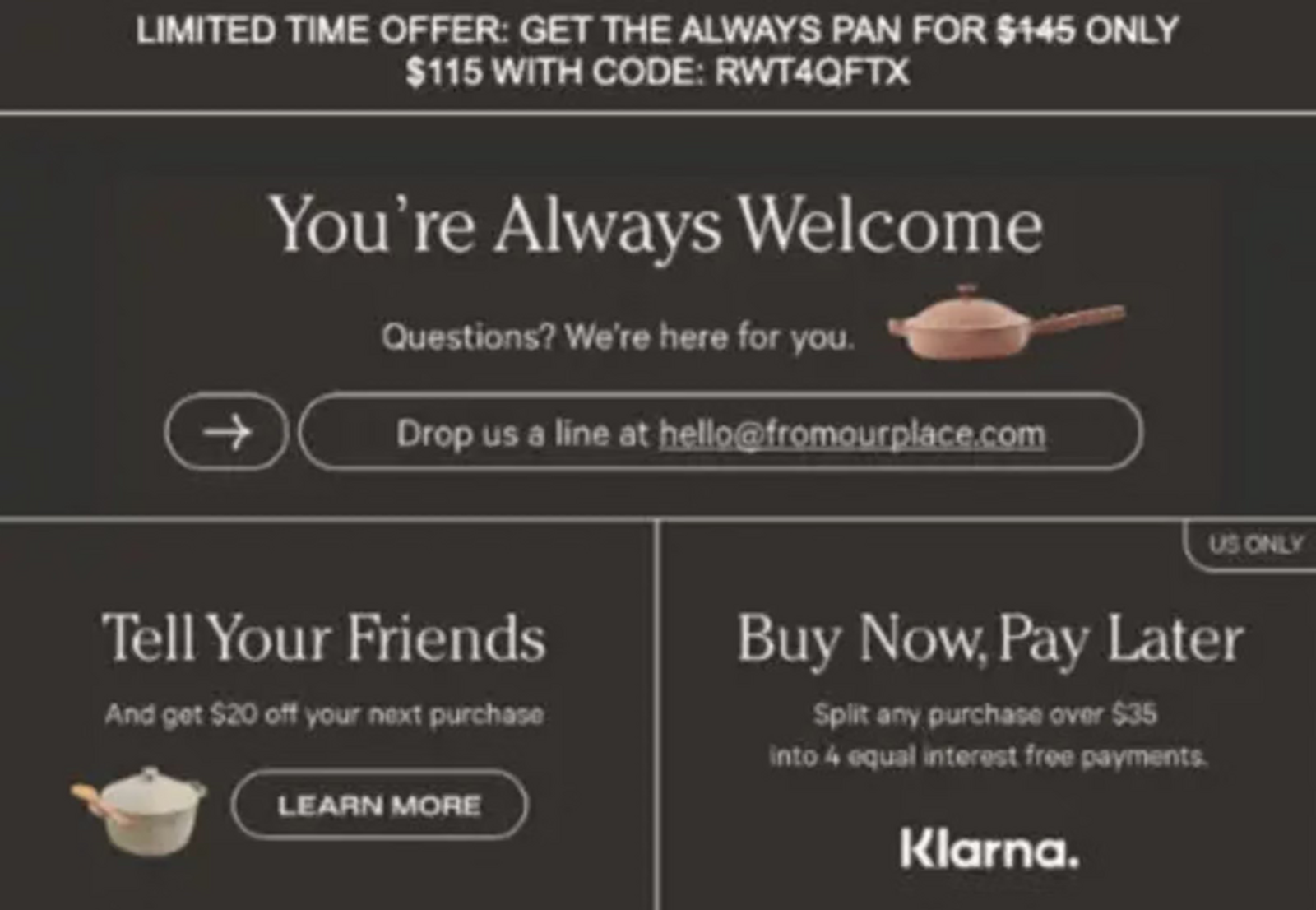
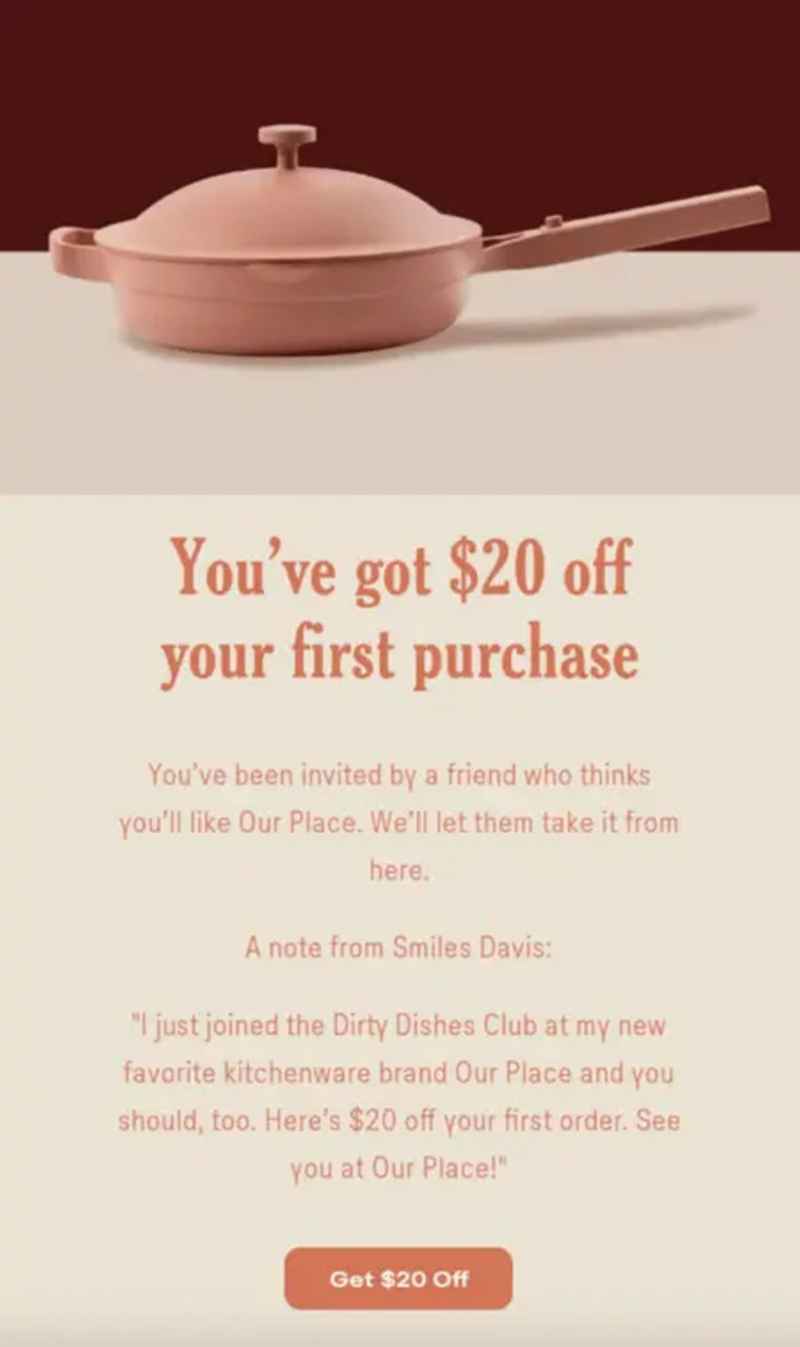
Cookware brand Our Place, for example, built their welcome series around a compelling referral engine. When subscribers tell a friend about the brand, they get $20 off their next purchase, and their recommendation note to that friend acts as social proof in the email the friend receives.
Our Place
5. Convincing CTAs
Some of the best welcome email examples are the ones that inspire action. The action doesn’t need to focus on a purchase, although it can, and, at some point in your welcome series, it should. But an email CTA can also prompt people to:
- Take a quiz.
- Explore your products.
- Participate in a survey.
- Give you their phone number in exchange for something more.
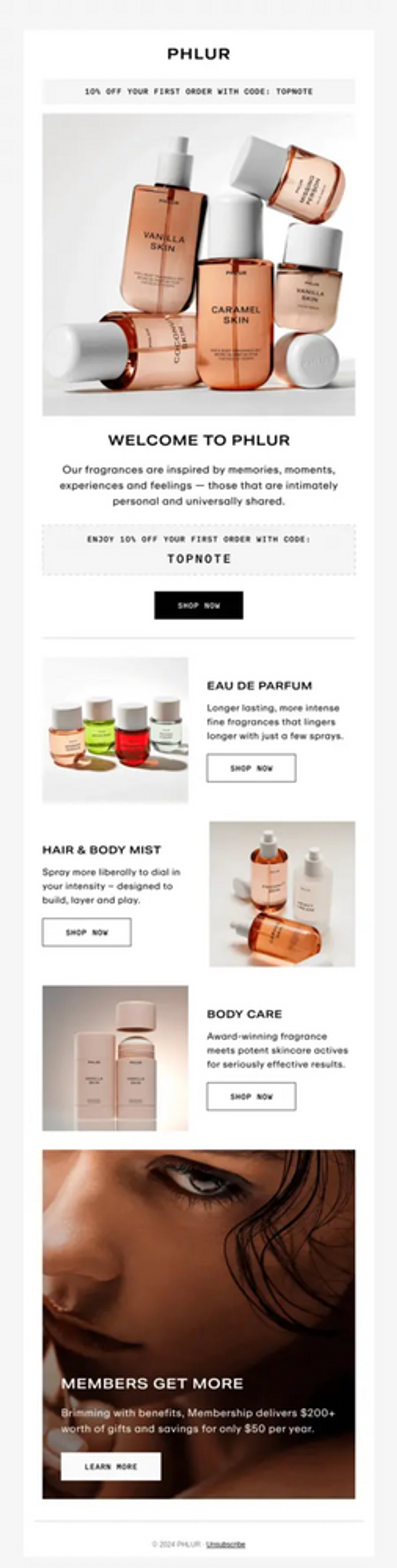
And remember: don’t be afraid to place the CTA front and center. Check out how fragrance brand Phlur places their CTA button above the fold of their welcome email, with copy that’s impossible to ignore: “Shop Now.”
What are the main types of welcome emails?
There’s no universal “right answer” to the type of welcome email series you should send.
If you’re sending one kind of welcome email, you can ask your AI marketing agent for suggestions on whether you should try something else. But if you need some inspiration in the meantime, here are the 4 most common types of welcome emails:
The educational welcome email
A welcome email is an opportunity to educate a captive audience about your products and their value. While many brands use their welcome series as a chance to tell their brand story, proceed with caution. Subscribers are thinking, “What’s in it for me?” Before talking about yourself, you need to answer this question.
Lindsey Arellano, director of email and SMS at Curio, thinks of it like this: “Brands could provide valuable content like exclusive tips or access to a helpful resource. Providing value can help establish the brand as an authority in their field and make subscribers more likely to engage with future emails.”
As part of their welcome email, fabric brand RipStop by the Roll combines education with social proof to reinforce the value of their products. By highlighting different areas of concern for customers, the brand is getting ahead of potential objections with more credibility because some of the education is coming from a real customer.

The offer-centric welcome email
The first rule of welcome email flows is to send any offer you promised in exchange for a sign-up. This is how you build a foundation of trust with subscribers from the start.
If you don’t want to lead with a discount, that’s okay. Your cost economics may not allow for it. But Christopher Maroney-Petitt, co-founder of Ecom Growers, recommends some experimentation with offers for “non-converters” further along in your welcome series, after you’ve already sent educational, tutorial-type emails.
“The best tactic I’ve implemented,” Maroney-Petitt says, “is an upgraded offer somewhere down in the welcome series flow. You do this if someone hasn’t converted already. That upgraded offer can be a better discount, free gift, giveaway entry, etc. If your other emails do a good job on educating, this upgrade will convert.”
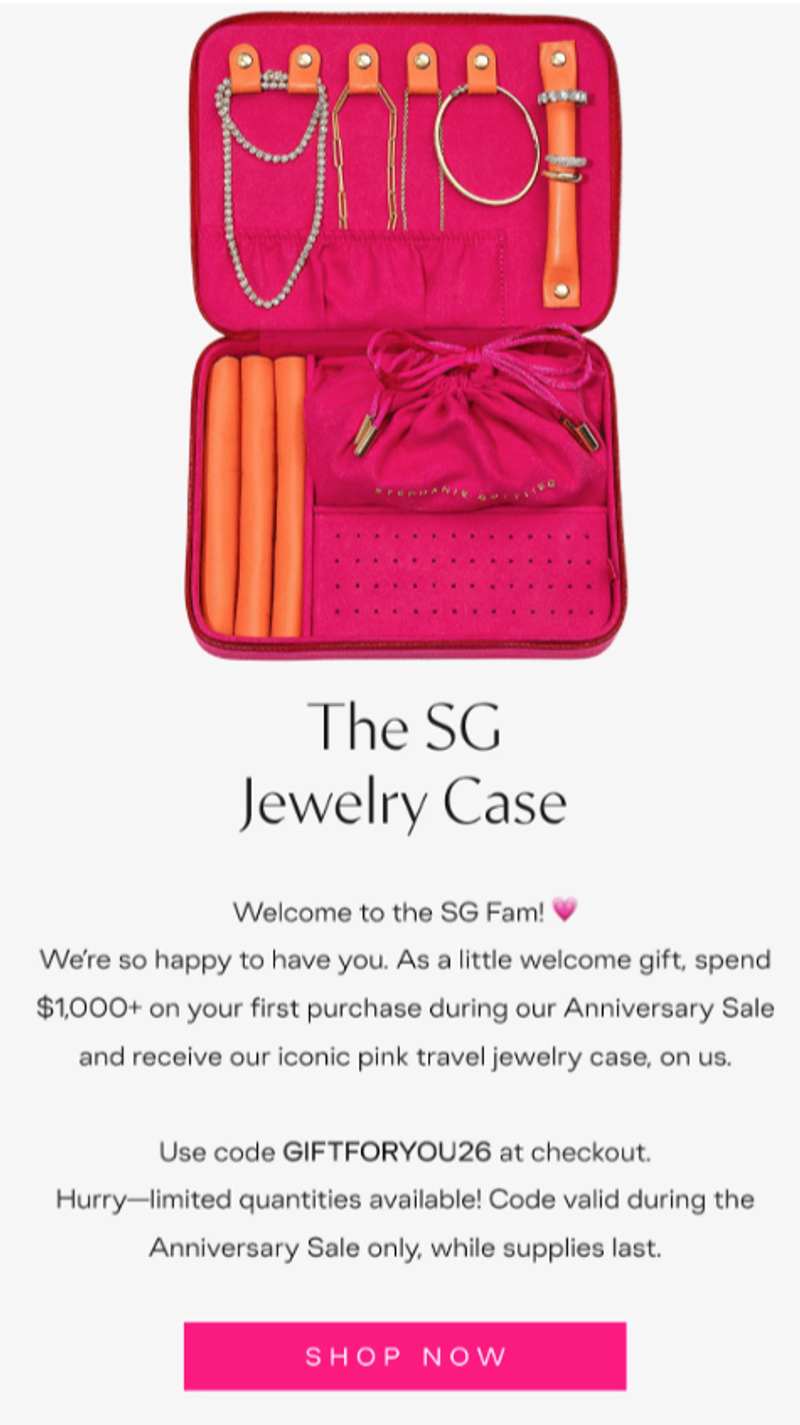
This welcome email from high-end jewelry brand Stephanie Gottlieb knows its audience. With pieces ranging from hundreds of dollars into the thousands, the brand’s customers can easily spend the $1,000 required to get a free jewelry case during their anniversary sale. It’s a premium offer that’s perfect for welcoming customers and boosting average order value (AOV).
The product-focused welcome email
Similar to an educational email, a product-focused email is a great way to make sure your audience knows about your brand value from the start. Your welcome series is your chance to make a good first impression, so focus on your bestsellers or use the opportunity to introduce new products.
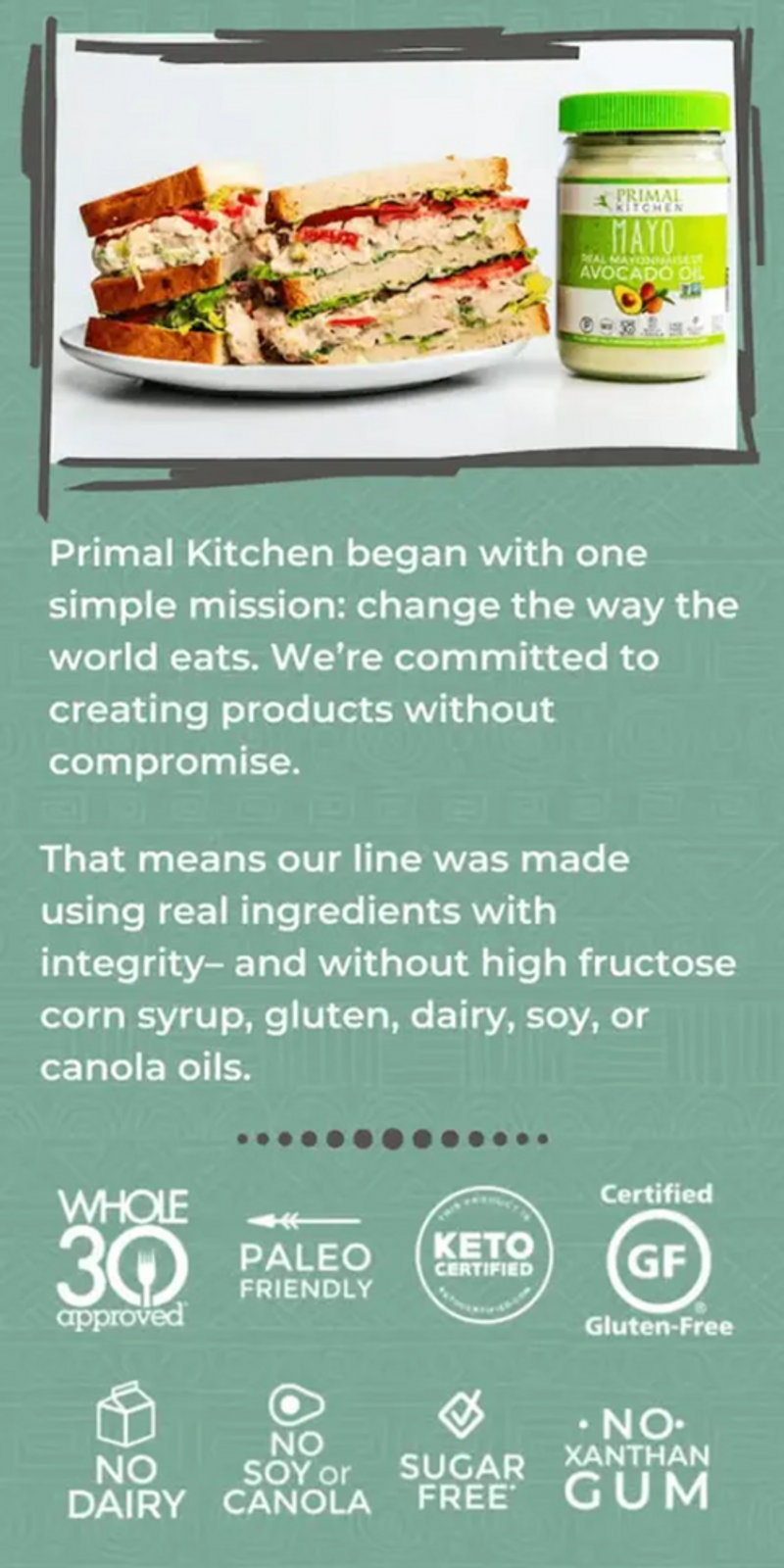
Here, see how olive oil brand Brightland divides their welcome email into sections that discuss the ingredients that make each product stand out:
Brightland
The information-gathering welcome email
You can collect customer data through AI customer agents, self-serve customer hubs, sign-up forms, website tracking, social media integrations, and more, but your welcome series is also ground zero for gathering more of this valuable data from subscribers who are excited about your brand.
You may want your welcome series to include links to interactive elements like quizzes or surveys that ask people about their lifestyle preferences and shopping habits. When you’re handling marketing in the same CRM that houses your customer data, you can easily keep track of all that information in each subscriber’s customer profile.
Or, if you notice someone is interacting with your welcome email series a lot, that may be a signal it’s time to ask for their phone number. The best email automation strategies actually take an omnichannel approach, meaning your email messages are part of an owned marketing ecosystem that includes text messages, push notifications, and WhatsApp.
Near the tail end of your welcome series, consider linking subscribers to an SMS or WhatsApp sign-up form where they can opt in to mobile messaging. If you’re ready to offer an additional incentive for a phone number, you may be surprised to find out how many people prefer to engage over mobile instead of email.
5 welcome email best practices to make a great first impression
Now that you know the content components of a solid welcome email series, it’s also important to understand the best practices to make your welcome email sequence truly effective:
1. Introduce your brand values
Use your first welcome series email to establish your brand values. Consumers are placing greater importance on brand values when deciding where to shop. According to our Future of Consumer Marketing Report, 42% say brand values mattered more in 2025 than they did the year before, indicating a clear upward trend over time.
Values such as a commitment to social and political issues, charitable contributions, carbon-neutral or zero emissions, and support for local businesses all ranked high among survey participants.
This sentiment is even stronger among younger generations: 49% of millennials and 53% of Gen Z prioritize brand values more in 2025. High spenders, defined as those who spend $100 or more on retail and ecommerce purchases, also reflect this trend: over half believe brand values matter more than before.
2. Include support contact details and unsubscribe links
In the US, the CAN-SPAM Act governs commercial email and gives people the right to opt out and unsubscribe from your email communications at any time. This is why all your emails need an obvious unsubscribe link, and it needs to be easy to unsubscribe.
Go the extra mile and include contact information for customer support, too. If you make it easy for a recipient to get answers to their questions by chatting with an AI customer agent that’s trained on your customer data and product catalog, it could mean the difference between a sale and an unsubscribe.
3. Feature bestsellers as a starting point
Your welcome email series is a great opportunity to introduce new subscribers to your bestselling products. Featuring customer favorites or trending items can act as your foundation for gathering the browsing data you need to make more personalized product recommendations later.
Ask your AI marketing agent to use dynamic content blocks that pull information from your online store to showcase current top-rated products and bestsellers in several product categories. When your subscribers click on those products and categories, that’s information that ends up in their customer profile so you can personalize future messages.
4. Highlight social proof
Social proof is one of the most effective ways to build credibility and encourage conversions. Authentic feedback, especially from customers who share similar interests or pain points, can help subscribers situate themselves as customers.
To show new subscribers that other people love your brand, reinforce brand value, and reduce hesitation around making a purchase, consider including the following in your welcome emails:
- Customer reviews
- Testimonials
- Star ratings
- User-generated content (UGC)
If you’re short on social proof, you may want to automate the collection of UGC with your CRM. When existing subscribers tag your brand on social, pull that mention into their customer profile so you can repurpose their UGC for your welcome series and reward them with something special.
5. Time your welcome email series just right
Your first email should go out immediately after someone signs up for your list. After that, we recommend at least a day between emails so that you’re not slamming people’s inboxes.
But timing isn’t just about timing. It’s also about suppression. When your email list starts to include thousands of people, things can get a little messy. To keep unsubscribe rates low and engagement rates up, you’ll need to “protect” people in your welcome series from receiving all the other emails you send, too.
Eric Miller, director of CRM and email at Tinuiti, puts it this way: “For email subscribers who are currently in the welcome series, suppress them from calendar sends. They aren’t ready for your full cadence. They’re still evaluating you and you haven’t earned their trust yet.”
How to automate your welcome emails
Sending a well-timed email series to thousands of recipients isn’t easy. But you don’t need to do it manually. The great thing about a welcome email is that it goes out automatically based on the trigger you set (typically, when a new subscriber signs up for your email list).
That means you just need to set up your welcome email series once. Then, your email automation platform takes care of the rest. Here’s how to make this work for your welcome series:
Use an AI marketing agent to set up your welcome flow
AI marketing agents are especially effective for brands that have collected a fair amount of customer data in their CRM. This is because AI outputs (in this case, your welcome series) are only as good as the real customer data they’re drawing from.
Rather than starting with a welcome series template, you may want to start building your flow with a few business questions as an AI prompt:
- What incentives do my new subscribers engage with the most?
- What incentives might work for new subscribers that I haven’t tried?
- Where do new subscribers drop off the most?
From there, your AI marketing agent can pull from existing customer and brand data to build your flow. If you know a bit more about what you want to achieve with your welcome series, you can give your AI agent a brief and some product shots as a starting point.
Start building your omnichannel strategy with your welcome series
To boost engagement and conversions, you’ll want to combine email with text message marketing. If you can get a phone number as a next step to providing an email address, you can send both a welcome email and a welcome text message, and ask how people prefer to be contacted in the future.
After a while, you won’t need to ask what people prefer at all. With AI-powered channel affinity, you can automatically follow up with subscribers on the channel they’re most likely to engage with next.
Channel affinity ranks each customer’s top channels in order of preference. You can use these insights in segments and flows to increase revenue just by following people’s channel preferences.
Track your welcome email performance
You can’t improve what you don’t measure. As you refine your welcome series over time, watch your email performance like a hawk. That means keeping track of the following metrics:
- Click rate: the percentage of recipients who click on a link within your welcome series
- Conversion rate: the percentage of recipients who take action after they click your welcome series
- Revenue per recipient (RPR): how much money every welcome email series recipient is bringing in
- Deliverability rate: the percentage of welcome series emails that makes it to your recipients’ inboxes
- Unsubscribe rate: the percentage of people who receive your welcome series and then unsubscribe from your list
- List growth rate: the rate at which you’re acquiring new subscribers to your list
- Return on investment (ROI): the financial return from your welcome series compared to the money you’ve spent
With Klaviyo reporting, you can track these metrics at a glance on your dashboard or ask your AI marketing agent performance-related questions to get insights in a conversational format.
Welcome email FAQs
How do I write a good welcome email subject line?
Write a good welcome email subject line by personalizing it, keeping it clear and brief, and evoking a sense of curiosity that encourages people to open your email just to find out what’s inside.
How many emails should be included in a welcome email sequence?
The number of emails in your welcome email sequence depends on the length of your average purchase cycle. If it takes potential customers an average of 20 days to purchase from the moment of discovery, your welcome series should reflect that to avoid losing sales.
What is the business impact of a welcome email?
According to Klaviyo’s 2026 Omnichannel Benchmarks Report, the business impact of a welcome email is, on average, $5.75 in RPR. Welcome emails also earn a high average click rate of 6.5% across all industries.
What are some common mistakes to avoid in a welcome email?
A welcome email sets the stage for your brand’s relationship with new subscribers, so avoiding missteps is crucial. Here are some common mistakes to steer clear of:
- Skipping personalization: Generic greetings like “Dear customer” can make your email feel impersonal. Instead, use first names, reference how they signed up, and if you can, include product recommendations that are tailored to browsing behavior at some point in your sequence.
- Lacking a strong CTA: Your welcome email should guide subscribers toward a next step, whether it’s shopping, following on social, or updating preferences.
- Neglecting mobile optimization: Most people open emails on mobile devices. If your email isn’t mobile friendly, you risk losing engagement.
- Forgetting to include an unsubscribe link: It’s legally required and builds trust. Make it easy for people to manage their subscription preferences.
What are the benefits of a welcome email series?
A welcome email series benefits your brand, your customers, and your sales. Here are some of the immediate benefits:
- Stronger brand connection: A sequence allows you to introduce your brand’s story, values, and bestselling products over time.
- Higher engagement rates: Klaviyo benchmarks show that welcome email series have some of the highest open and conversion rates compared to both other automated flows and email campaigns.
- Better customer segmentation: With multiple touchpoints, you can use your welcome series to gather more customer data and use it to tailor future messaging.
- Increased revenue potential: By offering personalized product recommendations and exclusive discounts, a well-timed welcome series can drive immediate conversions.
Why do marketers send welcome emails in the consideration stage of the marketing funnel?
The welcome email is an important touchpoint in the consideration stage, when subscribers are evaluating your brand but haven’t yet made a purchase. A carefully crafted welcome email series can educate potential customers and remind them of the value of your brand.
Marketers also use welcome emails to speed up time to purchase. A timely discount or new product feature can nudge potential customers toward making a purchase. Even if subscribers don’t convert immediately, keeping your brand top of mind through consistent engagement can lead to conversions down the line when they’re ready to buy.
Connect with more customers and build better relationships with Klaviyo.
Sign up
Related content