Designing effective loyalty programmes
Generated by Klaviyo AI
This article explains what customer loyalty programmes are, why they matter for B2C brands, and how different programme types work. It outlines a step-by-step process for building, promoting, and measuring a loyalty programme, and shows how unified data, AI, and key integrations can make these programmes more personalised and profitable.
- Why loyalty matters: The article shows how loyalty programmes increase LTV, reduce CAC, drive word of mouth, and meet consumer expectations across major B2C verticals.
- Programme types: It compares six common loyalty models—points-based, tiered, paid, partnered, gamified, and VIP—highlighting how each incentivises repeat purchases and advocacy.
- Step-by-step setup: Readers learn how to understand their audience, set goals and metrics, choose a fitting programme structure, promote it with targeted campaigns, and iterate based on performance.
- Role of AI and self-service: The guide describes how agentic AI for marketing and customer service, plus self-service portals, can personalise loyalty experiences and support at scale.
- Tech stack and integrations: It outlines how a B2C CRM like Klaviyo and loyalty platforms such as Smile, LoyaltyLion, and Friendbuy integrate to unify data and automate tailored loyalty communications.
Wouldn’t it be wonderful if people shared our products with their friends, bought from us every month, and raved about us on their socials?
According to Klaviyo’s 2025 Future of Consumer Marketing Report, consumers are only loyal to 1–2 brands. And at the time of the survey, 1 in 4 respondents predicted that in the next 6 months, economic conditions would lead them to look for more discounts.
The report also found that customer feedback and reviews are the most influential factor in first purchase decisions across verticals, while word of mouth is the primary discovery channel for 1 in 5 consumers trying new restaurants and 1 in 8 trying new wellness or personal service brands.
In other words, loyalty matters. A lot.
The most successful B2C brands sell great products and invest in lasting customer relationships. And they’re able to keep up by using a B2C CRM to unify their customer data across marketing, commerce, and customer service.
Unified data means loyalty and rewards programmes can be more effective, automated, personalised, and drive more revenue. With the right retention marketing strategies in place, a loyalty programme becomes a powerful lever for long-term growth.
What is a customer loyalty program?
A customer loyalty programme is a rewards system brands use to encourage repeat purchases and build long-term customer relationships.
Here’s how it typically works: when customers make purchases, they earn points, discounts, or other perks they can redeem later. They might earn points for every dollar they spend, for example, and once they reach a certain number of points, they can claim a discount on their next purchase.
Loyalty programmes are a win-win. You get stronger customer retention rates, and shoppers get discounts, freebies, or insider access.
The business case for loyalty programme marketing
When loyalty programmes work as intended, they increase customer lifetime value (LTV) while lowering customer acquisition cost (CAC).
Acquiring new customers can be 5x more expensive than retaining existing ones. Loyal customers already trust you, so they’re more likely to make repeat purchases, which gives your revenue a nice bump without needing to reach new audiences. They may be more likely to become brand advocates, too, bringing in new customers through word of mouth.
Building strong, long-term relationships with customers helps brands do more than just stand out from the competition and differentiate themselves from others in their category. It also boosts your bottom line: according to Antavo's Global Customer Loyalty Report 2025, the 83% of brands that report a positive return on investment (ROI) from loyalty programmes say their programmes generate 5.2x what they cost.
Finally, people expect brands to offer loyalty programmes. According to our Future of Consumer Marketing Report, consumers participate in brand loyalty programmes at high rates across verticals:
- Ecommerce and retail: 72%
- Wellness and personal services: 47%
- Restaurants: 51%
- Hotels: 49%
That means no matter your B2C industry, loyalty matters to nearly half or more of your audience.
6 popular types of loyalty programmes
The most effective customer loyalty programmes combine convenience and incentives to give people the most value. These are the 6 most popular types of loyalty programmes, with examples of brands using them. Note that they overlap with each other all the time.
1. Points-based loyalty programmes
Points-based loyalty programmes allow customers to accumulate points from purchases and redeem those points for rewards. They’re a low barrier to entry for people who may shop with you out of habit or convenience. Points are sometimes the nudge people need to spend just that little bit more to get an item they want. And if enough people spend that little bit more, you can generate a sizable chunk of revenue to offset CAC.
The downside of points-based loyalty programmes is that they fail to provide the instant gratification that’s essential for keeping customers engaged. Consider taking a hybrid approach and combining this strategy with another loyalty programme type.
Happy V is a subscription-based vaginal, gut, and menopausal health brand. The brand sends 7 loyalty-triggered flows and quarterly campaigns to subscribers reminding them to redeem points.
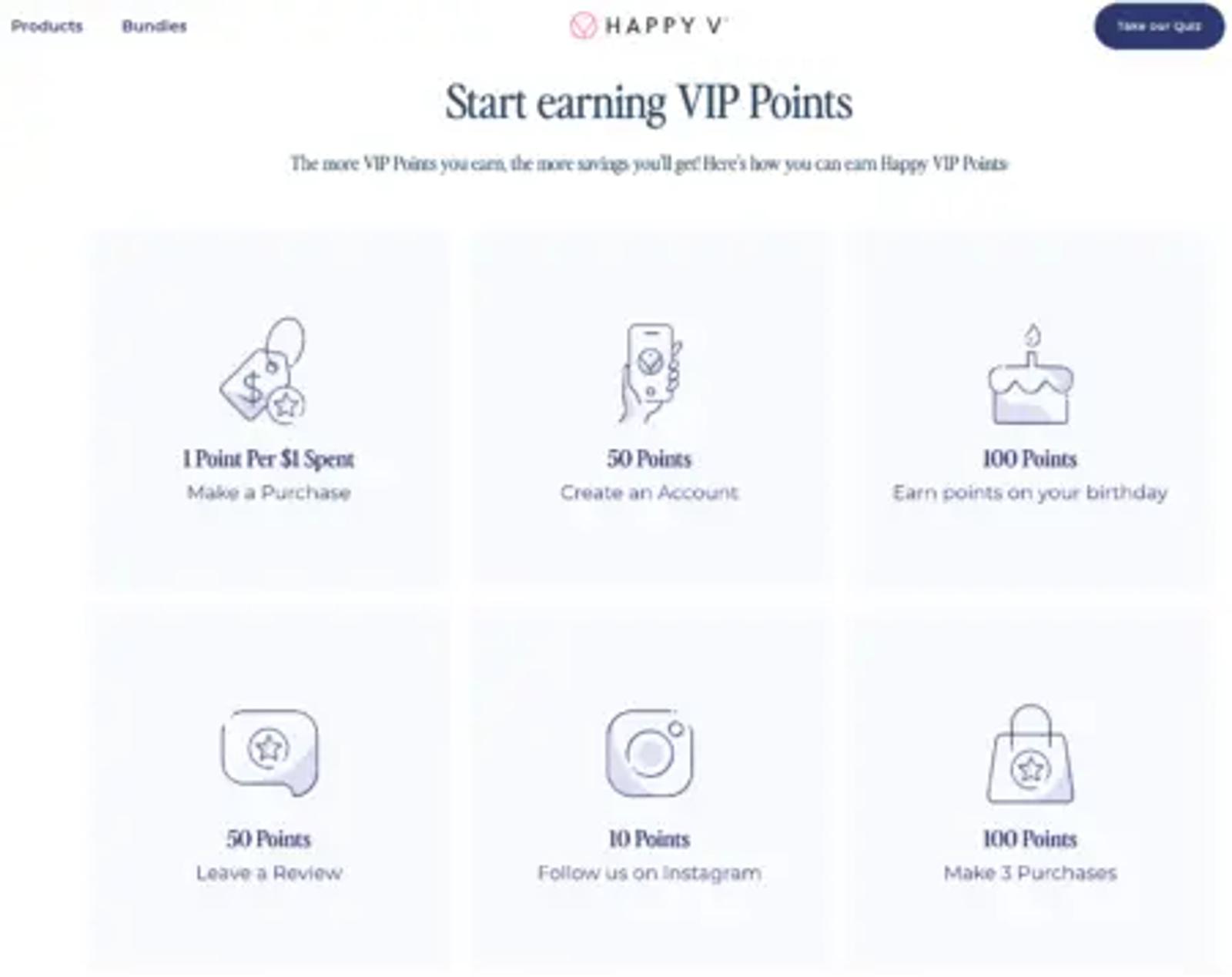
Source: Happy V
2. Tiered loyalty programmes
Tiered loyalty programmes reward customers with different levels of benefits based on behaviour like purchase volume or order history. You’ll be able to tell that your tiered programme is working if customers keep upgrading over time.
Tiered programmes also rely on choice and opportunity to upgrade. One person’s reason to upgrade will be different from another’s, so the more choice available, the better.
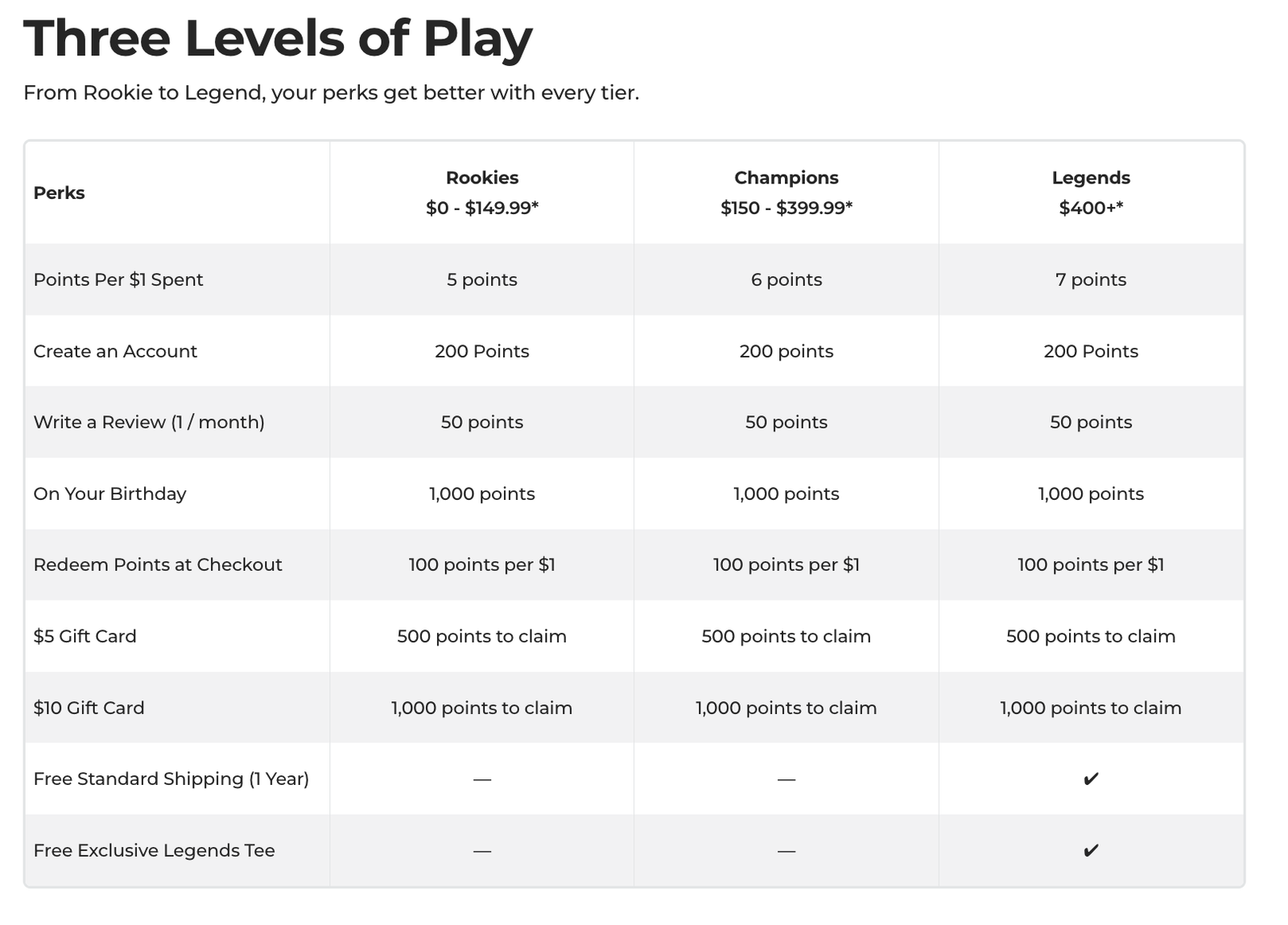
HOMAGE takes a tiered approach to their loyalty programme, with different offerings for rookies, champions, and legends. The vintage, retro-inspired apparel brand sends automatic reminders about loyalty points and progress toward unlocking higher tiers.
3. Paid loyalty programmes
A paid loyalty programme can generate massive amounts of revenue. First, because you’ve achieved the type of brand status that would justify paid membership, and second, because they’re actually highly profitable.
According to the 2026 Global Customer Loyalty Report, 72.0% of customers would shop more with brands that offer point pooling / family accounts..
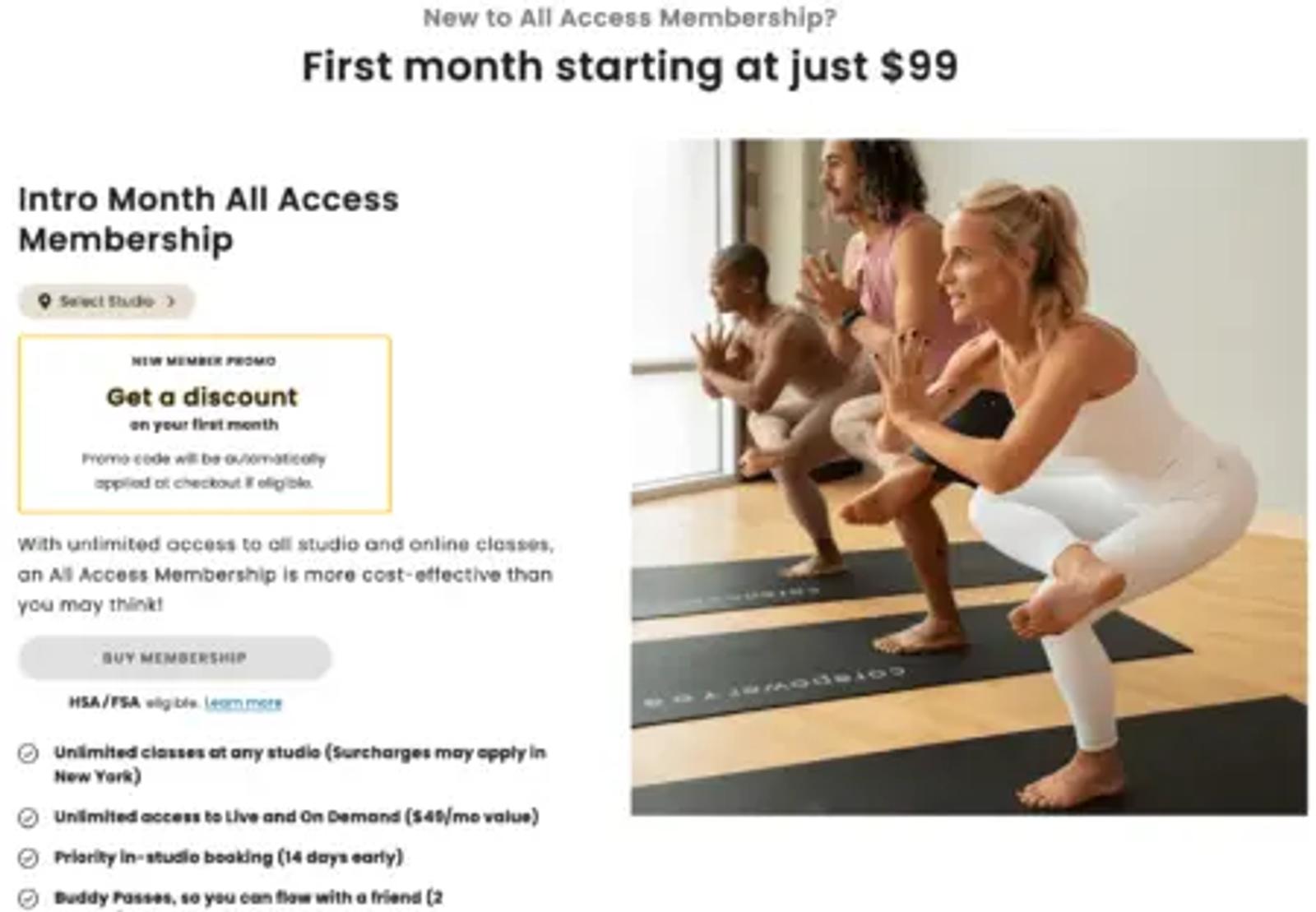
CorePower Yoga, an in-person and virtual yoga studio, offers a paid membership that includes perks like discounts, curated partner offers, and priority booking.
Source: CorePower Yoga
4. Partnered loyalty programmes
Partnered loyalty programmes are born when companies within complementary industries that are not competitors work together to create a loyalty programme. This could look like an airline partnering with a hotel chain, allowing travelers to apply frequent flier miles to their stay, or a coffee shop partnering with a local bookstore to provide discounts on purchases.
Marine Layer, a responsible clothing brand, partnered with Trashie, a recycling and rewards platform, to incentivise customers to send back unwanted items to be repurposed. As a reward for recycling, Marine Layer offers customers $40 in credit with the brand.
5. Gamified loyalty programmes
Gamified loyalty programs incentivise actions by turning them into small games or competitions, then awarding benefits upon successful completion.
To be successful, gamified programmes need to be, well, fun. At the very least, they should focus on a high exchange of value. Customers need to feel like they’re getting something worth it in return.
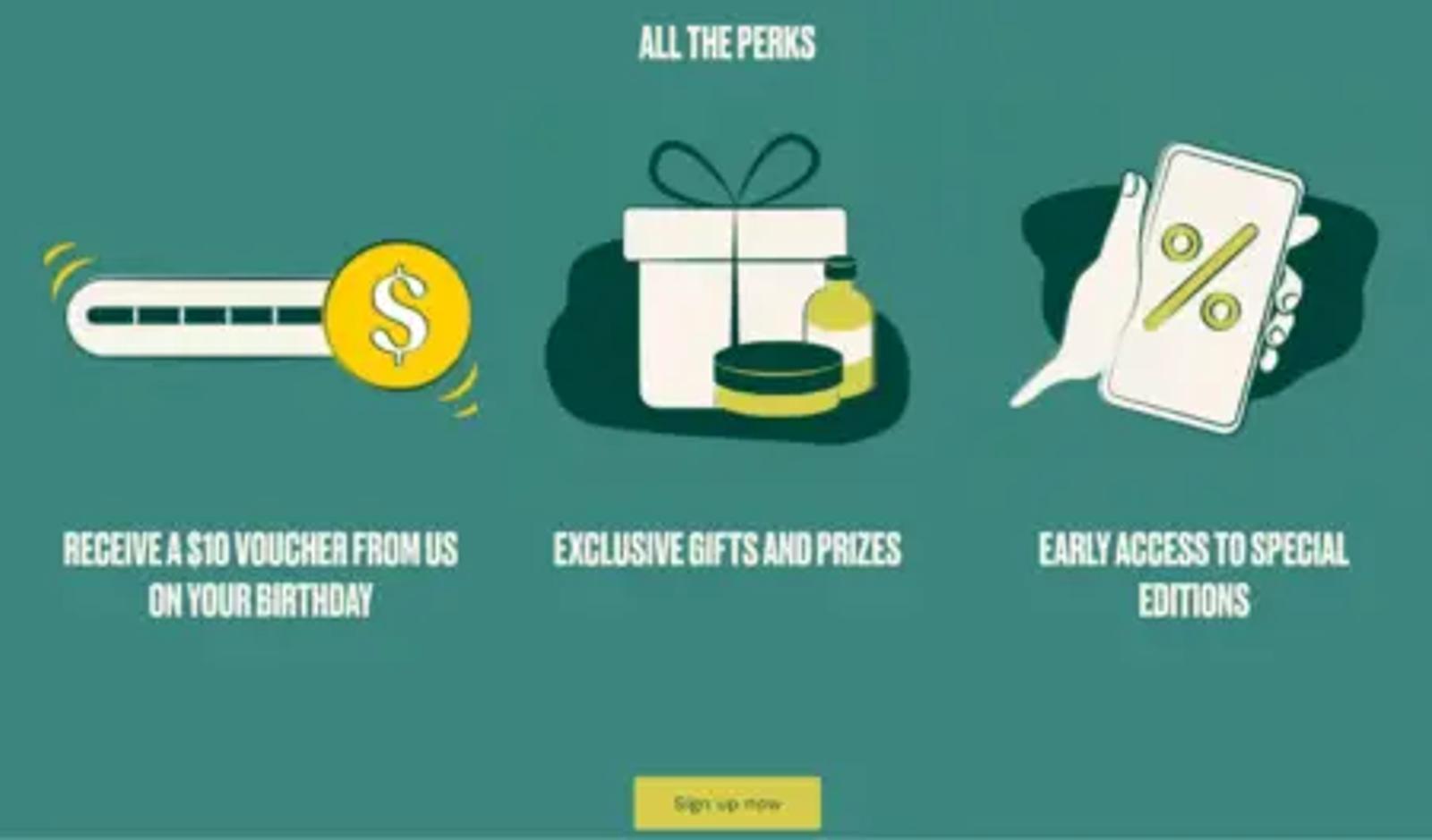
The Body Shop, a skincare brand, has a loyalty programme called the Love Your BodyTM Club. As a part of the programme, members can earn points, get birthday coupons, and win prizes for hitting certain milestones.
Source: The Body Shop
6. VIP loyalty programmes
A VIP loyalty programme rewards a company’s most loyal customers. Choose perks and benefits wisely and make eligibility criteria clear, so customers are incentivised to reach your top tier.
Dollar Shave Club, a subscription shaving brand, runs a points-based loyalty program called Razor Rewards with three tiers: Bronze, Silver, and Gold. Members earn points on every dollar of net purchases, and as customers spend more and reach Gold status, they unlock perks like point bonuses, early access to products, event invites, and other member benefits. Tier status is held for a rolling year and requires requalification to maintain.
How AI and self-service are reshaping loyalty programmes in 2026
AI is changing the way consumers interact with brands. According to Klaviyo’s 2025 AI Shopping Index, 68% of consumers prefer AI for instant answers (vs. 32% human), 56% of consumers prefer AI for personalized recommendations (vs. 44% human), and 48% of consumers prefer AI for post-purchase support (vs. 52% human).
The trend is clear: people want brands to give them the resources they need to solve their own problems. Here are just a few ways your brand can incorporate AI and self-service into your loyalty programme approach in 2026:
- Agentic AI for marketing: Prompt an AI marketing agent to help you launch an early-access VIP campaign or revamp your loyalty flows, and it’ll generate cross-channel copy and visuals, relevant audience segments, and timing and channel recommendations in minutes. Nothing goes live without your approval. After the fact, the AI marketing agent can help you understand what worked, what didn’t, and what to adjust for next time.
- Agentic AI for customer service: Unlike a generic chatbot, an AI customer service agent trained on your product catalog, help docs, and customer data can recognize when a customer is a loyalty programme participant and adjust its support approach, product recommendations, and responses accordingly. You can even set it up to escalate to a human being whenever it’s talking with a VIP.
- Self-service customer portals: A self-service customer experience hub can drive both loyalty and revenue by giving every customer a personalized, on-site experience while they shop. When customers have one place to manage orders, loyalty points, subscriptions, and recommendations, whether they're logged in or not, it helps them feel more connected to your brand.
How to create a brand loyalty programme: a step-by-step guide
If you sell monthly subscriptions for makeup products, your programme will look very different to a brand that sells high-ticket furniture. But there are some key steps that go into any thoughtful programme.
Step 1: Understand your audience and what they care most about from your brand
According to our Future of Consumer Marketing Report, 74% of consumers expected brands to provide more personalised experiences in 2025. The most successful loyalty programmes are customer-driven, and reflect what motivates customers to shop with your brand.
Focus on customers with high average order value (AOV), LTV, and order frequency, then identify trends within these customer segments. These customers have already demonstrated a higher-than-average commitment to your brand, and will most appreciate tailored messages and rewards.
The average customer of Callie’s Hot Little Biscuit, which sells biscuits, mixes, and spreads, makes two purchases a year. When the brand launched progressive flows that incentivise customers to make third and fourth purchases with special offers, it helped power 157.8% YoY growth in revenue from flows.
Step 2: Define your programme goals and metrics to track
Do you want to increase repeat purchases? Encourage referrals? Boost engagement with your brand? Your goal will determine what you offer and how you promote your program. Here’s what to track:
Loyalty metric | Definition | How to calculate |
LTV | The total revenue you can expect from a customer over their entire journey with your brand | Average LTV = average purchase frequency x average purchase price |
ROI | Captures how effective your loyalty program is at driving repeat purchases or larger orders | ROI = (net profit of your loyalty program / total cost) x 100 |
Net promoter score (NPS) | Based on a single-question survey: “On a scale of 0 to 10, how likely are you to recommend [brand] to a friend or colleague?” Scores 9–10 are promoters—customers who are likely to recommend your brand—and scores 0–6 are detractors, who may say negative things about your brand. | NPS score = (percentage of promoters) – (percentage of detractors) |
Customer loyalty index (CLI) | Measures the likelihood that a customer will remain loyal to your brand | CLI = (number of promoters – number of detractors) / total number of respondents |
Brand sentiment | The overall perception buyers have of your brand | Via customer feedback on social media, reviews, email replies, and forums, as sentiment is qualitative rather than quantitative |
Step 3: Choose a loyalty programme structure that aligns with your brand
The structure you choose should directly connect with your brand and goals. For example, the goal of POPFLEXs loyalty programme for activewear shoppers is to reward frequent shoppers and encourage customers to share their experiences . Made In’s Design Trade Program, meanwhile, is designed to support industry professionals, so it incentivises customers to participate in a community.
Simplicity is key. However you manage your loyalty programme, it should be intuitive, quick, and hassle-free for customers to not only join but also track their progress toward a benefit or tier.
“Don’t reinvent the wheel if you don’t need to,” says Tabish Bhimani, principal strategist at Mastrat Digital. “Focus on actions and standards customers are familiar with and build on that.”
Decide how you’ll manage your programme from a technical standpoint, whether members can sign up and manage their rewards in your app, in a self-serve customer portal on your website, or through dedicated customer loyalty programme software.
Loyalty programmes are the perfect channel for personalised offers based on customer behaviour and preferences, so you’ll need to know where your data is coming from and how you’re keeping it updated. Our Future of Consumer Marketing research found that consumers are most likely to share their email, purchase history, phone number, and reviews in exchange for more personalised shopping experiences.
“Use data about the customer’s points, tiers, and VIP status, and echo that back to them in every campaign and abandon cart email—really encourage them to use those points—using universal blocks,” Bhimani says.
Step 4: Promote your loyalty programme with targeted marketing campaigns
Launch your loyalty programme on any platforms where your customers interact with you. Set up automated, segmented, and personalised loyalty marketing flows across email, text messaging, WhatsApp, and mobile push.
Post-launch, continue to remind customers about your programme—especially new shoppers. Let them know they can redeem rewards in post-purchase emails, order confirmations, and product pages, and showcase the benefits of joining. Win-back messages can re-engage lapsed loyalty members who have stopped interacting with your programme.
Step 5: Measure success on a regular basis and gather feedback from your VIPs
Once your loyalty program is up and running, consider how you’ll track impact. Are customers engaging? Is it helping you meet your goals? Be ready to iterate—a great loyalty programme should evolve over time to keep things fresh and exciting.
Track core KPIs, and set up reporting dashboards so it’s easy to keep a pulse on your loyalty programme. Measure ROI at regular intervals so you can assess how the programme is generating incremental revenue for your brand.
Customer loyalty programme platforms and integrations for 2025
To build the loyalty programme of your dreams and better personalise the customer experience, integrate your CRM with your loyalty programme
Klaviyo
Klaviyo B2C CRM’s built-in customer data platform, which unifies customer data from across your tech stack into a single view of each customer, makes it ideal for running loyalty programmes. It has pre-built integrations with loyalty platforms so you can automate personalised reminders about rewards, offers for milestones, and tailored product recommendations based on each customer’s loyalty level.
“Your customer data will help you understand what keeps people coming back.”
With Klaviyo, your customer data lives in the same platform as your email, text message, WhatsApp, and mobile push marketing channels, as well as customer service, reporting and analytics, and agentic AI. That means a customer who redeems points in your mobile app can immediately receive a personalised "thank you" WhatsApp message with a recommendation for their next purchase, then reply to it with a product question your AI customer service agent knows how to answer 24/7. That kind of data-driven, cross-channel responsiveness is what separates programmes that feel automated from those that feel genuinely personal.
Here are some ways Klaviyo can elevate your loyalty programme:
- Tailored messages
- Automated reward reminders
- Targeted promotions for loyal customers
- Post-purchase follow-ups
- Agentic AI for marketing and customer service
Smile
Smile provides customisable and easy-to-use reward programmes that help scaling ecommerce brands transform one-time shoppers into forever customers.
LoyaltyLion
LoyaltyLion is a data-driven loyalty platform that helps ecommerce brands build points-based rewards, referrals, and tiered VIP memberships, with AI-powered features for optimising bonus campaigns and reward redemption.
Friendbuy
Friendbuy is a referral and loyalty platform used by leading ecommerce brands to acquire customers through word-of-mouth and drive retention with personalised rewards. It integrates with Klaviyo to trigger referral and loyalty actions from your customer data.
Customer loyalty programme FAQs
What is customer loyalty?
The standard definition of customer loyalty is consistent brand preference and repeat purchases driven by positive experiences, trust, and customer satisfaction. But the reality is that customer loyalty is a fickle thing that changes with lifestyle, location, and price sensitivity. Life events and income level shift our brand loyalties more than marketing campaigns ever will.
How do brands identify loyal customers?
Look for the outliers. Exact criteria will differ for every brand, but a good place to start is by identifying customers who:
- Consistently spend more than the average shopper per purchase
- Have a lifetime spend with your brand that is above the average LTV
- Return to shop regularly with your brand
What are the 3 Rs of a loyalty programme?
The 3 Rs of a loyalty programme are reward, recognition, and retention. Reward loyal customers with incentives, recognise them with personalised offers, and retain them by fostering long-term customer relationships.
How can brands reward loyal customers?
Reward loyal customers by offering tailored incentives like discounts, early access to new products, or points they can redeem for future purchases. Customers appreciate personalised rewards based on individual preferences and purchase history, and take note of expressions of appreciation like thank-you messages or birthday offers.
What is the difference between customer loyalty and customer retention?
Customer loyalty is an emotional attachment to a brand or retailer, which leads people to choose that brand consistently over others. Customer retention is the actual business strategy behind keeping existing customers engaged and preventing them from switching to a competitor.
How do loyalty programmes use AI in 2026?
B2C marketers can incorporate AI into their loyalty programmes in a variety of ways. An AI marketing agent can generate on-brand VIP campaigns and loyalty flow sequences based on a simple idea or prompt. An AI customer agent can answer customer questions about orders and loyalty points 24/7/365, and recognize VIPs when they reach out for help. And with an AI-powered self-service hub, customers have an on-site destination where they can track orders and loyalty points, initiate returns and exchanges, and chat with an AI agent all in one place, no log-in required.
Ready to explore the CRM made for better customer relationships?
Try KlaviyoRelated content