Convert anonymous traffic ethically
Generated by Klaviyo AI
The post explains how Klaviyo’s Extended ID and enhanced Shopify pixel sync help brands recover data from anonymous visitors while respecting privacy. It details how extended first-party identification and improved pixel-based tracking increase captured events, strengthen flows like abandoned cart, and improve conversion efficiency.
- Privacy-first identification: Extended ID and Shopify pixel sync prioritise first-party, consent-based tracking instead of opaque cross-site tracking or third-party identity graphs.
- Extended tracking window: Extended ID lengthens cookie-based identification from 7 days to up to a year, allowing brands to recognise returning visitors and link their behaviour to existing profiles.
- First-party identity graph: Klaviyo uses a first-party identity graph, including Shopify’s shopify_y cookie and optional custom identifiers, to refresh cookies and maintain continuous shopper profiles.
- Enhanced Shopify pixel sync: Updated Shopify pixel sync, including an improved Added to Cart event and planned checkout-page backfill, connects anonymous activity to profiles once users identify themselves.
- More events, better flows: By capturing 5–10% more events from anonymous browsing, brands can trigger more high-performing flows like abandoned cart, improving conversion rates and recovering lost revenue.
Nearly 98% of a brand’s website traffic is anonymous. And for marketers, it’s getting harder to identify and engage these anonymous visitors. Browsers like Safari are tightening cookie restrictions, limiting the time you can track user data to as little as 7 days.
What does this mean for you? Missed opportunities. Without knowing what products people are browsing, what they’ve added to their cart or what they abandoned, you can’t engage them effectively. You lose out on the chance to nudge them towards conversion, leaving revenue on the table.
Various mechanisms have emerged to help brands work around these restrictions. Unfortunately, many of these approaches violate data privacy principles by tracking users without their knowledge or consent. For example, cross-site tracking monitors users across different domains without their explicit consent. Another practice is to use third-party identity graphs to resolve device data like IP addresses, browser, and OS version into “highly deliverable email addresses”. These methods are problematic because they rely on data collected without user permission, undermining trust and privacy.
A better way to capture data
Klaviyo offers a smarter and more ethical approach with Extended ID and Shopify pixel sync. These tools are designed to help brands track and identify shoppers in a way that respects user privacy and builds trust. By focusing on first-party data and consent-based tracking, Klaviyo empowers marketers to engage shoppers using previously lost data from anonymous browsing, all while maintaining trust and integrity.
With Extended ID and Shopify pixel sync, brands see on average a 5-10% increase in captured events, turning more anonymous activity into actionable insights. This additional data powers high-performing flows such as abandoned cart flows, which drive the highest revenue per recipient (RPR) and deliver exceptional conversion rates. By accurately identifying users and triggering more of these high-performing flows, brands convert a higher percentage of site visitors, recovering previously lost revenue and improving overall marketing efficiency.
Turn anonymous visits into revenue with Extended ID
Klaviyo Extended ID, now generally available, changes the way you can engage with anonymous shoppers by extending cookie tracking from 7 days to a full year. This longer tracking window helps you identify returning users, making it possible to trigger Klaviyo flows and send personalised messages based on the products they’ve viewed or added to their cart.
Previously, if a shopper visited your site and you captured their email or phone number, once their cookie expired, on a return visit you still couldn’t identify who they were. As a result, if they abandoned their cart, you had no way to re-engage or follow up effectively.
Now when a shopper returns to your site, even if their Klaviyo cookie has expired, Extended ID checks for first-party cookies and does a lookup in our first-party identity graph. If there’s a match, Klaviyo will refresh the Klaviyo cookie, associating their activity against their existing profile. This seamless process ensures that the shopper’s behaviour is continuously linked to their identity, so you don’t lose valuable data and can trigger relevant automations based on their actions.
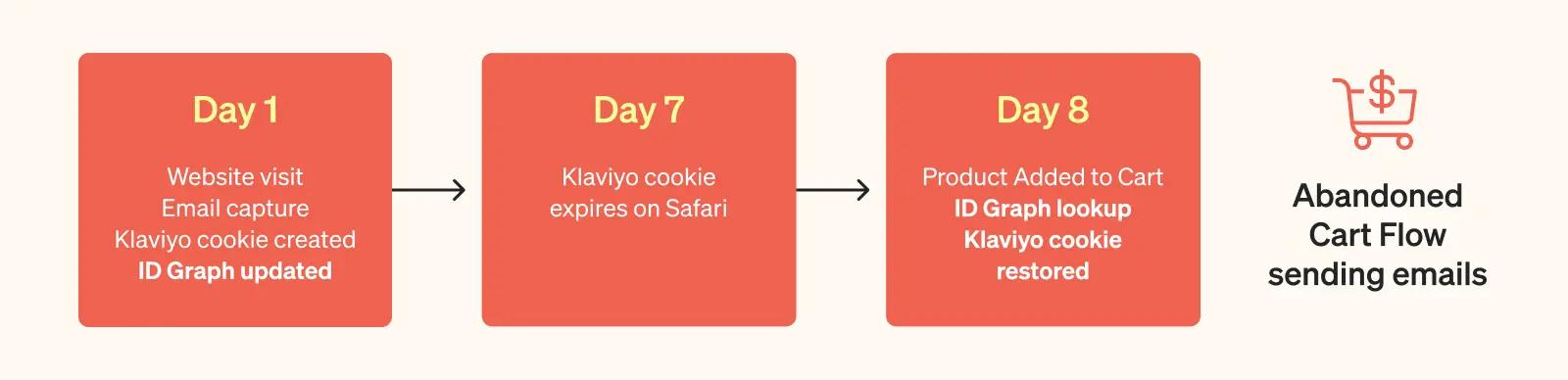
Klaviyo Extended ID works by leveraging a first-party identity graph to map unique, long-lasting identifiers to your Klaviyo profiles. Out-of-the-box, Extended ID supports Shopify’s shopify_y cookie, so if you already use Shopify with Klaviyo, enabling Extended ID is as simple as a few clicks. For added flexibility, you can integrate custom first-party identifiers– or even supply your own tracking or analytics cookie to the identity graph.
This first-party approach is future-proofed in that it is resilient to changes in third-party cookie policies. Klaviyo is working hard to expand out-of-the-box support for additional identifiers, so you can get started quickly with ease.
Learn how to set up extended ID to compliantly capture and track subscriber interactions with your brand for longer.
Capture checkout data with enhanced Shopify pixel sync
While Klaviyo Extended ID focuses on extending cookie lifetime for identifying anonymous users, pixel tracking offers another powerful approach. Pixels are small, invisible images embedded into your website that track user behaviour.
Shopify uses pixels to track shopper activity, including anonymous user behaviour. When Klaviyo onsite tracking for Shopify and anonymous backfill is enabled, once a user identifies themselves such as through a form fill, Klaviyo creates a user profile and connects all past actions to their Klaviyo profile, allowing you to re-engage them with personalised messages based on their browsing behaviour.
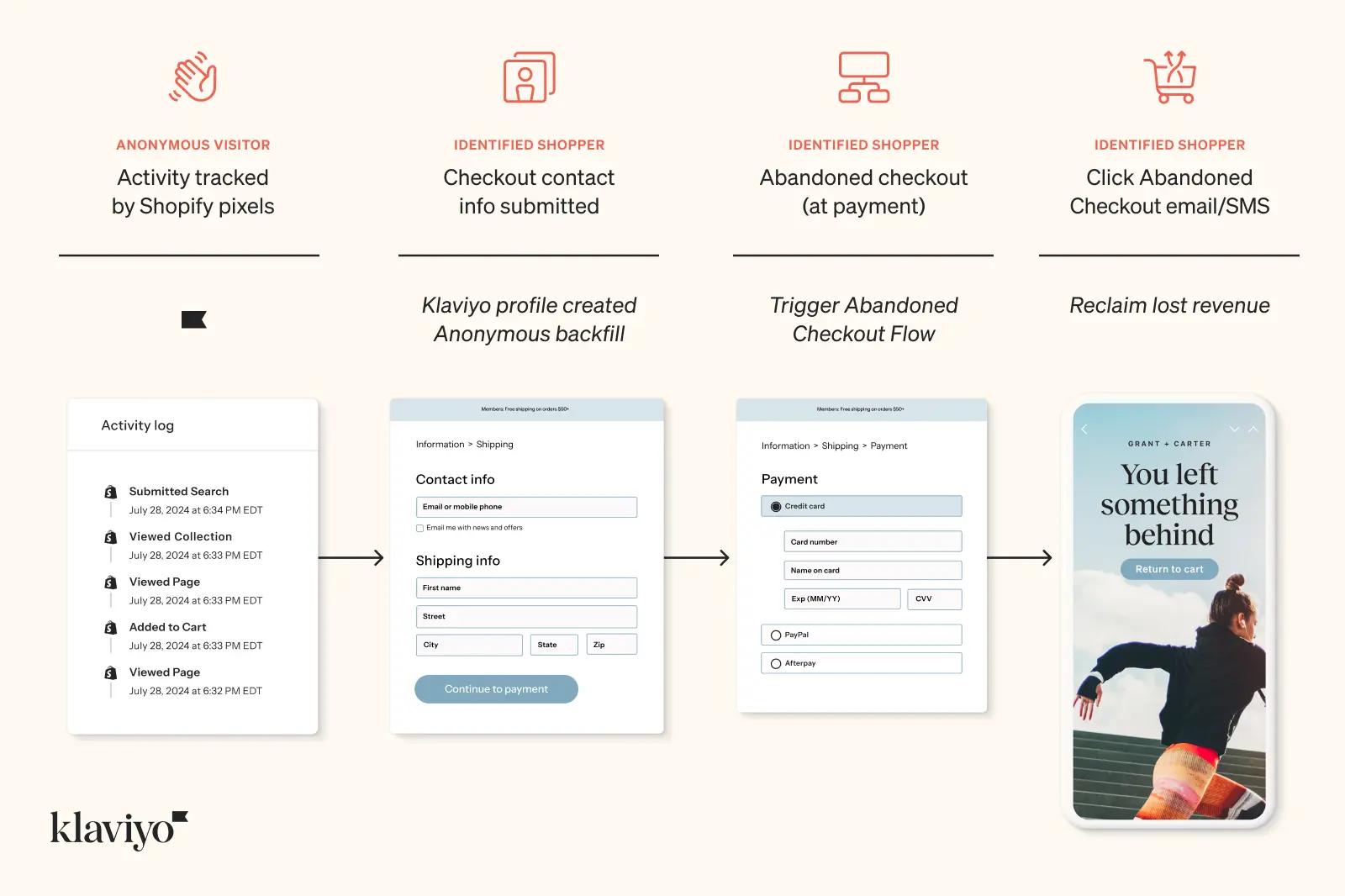
We’re introducing enhancements to Shopify pixel sync, starting with the updated Added to Cart event, now available. In the near future, we will also support the ability to trigger anonymous backfill immediately after a customer enters their contact details on the checkout page, even if they bounce before completing a multi-step checkout. This means that your abandoned cart flows will subsequently trigger if customers do not complete their order within the specified timeframe in your flow. In addition to supporting Shopify pixel, we also have plans to enhance our integrations with other commerce platforms with similar functionality in the future.
Learn how to set up onsite tracking for Shopify and anonymous backfill.
Maximise every conversion opportunity
Every onsite visit is a chance to turn browsers into buyers. With Klaviyo Extended ID and Shopify pixel sync, you can reclaim previously inactionable data from anonymous user activity. This enables you to deliver personalised messages in the moment it matters, and recover revenue that might have been lost.
To learn more about how Klaviyo can help you maximise your customer opportunities, request a personalised demo or get in touch with us.

Related content