This article explains what email marketing software is and outlines five leading platforms, including their core capabilities and limitations. It focuses on ecommerce use cases, data and segmentation depth, and how each tool fits different business sizes and needs, then closes with guidance on choosing the right ESP for an online store.
Role of ESPs: The article defines email marketing software (ESPs), describes common features like templates, integrations, segmentation, analytics, and A/B testing, and explains why owned channels matter in a post-iOS 14.5 landscape.
Klaviyo strengths: Klaviyo is presented as an all-in-one, ecommerce-focused platform with deep data storage, advanced segmentation and personalization, omnichannel automations, and AI tools, but may not suit batch-and-blast or advanced B2B lead-scoring needs.
Enterprise and retailer options: Salesforce Marketing Cloud and Listrak target larger businesses and retailers with extensive features and predictive analytics, but involve higher costs, complex data models, and heavier implementation and development requirements.
SMB-friendly tools: Omnisend and Mailchimp offer lower pricing and user-friendly experiences for ecommerce marketers and beginners, while trading off deeper data access, segmentation sophistication, predictive capabilities, and advanced ecommerce functionality.
Choosing an ESP: The piece emphasizes that each platform has distinct strengths and weaknesses, so ecommerce brands should evaluate them against their own data needs, automation complexity, channel mix, and growth stage when selecting email software.
In an economically challenged, post-iOS 14.5 world, where paid targeting is getting less precise and consumers are getting more selective about which brands they deem worthy of their money, email marketing is one of the best ways to connect with your audience.
Whereas paid and social media rely on complex algorithms that may prevent accurate targeting and make it difficult for you to get your content in front of the right people, email marketing is one of the few channels you own—meaning you have complete control over what you send, when you send it, and who has the opportunity to see it.
Building strong relationships with loyal customers now depends on your ability to communicate with them in an engaging, relevant, and meaningful way.
Your email list and SMS list—as well as how you collect, organize, and use your customer data—are where that work begins.
And your marketing platform is what powers it all. Here, we cover:
Email marketing software refers to the technology used to create and send emails to a specified list of email addresses. Also referred to as an email service provider (ESP), it is used to send anything from monthly email newsletters and email marketing campaigns to shipping confirmation, back-in-stock, and abandoned cart emails.
Email marketing platforms have come a long way since the early days of the internet. As email providers like Gmail have become more advanced, email marketing tools have followed suit, adapting to offer cutting-edge technology that keeps up with the changes.
Most of today’s ESPs come with built-in marketing features such as:
Below is our list of the top 5 email marketing platforms for delivering experiences today’s consumers demand. It’s not a comprehensive list, and of course we’re a little biased. But we’ve tried to select a list of marketing platforms that encompasses a wide range of different business sizes and use cases.
Here, we break down why you might want to use each platform—and why you might not.
1. Klaviyo
Audience: any growing ecommerce business, from solopreneurs to small businesses to large enterprise companies
All-in-one platform for: Email marketingSMS marketingMobile app push notificationsOn-site sign-up forms, including pop-ups, fly-outs, and forms embedded in landing pagesMicro-targeted email and SMS marketing campaignsOmnichannel automations triggered by customer behaviorCollecting, unifying, storing, and activating customer data across your tech stack (reviews, UGC, loyalty, order, shipping, payments, etc)Paid targeting via lookalike segments and retargeting through Google Ads, Facebook and Instagram, and CriteoAI tools like peer benchmarking, content generators, and predictive analytics
On-site sign-up forms, including pop-ups, fly-outs, and forms embedded in landing pages
Micro-targeted email and SMS marketing campaigns
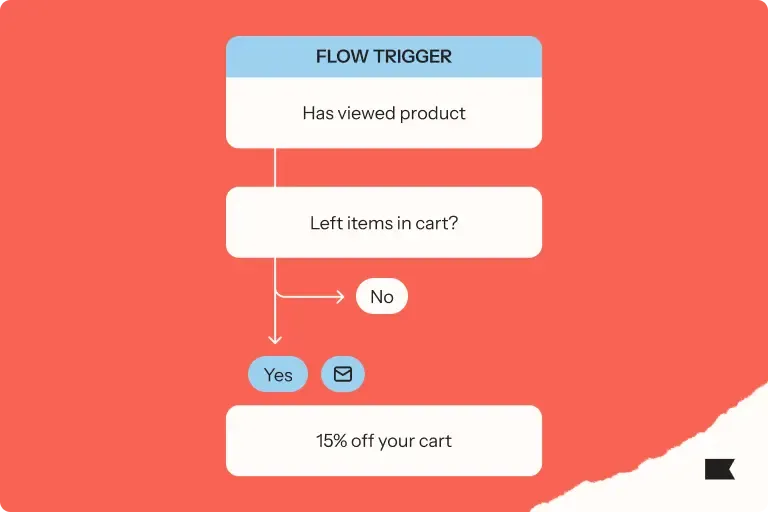
Omnichannel automations triggered by customer behavior
Collecting, unifying, storing, and activating customer data across your tech stack (reviews, UGC, loyalty, order, shipping, payments, etc)
Paid targeting via lookalike segments and retargeting through Google Ads, Facebook and Instagram, and Criteo
AI tools like peer benchmarking, content generators, and predictive analytics
Unaggregated and unfiltered event and profile data, stored indefinitely Real-time behavior tracking, reporting, and modeling stored at the profile levelAbility to ingest and index any data volume and format without pre-configuring data schemaNo data retention limits, with quick access to all real-time and historical dataMassive allowance of data fields and custom properties
Real-time behavior tracking, reporting, and modeling stored at the profile level
Ability to ingest and index any data volume and format without pre-configuring data schema
No data retention limits, with quick access to all real-time and historical data
Massive allowance of data fields and custom properties
Deep ecommerce focus Built-in ecomm functionality, including back-in-stock communications, dynamic coupons, and product recommendationsRevenue reporting goes beyond sends, opens, and clicks to provide detailed ecomm insights such as revenue per campaign/flow, benchmarks vs. peers, funnel data, and moreBuilt-in and customizable templates for abandoned cart emails, follow-up emails, transactional emails, welcome emails, and more—so you can set new automations live in hours, not weeksPeer benchmarking against 100K+ other ecommerce brands
Built-in ecomm functionality, including back-in-stock communications, dynamic coupons, and product recommendations
Revenue reporting goes beyond sends, opens, and clicks to provide detailed ecomm insights such as revenue per campaign/flow, benchmarks vs. peers, funnel data, and more
Built-in and customizable templates for abandoned cart emails, follow-up emails, transactional emails, welcome emails, and more—so you can set new automations live in hours, not weeks
Peer benchmarking against 100K+ other ecommerce brands
Advanced segmentation and personalization functionality Segment on any piece of customer profile or event data from 300+ pre-built integrations, including metadata, all-time historical data, and predictive analyticsUnlimited “AND/OR” statementsPersonalized product feedsDozens of pre-built SMS and email automations based on real-time individual profile actionsPredictive analytics include a spectrum of historic and predictive lifetime value, including returns and churn risk
Segment on any piece of customer profile or event data from 300+ pre-built integrations, including metadata, all-time historical data, and predictive analytics
Unlimited “AND/OR” statements
Personalized product feeds
Dozens of pre-built SMS and email automations based on real-time individual profile actions
Predictive analytics include a spectrum of historic and predictive lifetime value, including returns and churn risk
Advanced features for A/B testing Up to 7 email variationsA/B test multiple elements, including sender name, subject line, send time, content, and CTAWinning variation is auto-selected based on statistical significance
Up to 7 email variations
A/B test multiple elements, including sender name, subject line, send time, content, and CTA
Winning variation is auto-selected based on statistical significance
Ease of use—no developer work required for: Connecting your tech stack with 300+ pre-built integrationsBuilding customer segments, no matter how granularBuilding new automations triggered by customer behaviorBuilding the automation trigger, branches within the automation, or personalized contentPersonalizing email and SMS content
Connecting your tech stack with 300+ pre-built integrations
Building customer segments, no matter how granular
Building new automations triggered by customer behavior
Building the automation trigger, branches within the automation, or personalized content
Personalizing email and SMS content
Why you might not want to use Klaviyo
Your email marketing strategy relies on the old-school batch-and-blast method, rather than list segmentation and personalization.
You need an email marketing provider that can handle advanced B2B use cases, such as lead scoring.
Every feature and use case is possible, as long as you’re willing to pay for it—both financially but also in terms of marketer, developer, and system integrator lift
Other Salesforce softwares, such as Salesforce Einstein AI, are already a crucial part of your tech stack
Professional in-house services available for an additional cost
Global enterprise features Multi-language and multi-currency functionalityTemplate translationAdvanced HTML tools
Multi-language and multi-currency functionality
Template translation
Advanced HTML tools
Advanced AI capabilities AI-recommended next best action for each customerAI insights from dataAI segmentation
AI-recommended next best action for each customer
AI insights from data
AI segmentation
Why you might not want to use Salesforce Marketing Cloud
High cost for implementation and maintenance
Requires heavy developmental support to: Maintain integrationsCreate segments (must have knowledge of SQL)Build common ecommerce flows, such as abandoned cart or back-in-stock
Maintain integrations
Create segments (must have knowledge of SQL)
Build common ecommerce flows, such as abandoned cart or back-in-stock
Limited data model Need to define every event in advance and configure every attribute of the event in the user interfaceData is not unified but rather stored in separate data extensionsRequires separate Salesforce products, CDP and Genie, in order to use real-time data for triggered messages
Need to define every event in advance and configure every attribute of the event in the user interface
Data is not unified but rather stored in separate data extensions
Requires separate Salesforce products, CDP and Genie, in order to use real-time data for triggered messages
Limited integrations, even with other Salesforce products Salesforce owns software for every use case, but all are built separately and must be integrated with Salesforce Marketing Cloud
Salesforce owns software for every use case, but all are built separately and must be integrated with Salesforce Marketing Cloud
If you’re interested in learning more about how to get the most out of Salesforce for your next campaign, read more about the 4 Salesforce email marketing plug-ins.
Your digital marketing strategy requires: Global SMSWeb push notificationsWheel of fortune-style forms
Global SMS
Web push notifications
Wheel of fortune-style forms
Low pricing
Built-in, guided prompts throughout the platform
Why you might not want to use Omnisend
Minimal onboarding and customer support
Limited data access No access to nested event data, beyond variant details like brand and colorLimited pre-built ecommerce data integrations (around 70)No storage for data older than 18 months
No access to nested event data, beyond variant details like brand and color
Limited pre-built ecommerce data integrations (around 70)
No storage for data older than 18 months
Limited segmentation functionality Segmentation is limited to 3 categoriesNo predictive capabilities
Segmentation is limited to 3 categories
No predictive capabilities
A/B testing is limited to subject line and sender name
GXP identity graph: identity resolution for anonymous traffic and cross-device tracking (note that due to data privacy changes from Apple, Google, and government regulations, the long-term viability of this product is unclear)
Professional in-house services available for an additional cost
Listrak claims their proprietary MTA infrastructure translates to higher email deliverability rates
You need one platform for email, SMS, and mobile app push notifications
Limited ecommerce functionality Integrations with ecommerce platforms lack depthLimited pre-built ecommerce data integrations (around 60)Real-time data is lacking
Integrations with ecommerce platforms lack depth
Limited pre-built ecommerce data integrations (around 60)
Real-time data is lacking
Restrictive data model Data is not unified between email and SMS productsPre-defined, inflexible order schema requires data mappingRequires list identification before gathering event data from customersAPIs only give limited access to product’s surface area
Data is not unified between email and SMS products
Pre-defined, inflexible order schema requires data mapping
Requires list identification before gathering event data from customers
APIs only give limited access to product’s surface area
Many of the following need to be built from scratch: IntegrationsTemplatesAutomationsReports
Integrations
Templates
Automations
Reports
Listrak’s team must set up every new automation—and they charge for each one
5. Mailchimp
Year launched: 2001
Target audience: entrepreneurs, beginners, and new brands
Limited ecommerce functionality Revenue reporting only contains surface-level data like sends, opens, and clicksBack-in-stock communications and coupons are handled through third parties
Revenue reporting only contains surface-level data like sends, opens, and clicks
Back-in-stock communications and coupons are handled through third parties
Limited data model Limits on data retention, including the ability to store no more than 80 custom propertiesNo real-time behavior tracking, and limited nested event tracking (only offers surface-level data like product/order info and price vs. nested event data like categories, coupons, variants, email tags, etc.)
Limits on data retention, including the ability to store no more than 80 custom properties
No real-time behavior tracking, and limited nested event tracking (only offers surface-level data like product/order info and price vs. nested event data like categories, coupons, variants, email tags, etc.)
Limited segmentation and personalization functionality Segments are limited to 5 total predefined metrics, rather than making all customer data available for segmentationSegmentation is list-based rather than profile-based, meaning Mailchimp counts the number of subscribers that appear on multiple contact lists as two separate contactsProduct feeds are basic and can’t pull specific categories or collectionsMinimal predictive analytics for future purchases and lifetime value
Segments are limited to 5 total predefined metrics, rather than making all customer data available for segmentation
Segmentation is list-based rather than profile-based, meaning Mailchimp counts the number of subscribers that appear on multiple contact lists as two separate contacts
Product feeds are basic and can’t pull specific categories or collections
Minimal predictive analytics for future purchases and lifetime value
A/B testing is limited to 3 email variations
Additional email marketing solutions for your online store
Other email marketing providers that didn’t make our list include:
How to choose the best email marketing software for your ecommerce store
Email marketing trends have changed a lot over the last decade and software needs to keep up. But just like your business isn’t the same as anyone else’s, not all ESPs are created equal—and not all will serve the needs of your unique businesses equally, either.
Keep in mind that each ecommerce email marketing platform has its own strengths and weaknesses. Selecting the one that’s best for your brand is a daunting process, and a lot of it comes down to asking the right questions.
Need help moving things in the right direction? Check out Klaviyo’s free RFP template for 122 questions to ask of each ESP vendor you’re considering—even if you don’t end up running an RFP, the questions will still be useful as you narrow down your options.
Best email marketing software FAQS
How does the email marketing software you choose affect automation workflows?
The email marketing software you choose can have a significant impact on the effectiveness and flexibility of your automation workflows. Different email marketing automation tools offer varying levels of automation features and capabilities that can influence how you design and manage your workflows.
How does the email marketing software you choose affect click-through rates?
The choice of email marketing software can indirectly impact open rates and CTRs by influencing several factors that can affect the overall effectiveness of your email marketing efforts. While the software itself does not directly determine CTRs, it can provide features and functionalities that can optimize customer journeys and contribute to higher CTRs. Here are some email marketing features that can impact CTR:
Email design and templates
Personalization and segmentation
A/B testing
Tracking, advanced reporting, and analytics
Does email marketing software help with customer relationship management?
Email marketing software can play a role in customer relationship management (CRM) by helping business owners manage and nurture customer relationships through targeted and personalized email campaigns. While email marketing software is not a dedicated CRM system, it often provides integration capabilities with CRM platforms or includes basic CRM functionalities within its features.
Learn why Klaviyo is the top email software provider on this list.
Jax Connelly brings 15 years of editorial experience to their role as lead editor at Klaviyo. They started their career doing SEO at a small digital ad agency and spent most of their twenties managing a financial magazine for a trade association based in Washington, DC. Most recently, they studied and taught writing at Columbia College Chicago during the peak years of the pandemic. Outside of their day job, Jax is an award-winning creative writer who has received 4 Notables in the Best American Essays series, honors from Red Hen Press and AWP, and residencies from the Ragdale Foundation and VCCA. Jax lives in Chicago.
Learn how to write email subject lines that increase open rates. Get real email subject line examples and expert tips to optimize your email campaigns.
# The 5 top email marketing platforms—and why they might be right for your business

In an economically challenged, post-iOS 14.5 world, where paid targeting is getting less precise and consumers are getting more selective about which brands they deem worthy of their money, email marketing is one of the best ways to connect with your audience.

Whereas paid and social media rely on complex algorithms that may prevent accurate targeting and make it difficult for you to get your content in front of the right people, email marketing is one of the few channels you own—meaning you have complete control over what you send, when you send it, and who has the opportunity to see it.

Building strong relationships with loyal customers now depends on your ability to communicate with them in an engaging, relevant, and meaningful way.

Your [email list](https://www.klaviyo.com/blog/email-list-building-strategies) and SMS list—as well as how you collect, organize, and use your customer data—are where that work begins.

And your marketing platform is what powers it all. Here, we cover:

1. [What is an email marketing service provider?](#what-is-an-email-marketing-service-provider)
2. [The 5 best email marketing platforms](#the-5-best-email-marketing-platforms)
3. [Additional email marketing solutions for your online store](#additional-email-marketing-solutions-for-your-online-store)
4. [How to choose the best email marketing software for your ecommerce store](#how-to-choose-the-best-email-marketing-software-for-your-ecommerce-store)

## What is email marketing software?

Email marketing software refers to the technology used to create and send emails to a specified list of email addresses. Also referred to as an email service provider (ESP), it is used to send anything from monthly email newsletters and email marketing campaigns to [shipping confirmation](https://www.klaviyo.com/blog/tips-better-shipping-confirmation-emails), back-in-stock, and abandoned cart emails.

Email marketing platforms have come a long way since the early days of the internet. As email providers like Gmail have become more advanced, email marketing tools have followed suit, adapting to offer cutting-edge technology that keeps up with the changes.

Most of today’s ESPs come with built-in marketing features such as:

- Email templates
- Integrations with third-party tech solutions
- Audience segmentation and personalization tools
- Reporting and analytics dashboards
- [A/B testing](https://www.klaviyo.com/blog/ab-testing-email)

## The 5 best email marketing platforms

Below is our list of the top 5 email marketing platforms for delivering experiences today’s consumers demand. It’s not a comprehensive list, and of course we’re a little biased. But we’ve tried to select a list of marketing platforms that encompasses a wide range of different business sizes and use cases.

Here, we break down why you might want to use each platform—and why you might not.

### 1. Klaviyo

**Audience: **any growing ecommerce business, from solopreneurs to small businesses to large enterprise companies

**Year launched: **2012

**Why you might want to use [Klaviyo](http://www.klaviyo.com)**

- All-in-one platform for:
Email marketing[SMS marketing](https://www.klaviyo.com/blog/what-is-sms-marketing)Mobile app push notificationsOn-site sign-up forms, including pop-ups, fly-outs, and forms embedded in landing pagesMicro-targeted email and SMS marketing campaignsOmnichannel automations triggered by customer behaviorCollecting, unifying, storing, and activating customer data across your tech stack (reviews, UGC, loyalty, order, shipping, payments, etc)Paid targeting via lookalike segments and [retargeting](https://www.klaviyo.com/blog/what-is-retargeting) through Google Ads, Facebook and Instagram, and CriteoAI tools like peer benchmarking, content generators, and predictive analytics
   - Email marketing
   - [SMS marketing](https://www.klaviyo.com/blog/what-is-sms-marketing)
   - Mobile app push notifications
   - On-site sign-up forms, including pop-ups, fly-outs, and forms embedded in landing pages
   - Micro-targeted email and SMS marketing campaigns
   - Omnichannel automations triggered by customer behavior
   - Collecting, unifying, storing, and activating customer data across your tech stack (reviews, UGC, loyalty, order, shipping, payments, etc)
   - Paid targeting via lookalike segments and [retargeting](https://www.klaviyo.com/blog/what-is-retargeting) through Google Ads, Facebook and Instagram, and Criteo
   - AI tools like peer benchmarking, content generators, and predictive analytics
- Unaggregated and unfiltered event and profile data, stored indefinitely
Real-time behavior tracking, reporting, and modeling stored at the profile levelAbility to ingest and index any data volume and format without pre-configuring data schemaNo data retention limits, with quick access to all real-time and historical dataMassive allowance of data fields and custom properties
   - Real-time behavior tracking, reporting, and modeling stored at the profile level
   - Ability to ingest and index any data volume and format without pre-configuring data schema
   - No data retention limits, with quick access to all real-time and historical data
   - Massive allowance of data fields and custom properties
- Deep ecommerce focus
Built-in ecomm functionality, including back-in-stock communications, dynamic coupons, and product recommendationsRevenue reporting goes beyond sends, opens, and clicks to provide detailed ecomm insights such as revenue per campaign/flow, benchmarks vs. peers, funnel data, and moreBuilt-in and customizable templates for abandoned cart emails, follow-up emails, [transactional emails](https://www.klaviyo.com/blog/transactional-email), welcome emails, and more—so you can set new automations live in hours, not weeksPeer benchmarking against 100K+ other ecommerce brands
   - Built-in ecomm functionality, including back-in-stock communications, dynamic coupons, and product recommendations
   - Revenue reporting goes beyond sends, opens, and clicks to provide detailed ecomm insights such as revenue per campaign/flow, benchmarks vs. peers, funnel data, and more
   - Built-in and customizable templates for abandoned cart emails, follow-up emails, [transactional emails](https://www.klaviyo.com/blog/transactional-email), welcome emails, and more—so you can set new automations live in hours, not weeks
   - Peer benchmarking against 100K+ other ecommerce brands
- Advanced segmentation and personalization functionality
Segment on any piece of customer profile or event data from 300+ pre-built integrations, including metadata, all-time historical data, and predictive analyticsUnlimited “AND/OR” statementsPersonalized product feedsDozens of pre-built SMS and [email automations](https://www.klaviyo.com/blog/email-automation-basics) based on real-time individual profile actionsPredictive analytics include a spectrum of historic and predictive lifetime value, including returns and churn risk
   - Segment on any piece of customer profile or event data from 300+ pre-built integrations, including metadata, all-time historical data, and predictive analytics
   - Unlimited “AND/OR” statements
   - Personalized product feeds
   - Dozens of pre-built SMS and [email automations](https://www.klaviyo.com/blog/email-automation-basics) based on real-time individual profile actions
   - Predictive analytics include a spectrum of historic and predictive lifetime value, including returns and churn risk
- Advanced features for A/B testing
Up to 7 email variationsA/B test multiple elements, including sender name, subject line, send time, content, and CTAWinning variation is auto-selected based on statistical significance
   - Up to 7 email variations
   - A/B test multiple elements, including sender name, subject line, send time, content, and CTA
   - Winning variation is auto-selected based on statistical significance
- Ease of use—no developer work required for:
Connecting your tech stack with 300+ pre-built integrationsBuilding customer segments, no matter how granularBuilding new automations triggered by customer behaviorBuilding the automation trigger, branches within the automation, or personalized contentPersonalizing email and SMS content
   - Connecting your tech stack with 300+ pre-built integrations
   - Building customer segments, no matter how granular
   - Building new automations triggered by customer behavior
   - Building the automation trigger, branches within the automation, or personalized content
   - Personalizing email and SMS content

**Why you might not want to use Klaviyo**

- Your email marketing strategy relies on the old-school batch-and-blast method, rather than list segmentation and personalization.
- You need an email marketing provider that can handle advanced B2B use cases, such as lead scoring.

### 2. Salesforce Marketing Cloud

**Target audience: **large to enterprise businesses

**Year launched: **2000, under the name ExactTarget

**Why you might want to use [Salesforce Marketing Cloud](http://salesforce.com/products/marketing-cloud/overview)**

- Every feature and use case is possible, as long as you’re willing to pay for it—both financially but also in terms of marketer, developer, and system integrator lift
- Other Salesforce softwares, such as Salesforce Einstein AI, are already a crucial part of your tech stack
- Professional in-house services available for an additional cost
- Global enterprise features
Multi-language and multi-currency functionalityTemplate translationAdvanced HTML tools
   - Multi-language and multi-currency functionality
   - Template translation
   - Advanced HTML tools
- Advanced AI capabilities
AI-recommended next best action for each customerAI insights from dataAI segmentation
   - AI-recommended next best action for each customer
   - AI insights from data
   - AI segmentation

**Why you might not want to use Salesforce Marketing Cloud**

- High cost for implementation and maintenance
- Requires heavy developmental support to:
Maintain integrationsCreate segments (must have knowledge of SQL)Build common ecommerce flows, such as abandoned cart or back-in-stock
   - Maintain integrations
   - Create segments (must have knowledge of SQL)
   - Build common ecommerce flows, such as abandoned cart or back-in-stock
- Limited data model
Need to define every event in advance and configure every attribute of the event in the user interfaceData is not unified but rather stored in separate data extensionsRequires separate Salesforce products, CDP and Genie, in order to use real-time data for triggered messages
   - Need to define every event in advance and configure every attribute of the event in the user interface
   - Data is not unified but rather stored in separate data extensions
   - Requires separate Salesforce products, CDP and Genie, in order to use real-time data for triggered messages
- Limited integrations, even with other Salesforce products
Salesforce owns software for every use case, but all are built separately and must be integrated with Salesforce Marketing Cloud
   - Salesforce owns software for every use case, but all are built separately and must be integrated with Salesforce Marketing Cloud

If you’re interested in learning more about how to get the most out of Salesforce for your next campaign, read more about the [4 Salesforce email marketing plug-ins](https://www.klaviyo.com/blog/salesforce-email-marketing).

### 3. Omnisend

**Target audience: **ecommerce marketers

**Year launched: **2014, under the name Soundest

**Why you might want to use [Omnisend](http://omnisend.com)**

- Multi-account email support
- Your digital marketing strategy requires:
Global SMSWeb push notificationsWheel of fortune-style forms
   - Global SMS
   - Web push notifications
   - Wheel of fortune-style forms
- Low pricing
- Built-in, guided prompts throughout the platform

**Why you might not want to use Omnisend**

- Minimal onboarding and customer support
- Limited data access
No access to nested event data, beyond variant details like brand and colorLimited pre-built ecommerce data integrations (around 70)No storage for data older than 18 months
   - No access to nested event data, beyond variant details like brand and color
   - Limited pre-built ecommerce data integrations (around 70)
   - No storage for data older than 18 months
- Limited segmentation functionality
Segmentation is limited to 3 categoriesNo predictive capabilities
   - Segmentation is limited to 3 categories
   - No predictive capabilities
- A/B testing is limited to subject line and sender name

### 4. Listrak

**Target audience: **large retailers

**Year launched: **1999

**Why you might want to use [Listrak](http://listrak.com)**

- GXP identity graph: identity resolution for anonymous traffic and cross-device tracking (note that due to data privacy changes from Apple, Google, and government regulations, the long-term viability of this product is unclear)
- Professional in-house services available for an additional cost
- Listrak claims their proprietary MTA infrastructure translates to higher [email deliverability](https://www.klaviyo.com/blog/steps-deliverability-spam) rates
- Sophisticated predictive analytics
Discount affinityProduct affinity
   - Discount affinity
   - Product affinity

**Why you might not want to use Listrak**

- You need one platform for email, SMS, and mobile app push notifications
- Limited ecommerce functionality
Integrations with ecommerce platforms lack depthLimited pre-built ecommerce data integrations (around 60)Real-time data is lacking
   - Integrations with ecommerce platforms lack depth
   - Limited pre-built ecommerce data integrations (around 60)
   - Real-time data is lacking
- Restrictive data model
Data is not unified between email and SMS productsPre-defined, inflexible order schema requires data mappingRequires list identification before gathering event data from customersAPIs only give limited access to product’s surface area
   - Data is not unified between email and SMS products
   - Pre-defined, inflexible order schema requires data mapping
   - Requires list identification before gathering event data from customers
   - APIs only give limited access to product’s surface area
- Many of the following need to be built from scratch:
IntegrationsTemplatesAutomationsReports
   - Integrations
   - Templates
   - Automations
   - Reports
- Listrak’s team must set up every new automation—and they charge for each one

### 5. Mailchimp

**Year launched:** 2001

**Target audience: **entrepreneurs, beginners, and new brands

**Why you might want to use [Mailchimp](http://mailchimp.com)**

- User-friendly
- Intuitive user interface
- Free plan available
- Low pricing on paid plans

**Why you might not want to use Mailchimp**

- Limited ecommerce functionality
Revenue reporting only contains surface-level data like sends, opens, and clicksBack-in-stock communications and coupons are handled through third parties
   - Revenue reporting only contains surface-level data like sends, opens, and clicks
   - Back-in-stock communications and coupons are handled through third parties
- Limited data model
Limits on data retention, including the ability to store no more than 80 custom propertiesNo real-time behavior tracking, and limited nested event tracking (only offers surface-level data like product/order info and price vs. nested event data like categories, coupons, variants, [email tags](https://www.klaviyo.com/blog/email-tags), etc.)
   - Limits on data retention, including the ability to store no more than 80 custom properties
   - No real-time behavior tracking, and limited nested event tracking (only offers surface-level data like product/order info and price vs. nested event data like categories, coupons, variants, [email tags](https://www.klaviyo.com/blog/email-tags), etc.)
- Limited segmentation and personalization functionality
Segments are limited to 5 total predefined metrics, rather than making all customer data available for segmentationSegmentation is list-based rather than profile-based, meaning Mailchimp counts the number of subscribers that appear on multiple contact lists as two separate contactsProduct feeds are basic and can’t pull specific categories or collectionsMinimal predictive analytics for future purchases and lifetime value
   - Segments are limited to 5 total predefined metrics, rather than making all customer data available for segmentation
   - Segmentation is list-based rather than profile-based, meaning Mailchimp counts the number of subscribers that appear on multiple contact lists as two separate contacts
   - Product feeds are basic and can’t pull specific categories or collections
   - Minimal predictive analytics for future purchases and lifetime value
- A/B testing is limited to 3 email variations

## Additional email marketing solutions for your online store

Other email marketing providers that didn’t make our list include:

- [ActiveCampaign](https://www.activecampaign.com/)
- [CampaignMonitor](https://www.campaignmonitor.com/)
- [Constant Contact](https://www.constantcontact.com/)
- [SendInBlue](https://www.sendinblue.com/)
- [GetResponse](https://www.getresponse.com/)
- [MailerLite](https://www.mailerlite.com/)
- [Hubspot](https://www.hubspot.com/)
- [Drip](https://www.drip.com/)

## How to choose the best email marketing software for your ecommerce store

[Email marketing trends](https://www.klaviyo.com/blog/email-marketing-trends-2023) have changed a lot over the last decade and software needs to keep up. But just like your business isn’t the same as anyone else’s, not all ESPs are created equal—and not all will serve the needs of your unique businesses equally, either.

Keep in mind that each [ecommerce email marketing](https://www.klaviyo.com/blog/email-marketing) platform has its own strengths and weaknesses. Selecting the one that’s best for your brand is a daunting process, and a lot of it comes down to asking the right questions.

Need help moving things in the right direction? Check out Klaviyo’s free [RFP template](https://www.klaviyo.com/blog/rfp-template) for 122 questions to ask of each ESP vendor you’re considering—even if you don’t end up running an RFP, the questions will still be useful as you narrow down your options.

## Best email marketing software FAQS

### How does the email marketing software you choose affect automation workflows?

The email marketing software you choose can have a significant impact on the effectiveness and flexibility of your automation workflows. Different email marketing automation tools offer varying levels of automation features and capabilities that can influence how you design and manage your workflows.

### How does the email marketing software you choose affect click-through rates?

The choice of email marketing software can indirectly impact open rates and CTRs by influencing several factors that can affect the overall effectiveness of your email marketing efforts. While the software itself does not directly determine CTRs, it can provide features and functionalities that can optimize customer journeys and contribute to higher CTRs. Here are some email marketing features that can impact CTR:

- Email design and templates
- Personalization and segmentation
- A/B testing
- Tracking, advanced reporting, and analytics

### Does email marketing software help with customer relationship management?

Email marketing software can play a role in customer relationship management (CRM) by helping business owners manage and nurture customer relationships through targeted and personalized email campaigns. While email marketing software is not a dedicated CRM system, it often provides integration capabilities with CRM platforms or includes basic CRM functionalities within its features.

```json
{
  "_createdAt": "2026-01-20T03:15:44Z",
  "_id": "a7c623fa-a026-4b75-a176-797153a0c26b",
  "_key": "EqVQHfTxd77S2dS0rrUQFX",
  "_ref": "a7c623fa-a026-4b75-a176-797153a0c26b",
  "_rev": "ZBhW7YOQyaKsazOyPev4dS",
  "_type": "ctaDocument",
  "_updatedAt": "2026-05-05T16:34:00Z",
  "button": {
    "_key": "6a506365-49c1-4a55-a0e0-ce7b632f056a",
    "_type": "button",
    "buttonText": "Get a free trial",
    "buttonType": "primary",
    "buttonUrl": "?modal=signup"
  },
  "content": [
    {
      "_key": "1c184a58-8882-423e-be23-19ac112478f5",
      "_type": "block",
      "children": [
        {
          "_key": "25517743-bad7-4f49-8bfa-9e668f59adc1",
          "_type": "span",
          "marks": [],
          "text": "Learn why Klaviyo is the top email software provider on this list."
        }
      ],
      "markDefs": [],
      "style": "normal"
    }
  ],
  "language": "en-US"
}
```