One of the biggest SMS marketing myths that keeps ecommerce brands from investing in an SMS marketing platform is that it’s too expensive. SMS does cost more per message than email, but it’s also true that SMS marketing can pay for itself—and then some. The No. 1 way to increase ROI through SMS marketing, experts agree, is to leverage it alongside a strong email marketing strategy.
Welcome to your tactical guide to coordinating multi-channel campaigns and flows across email and SMS.
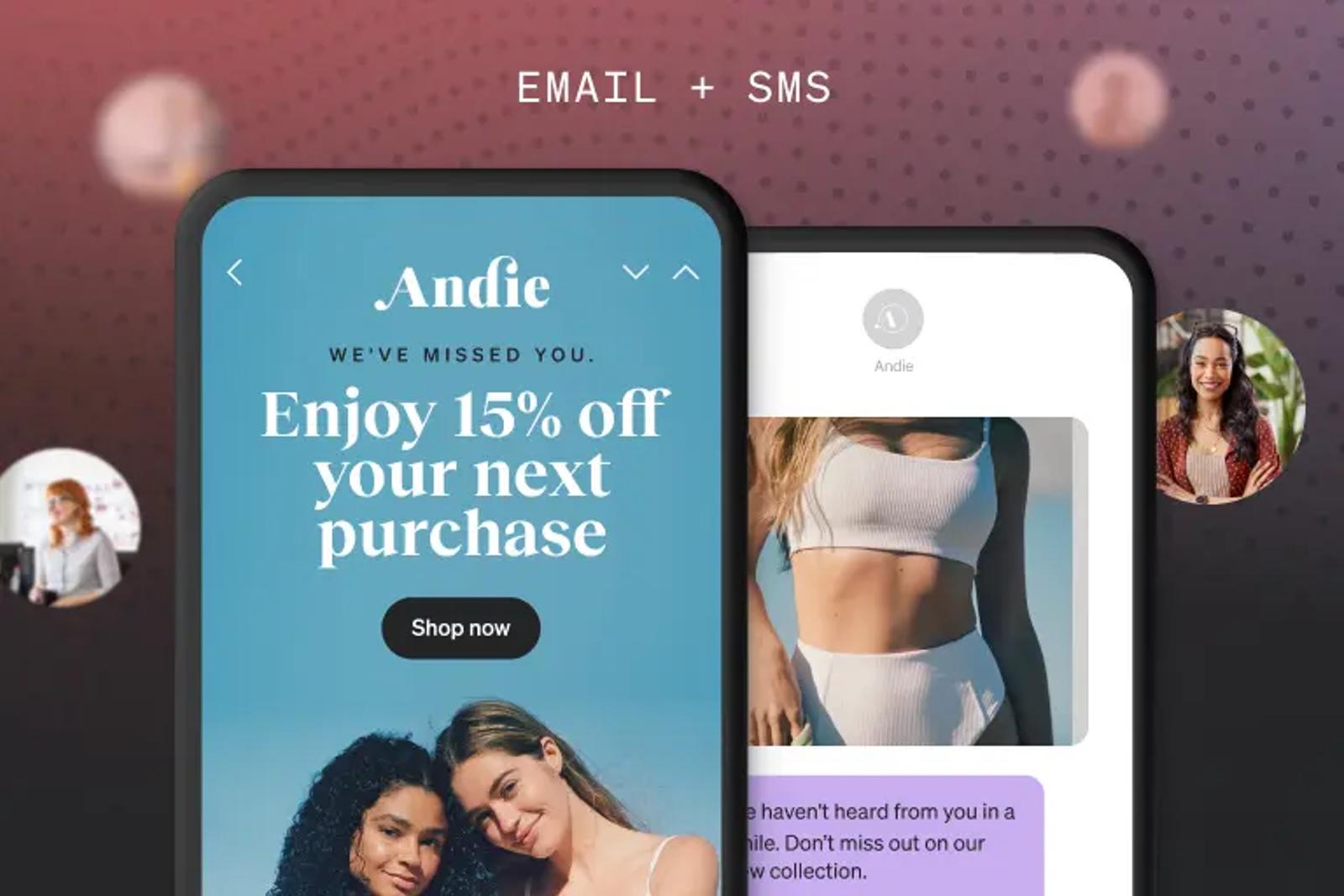
Maximising email and SMS campaign revenue
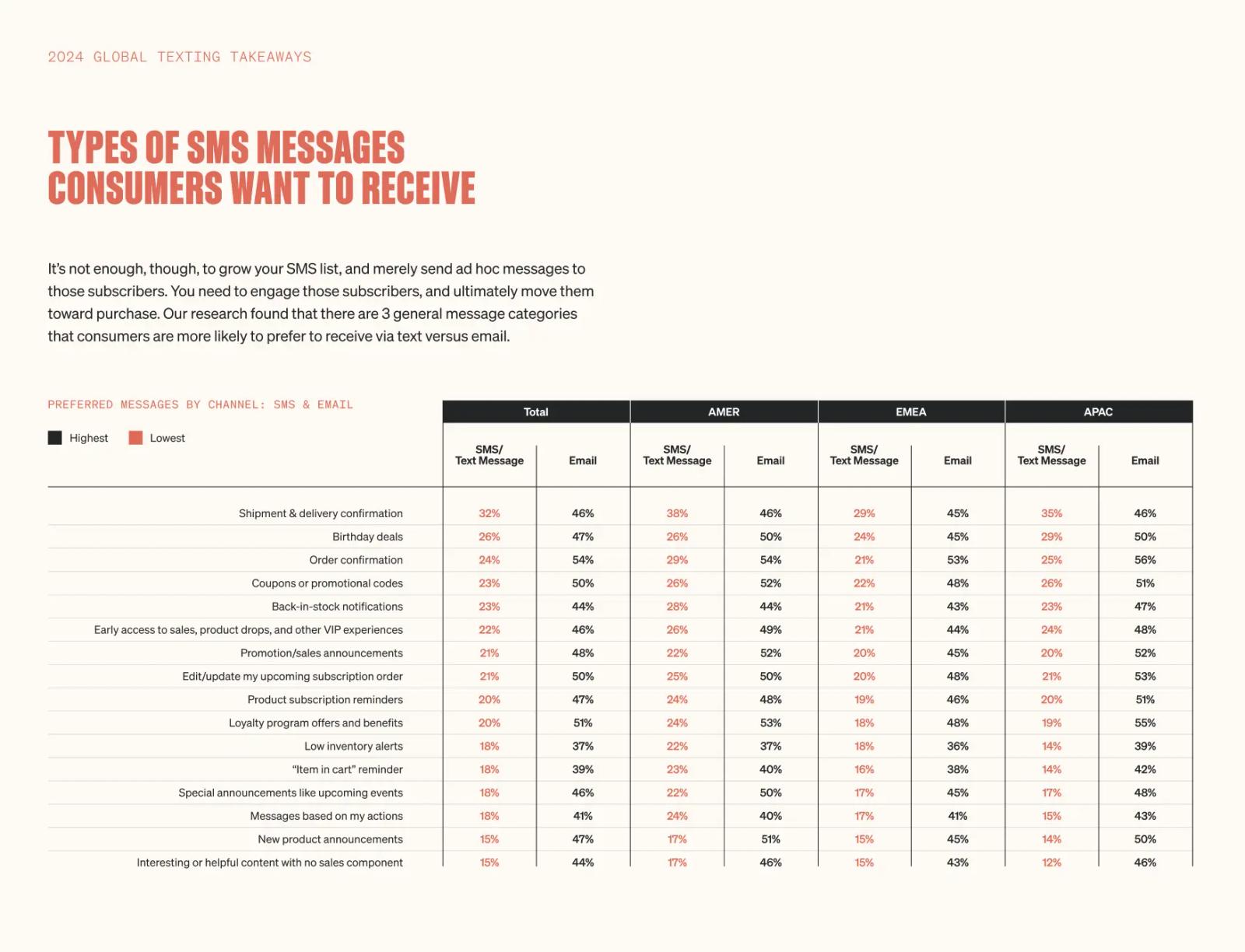
When communicating with customers across channels, be smart about when you use each one. “For smaller moments, it makes sense to pick the channel best suited for the content,” explains Mindy Regnell, head of market intelligence at Klaviyo. “For bigger moments, consider using both channels keeping in mind that SMS and email should be handled a bit differently.”
“Saying the exact same thing over text and email is a huge miss,” agrees Jessica Schanzer, lead product marketing manager at Klaviyo. “Brands definitely need to tailor their content to each channel.” Here’s how to do that.
Coordinating multi-channel campaigns
Campaign content: what works best in each channel
Email is ideal for anything longer-form and information-heavy, with lots of images or links to click on—think brand and product storytelling, letters from the founder, user-generated content and social proof, or newsletter, video, and podcast content. That kind of content burns through SMS credits fast and reads badly on a phone screen. Longer texts can work, but only within reason—don’t send a text so long someone can’t easily read it.
A note on MMS
Always test whether MMS makes sense for your brand. Depending on how you use images and emojis, and how your SMS platform prices MMS (1 MMS on Klaviyo gives you 1,600 characters, with or without emojis), MMS can end up being more or less cost-effective than SMS. Product-specific images can work well for collection or product launches, but avoid wasting money on a generic gif or “30% off” banner—if an image isn’t elevating the message, it’s best to leave it as text only with a clear CTA.
Nailing cadence: campaign frequency and timing
Your customers asked for you to text them. If you aren’t sending texts on some sort of regular basis, they’re likely to forget they opted in—and more likely to report your texts as spam or opt out. If you’re new to SMS, start with 2-4 monthly SMS campaigns alongside your broader email strategy, and gradually work up to 5-8 a month, provided every campaign you send is strategic and genuinely valuable to the customer. Other cadence factors—like which day of the week and time of day drive the most engagement and revenue—vary brand to brand. Always A/B test, and avoid sending during quiet hours in the recipient’s local time zone.
Campaign sequencing: which comes first, the email or the text?
The ideal sequence for your multi-channel campaign depends on your brand and your goals, but typically follows one of 3 tracks:
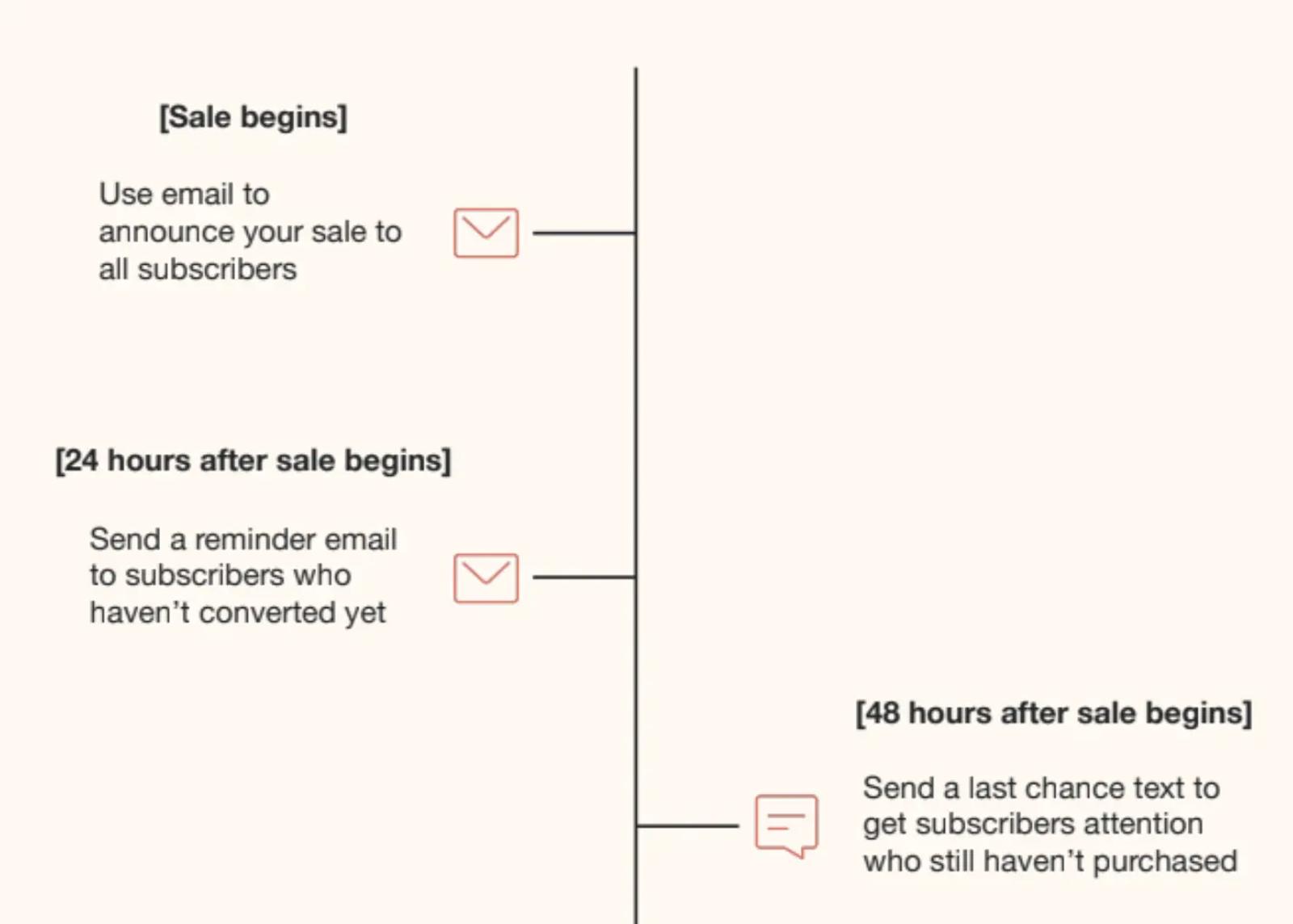
Use SMS at both the top and bottom of the campaign to reach your entire list quickly. This works well for bigger sales, like BFCM, with additional texts scattered throughout the campaign.
Use SMS at the start of the campaign to get VIP attention right away. If there’s ever an opportunity to offer something special for your SMS subscribers—early access or a unique discount code—start with SMS.
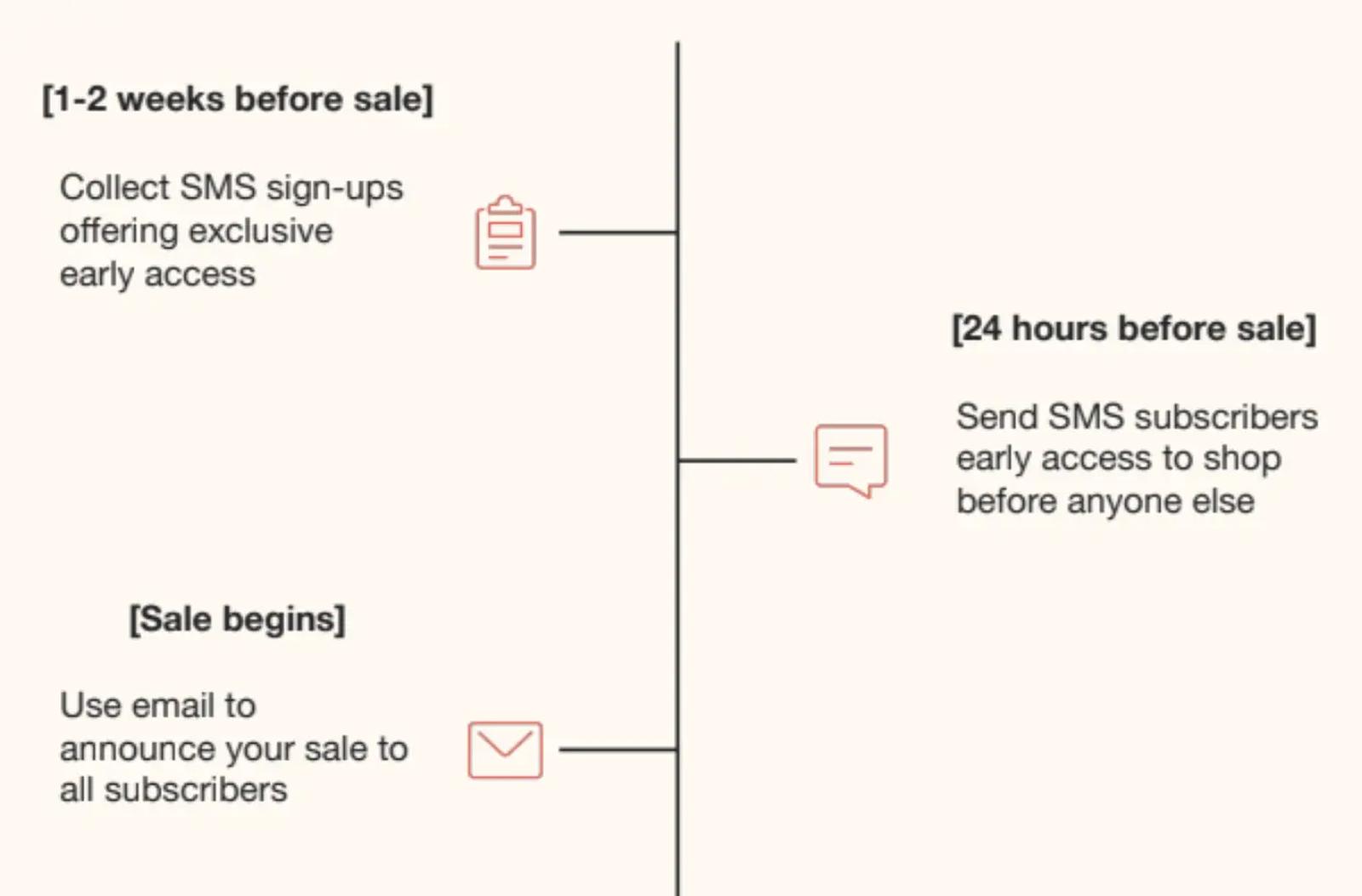
Use SMS at the end of the campaign to drive urgency for last-minute purchases. If you expect high engagement, lead with email, which has a lower cost per message, then factor in which channel is earning the most engagement before deciding whether to follow up via text or email. Toward the end of the campaign, if subscribers still haven’t converted, SMS makes a good final notice—an email might just sit in an inbox, but a text at the end acts as a safety net for the sale, creating urgency right in front of your customer.
Coordinating multi-channel flows
Don’t let the success of your multi-channel campaigns distract from your multi-channel automations, or flows—a common mistake, especially with SMS. SMS flows often generate more sales than campaigns: shoppers on the receiving end have high intent, and automations tend to pull in a significant share of SMS revenue with much higher efficiency than campaigns.
Klaviyo recommends incorporating SMS into at least 3 of your flows, such as:
Besides welcome flows, which need to stay channel-specific based on the list a subscriber signed up for, pretty much every flow benefits from incorporating both email and SMS.
Content and cadence best practices for flows
Flow content: what works best in each channel
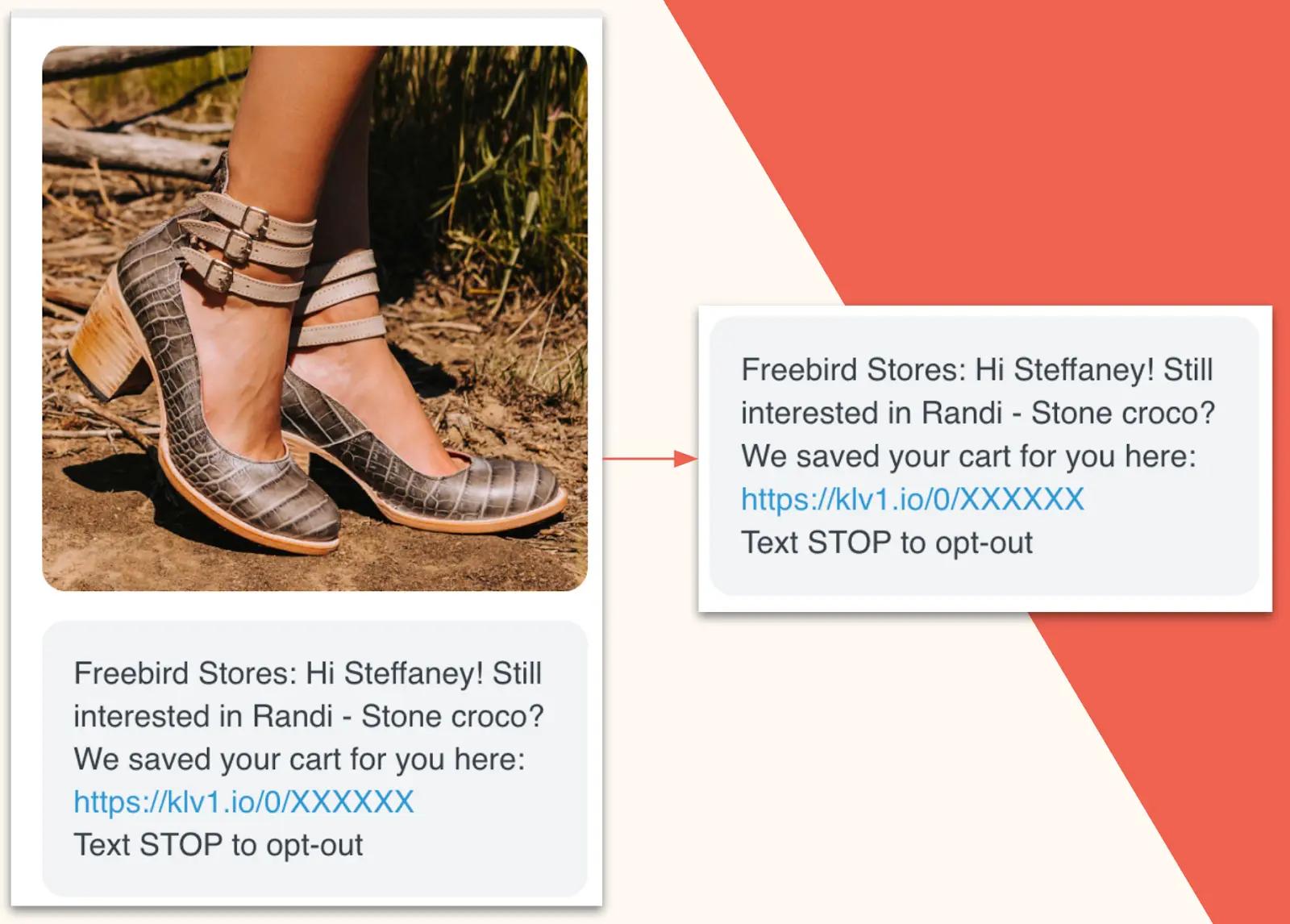
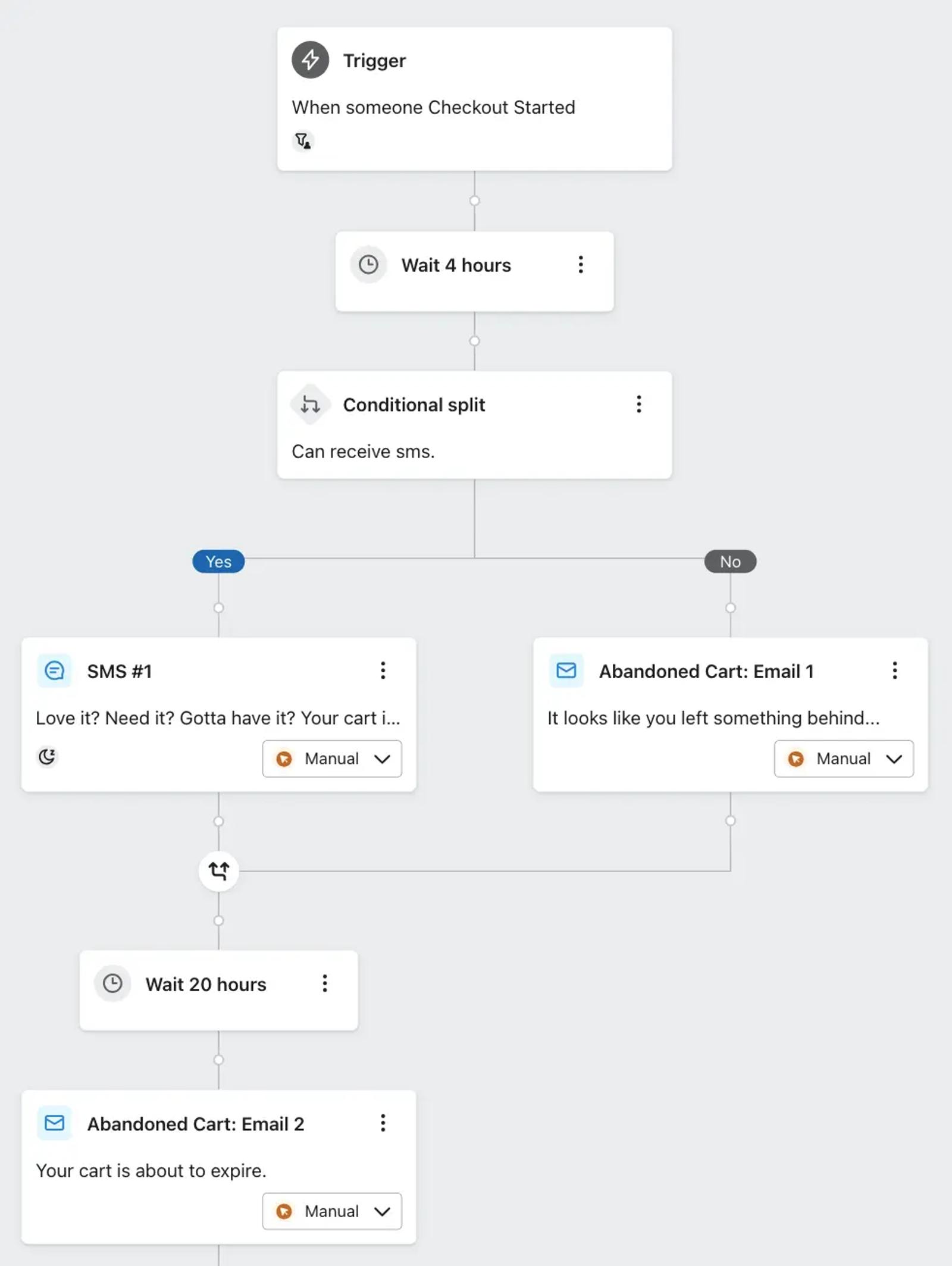
Within flows, reserve visual storytelling for email and keep SMS straightforward and urgent. You still want dynamic variables like you would in an email, but pare the content down for SMS. If someone abandons 3 products in their cart, an abandoned cart email might include all 3 product names and images, several personalised recommendations, and even customer support contact details. An abandoned cart text, on the other hand, should be much more straightforward: the name of the first product left behind, a coupon code if you’re offering one, a single link back to checkout, and possibly a product image.
A note on MMS in flows
Images are especially effective in abandonment flows—A/B test MMS for impact in others. MMS can help conversions when you’re showing someone something relevant to what they’ve already expressed interest in, but because MMS costs significantly more than SMS (and emojis reduce an SMS’s character limit from 160 to 70), test images and emojis to make sure you’re using them intentionally. Product-specific images tend to perform best; if an image doesn’t elevate the message, keep it to text only and lean on other personalisation elements, like the product name. Always A/B test.
Nailing cadence: flow frequency and timing
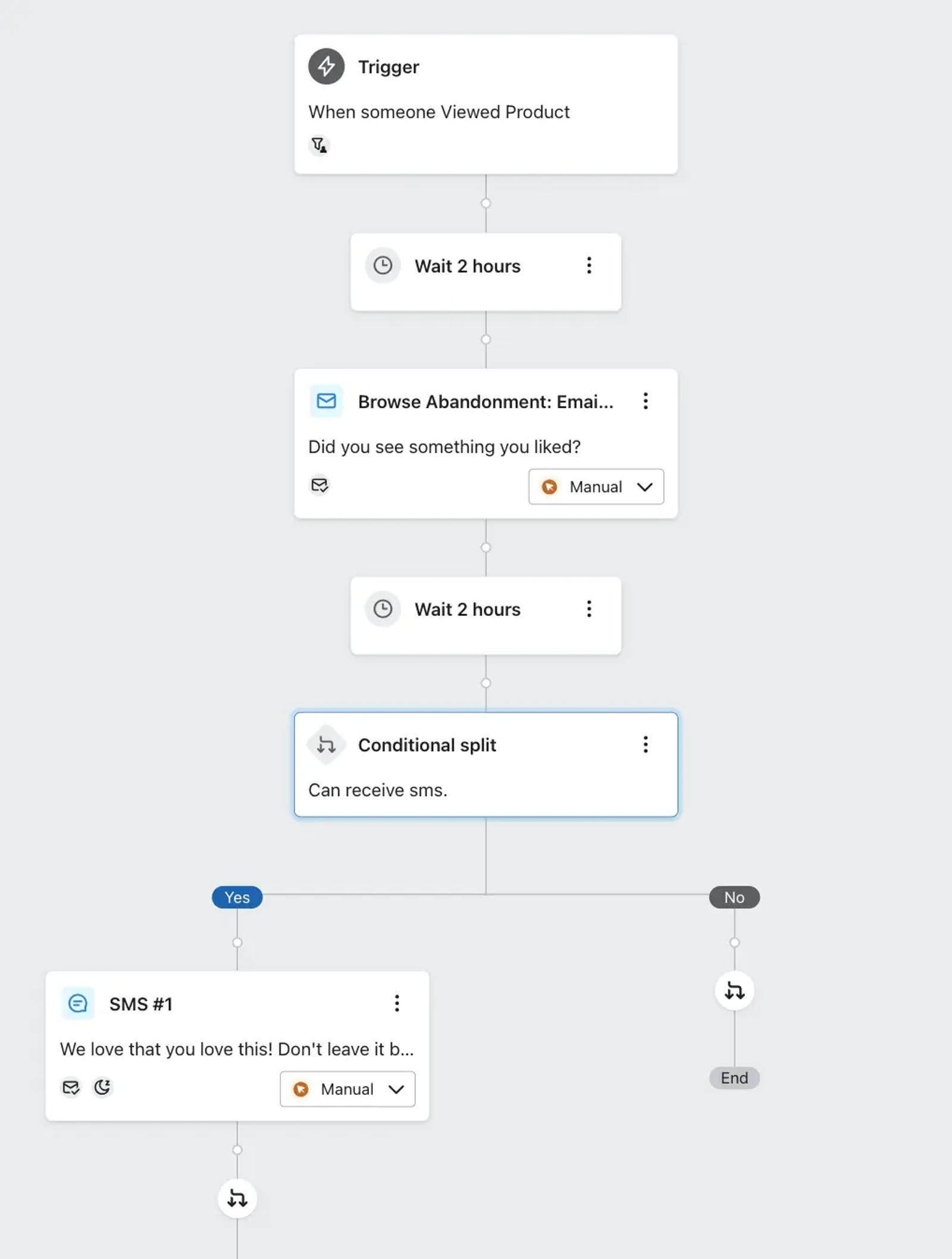
Some carriers require abandoned cart flows to contain only one SMS per recipient; even where that’s not required, limiting cart and browse abandonment flows to one text is still best practice. In all other flows, start with 2 texts per recipient beyond what you’re already doing over email, and open it up to more if engagement holds on the second message. Depending on the flow, send the SMS as early as 2 hours or as late as 48 hours after the triggering event.
Consider excluding a recipient from an SMS within a flow if they:
- Placed an order recently
- Engaged with a message earlier in the flow
- Are engaged with email generally
Flow sequencing: which comes first, the email or the text?
Lead with email for lower-intent flows. Sending an email costs less than a text. Seeing if a subscriber engages with an email first, then following up with a text if they don’t, is a smart strategy for lower-intent flows like browse abandonment—if someone’s only viewed a product, don’t jump straight to SMS. Consumers see and engage with texts very quickly, so balance urgency with intent: when customers are still toward the top of the funnel, start with email. Then factor in flow branching beyond just SMS subscription—have they purchased before, or viewed more than 2-3 products? When you know someone browsing has higher intent, it’s worth testing whether SMS can help close the sale.
Lead with SMS for higher-intent flows. For higher-intent flows—abandoned cart, abandoned checkout, order confirmation, back-in-stock—sending a text at the top of the flow gets in front of a shopper while your brand is still top of mind. People are more likely to purchase shortly after abandoning a session; if they don’t act on the text, they’ll still get the rest of the flow series over email.
How to optimise your multi-channel marketing efforts for ROI
One team’s No. 1 piece of advice for marketers who want to use SMS in tandem with email to boost ROI: A/B test. “It’s never a one shoe fits all,” says Christina Buban, onboarding implementation consultant at Klaviyo. “Yes, we have best practices, but you should always A/B test as much as you can to figure out what your specific customers engage with most, and then use that to further develop your strategy and maximise your ROI.”
Within your multi-channel campaigns and flows, consider A/B testing the following to see which drive higher click rates and placed order rates:
- Personalisation vs. non-personalisation
- Incentive vs. no incentive
- CTA language, position, and design
- Emojis vs. no emojis
- More copy vs. less
- Copy voice and tone
- Time of day
- Day of week
- Different segments
- Type of incentive (e.g., £ off, % off, free gift)
- MMS vs. SMS
- Sequence of flow paths (email vs. SMS first)
Why a unified email and SMS platform matters
All of the above is a lot easier when you use a unified email and SMS marketing platform like Klaviyo. Combining SMS and email in a single platform means a single place for list growth and consent management, more accurate attribution across channels, better-coordinated customer communications, and a fuller database that lets you use the right integrations to power the right message at the right time.
It improves the customer experience. When you run email and SMS on different platforms, you get data gaps and latencies that create delays and redundancies in your customer communications. In Klaviyo, real-time data determines which experience each customer receives.
It makes your team’s lives easier. With visibility into who’s getting what and when, you can see everything in one place and move fast—making it easier to create, track, and manage these journeys.
It reveals what’s actually driving revenue. With email and SMS under one roof, attribution is aligned. You get an undistorted view of performance across both channels combined, and can still look at each separately.
Power smarter digital relationships with Klaviyo
Ready to bring your email and SMS marketing together in one platform? Get started now.