How AI Enables Vibe Marketing
Generated by Klaviyo AI
The article explains how AI is shifting marketing from manual execution to intent-driven "vibe marketing," where marketers describe goals and systems handle the mechanics. It contrasts high-quality, brand-aligned AI-assisted marketing with generic, low-impact output, and outlines how reduced execution friction unlocks more testing, learning, and strategic focus.
- Shift to intent: Vibe marketing moves work from step-by-step campaign building to describing desired outcomes and letting AI assemble the execution for review.
- Execution bottleneck: The main constraint in marketing is no longer ideas or talent but the time-consuming mechanics of building and launching campaigns.
- Good vs. bad vibes: Good vibe marketing uses AI grounded in real brand and customer context, while bad vibe marketing produces fast but generic, low-impact campaigns.
- Role of judgment: AI removes friction but not the need for human taste, strategy, and understanding of the customer to decide what should actually be sent.
- Impact on learning: When execution is no longer the constraint, teams can run more campaigns and tests, accelerating learning and competitive advantage.
Something fundamental has shifted in how marketing actually gets done. And once you see it, you can't unsee it.
We've entered a new era. I've started calling it vibe marketing.
Where the idea comes from
In early 2025, Andrej Karpathy coined the term "vibe coding" to describe a shift already happening in engineering. Developers were moving away from writing code line by line toward something more intent-driven: describing what they wanted to build, letting AI generate the implementation, then guiding and refining the output.
It stuck with me. It described something I'd been trying to solve in marketing for most of my career.
The wall marketers have been stuck behind
I started in marketing building campaigns by hand. Segment the list. Configure the flow. Write the brief. Chase the designer. Wait for legal. Push the launch date. I was good at it. You get fast. You build muscle memory. And somewhere along the way, you stop noticing how much of your time disappears into the mechanics.
That's the wall I've been staring at for 20-plus years. Because the bottleneck in most marketing orgs isn't creativity, strategy, or talent. It's execution.
Every team I talk to has some version of this story. The win-back series that's been "on the list" for two quarters. The A/B test nobody has time to set up. The campaign that misses the moment because it just wasn't ready. The ideas don't stop. The capacity to execute them does. And hiring more people doesn't fix it. I've tried. It just means more people navigating the same slow machinery.
From vibe coding to vibe marketing
So when I read about vibe coding, what stood out was the shift itself. Engineers had found a way to move the work up a level, from building everything manually to describing what they wanted and focusing on the decisions that actually matter. They weren't less skilled. They were faster. More experimental. More ambitious.
And I kept thinking: when does this happen for us?
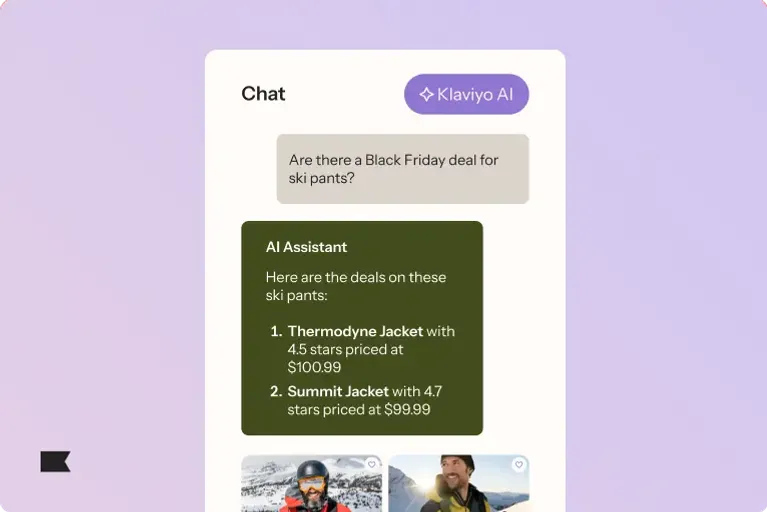
That's what I mean by vibe marketing. You describe what you want to happen, and AI builds it. You start with intent, not process. "Win back customers who haven't purchased in 90 days." "Launch this product next week." "Test urgency vs. education for this audience." And instead of manually stitching everything together, the system handles the execution: segmentation, copy, orchestration, timing. It brings it back to you ready for review.
You're still in control. You still make the decisions. Nothing goes out without a human saying yes. But you're no longer spending your time inside the machinery.
And there's something incredibly fitting about the name. Marketers have always been responsible for the vibe: the feel of a brand, the tone of a message, the timing of a moment. The difference between something that resonates and something that falls flat. As the mechanics fall away, what's left is exactly that.
Good vibe marketing vs. bad vibe marketing
But just like in the real world, not all vibes are good. And the same is true for vibe marketing. There’s good vibe marketing, and there’s bad vibe marketing.
Good vibe marketing feels like your best marketer on their best day. It's clear. It's intentional. It sounds like your brand. It shows up at the right moment with something that actually makes sense for the customer. AI is doing the heavy lifting, but it's grounded in real context: your data, your audience, what actually works.
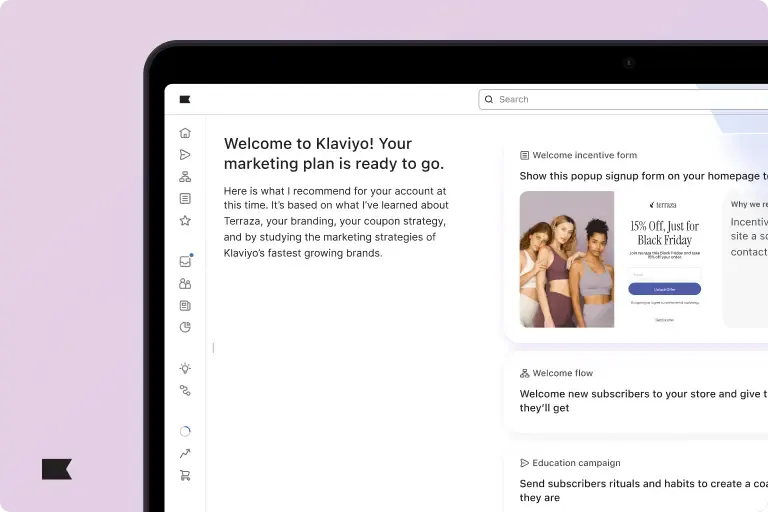
We've been building toward this at Klaviyo with a capability we call Composer. Before we ever shipped it to a private beta, we used it ourselves. I wanted to understand what this would actually feel like in practice. The first time I watched someone type a goal in plain language and see a full campaign come together in minutes, audience, email, SMS, timing, all coordinated, I just sat there. What used to take days was suddenly done.
What surprised me more than the speed was the quality. The output wasn't generic. It was shaped by what Klaviyo has learned across 14 years, 205,000-plus brands, and billions of consumer interactions. Deliverability, compliance, best practices, already built in. So the conversation changed. Instead of spending two days building the campaign, the team spent their time asking: Is this the right message? Is this the right moment? Is this what we want our brand to say?
That's good vibe marketing.
Bad vibe marketing looks very different. It's fast but generic. High volume but low impact. It technically works, but it feels off. Campaigns get generated and sent with minimal thought. Every brand starts to sound the same. Messaging loses its edge. Timing loses its meaning. Some people are starting to call it "AI slop." And it's not a technology problem. It's a judgment problem. AI removes friction. It doesn't replace taste.
What changes from here
When marketing execution stops being the constraint, the math changes. The team that used to run 3 campaigns a month runs 15. The idea that would have sat in a backlog launches the next day. The test you've been putting off actually gets run. Same team. Same budget. Completely different output.
But the real advantage goes beyond volume. It's learning. The teams that move faster, test more, and iterate quicker are the ones that pull ahead.
That's really the point. Vibe marketing is about removing the parts of the work that never really required you in the first place, so you can focus on the parts that do. The judgment. The strategy. The understanding of your customer. The things that actually make marketing good.
So yes. We've entered the era of vibe marketing. The tools are here. The shift is happening. The only real question is what kind of vibe you're going to put into the world.
Because the difference between good and bad isn't the AI. It's you.

Related content