Scaling UK ecommerce into Europe
Generated by Klaviyo AI
The article explains how post-Brexit customs, VAT, and duties affect UK brands selling into EU markets and how these changes impact unit economics. It outlines which European markets to prioritise, what full-funnel localisation really involves, and how to retain international customers through localised post-purchase and retention strategies.
- Post-Brexit customs reality: UK-to-EU shipments now cross an international customs border, requiring IOSS for low-value orders, decisions between DDP and DAP for higher-value orders, and planning for new EU-wide duties and handling fees from 2026.
- Unit economics and margins: Brands must model VAT, higher cross-border shipping, elevated return rates, and new per-parcel duties to see whether their products remain profitable in target EU markets and adjust pricing or logistics accordingly.
- Market selection strategy: Ireland offers a low-risk, English-language test market, while Germany, France, and the Netherlands provide larger opportunities but demand deeper localisation in language, payments, and consumer expectations.
- Operational localisation: Effective localisation spans language, local pricing and VAT, preferred payment methods, trust signals like the Ecommerce Europe Trustmark, DDP-focused delivery, and a scalable site structure using localised subdirectories.
- Retention across borders: Long-term success depends on local-language post-purchase flows, clear cross-border returns, country-level segmentation, fully localised lifecycle messaging across channels, and strict compliance with EU consent rules.
If your UK-based B2C brand has hit a domestic ceiling, expanding into the rest of Europe is an obvious growth move.
But since Brexit, the path from the UK into the EU carries operational complexity that's easy to underestimate.
This guide covers the UK-specific operational reality of selling into the rest of Europe in 2026. Disclaimer: The information provided in this guide is intended to be educational and should not be construed as legal advice. Klaviyo encourages all of our customers, and all ecommerce merchants, to seek legal advice for counsel on how they specifically should ensure they are compliant with the regulations mentioned in this article.
TL;DR
|
Your international customers are already visiting. Now give them a reason to stay.
Why expanding from the UK looks different in 2026
If you're a UK brand thinking about selling across more of Europe, the first thing to understand is that you're operating under a different set of rules than your EU competitors.
Since Brexit, shipping a parcel from the UK to an EU customer means crossing an international customs border. That changes your costs, your logistics, and your customers’ experience in ways that most international expansion planning doesn't account for.
What changed after Brexit Before 2021: A UK brand shipping to Germany worked the same way as a French brand shipping to Germany. No customs forms, no import duties, and no VAT complications at the border. 2021 onwards: A UK brand shipping to Germany is now treated as an international import. Customs declarations, VAT collection or border charges, and potential delivery delays all apply. An EU brand shipping within the EU faces none of this. |
The post-Brexit customs reality
Before Brexit took effect at the end of 2020, a UK brand could ship to France or Germany the same way a French brand ships to Germany today. No customs forms, no import duties, and no VAT complications at the border.
Now, when a German customer orders from another EU brand, the parcel arrives like any domestic purchase. But when that same customer orders from a UK brand, the parcel crosses an international border and gets treated as an import. The practical impact depends on the order value.
For orders under £135, brands typically register for the Import One-Stop Shop (IOSS), an EU system that lets you collect and remit VAT at check-out so the customer pays one clean price. Without IOSS, the parcel sits at customs and the customer gets an unexpected bill from the courier before they can receive their order. That leads to refused deliveries and returns.
For orders above £135, import VAT and duties are typically charged at the border. If you ship Delivered at Place (DAP), the customer is responsible for those charges. If you ship Delivered Duty Paid (DDP), you absorb the costs upfront and build them into your pricing, and the customer gets a smoother delivery experience without surprise fees.
And the rules are still changing. From July 2026, the EU will apply a fixed €3 customs duty on all ecommerce parcels valued under €150, removing an exemption that previously kept lower-value shipments duty-free. A separate handling fee will follow in November 2026. Some individual EU countries, including the Netherlands, plan to add their own fees on top.
2026 customs timeline for UK brands selling into the EU July 2026: €3 fixed customs duty applies to all ecommerce parcels under €150 entering the EU. November 2026: EU-wide handling fee on ecommerce imports takes effect; some markets (including the Netherlands) introduce additional national fees. 2028: EU Customs Data Hub goes live, replacing temporary measures with a permanent duty regime. |
None of this is a reason to avoid international expansion, but it is a reason to plan before a single order ships.
What this means for your unit economics
All of these customs layers add up, and they change the maths on whether international expansion is profitable for your specific products.
Take a straightforward example. Say you sell a product at £80 and ship it to a customer in Germany. You'll need to factor in German VAT at 19%, a DDP freight premium that's higher than your domestic shipping cost, and a return rate that will likely be steeper than what you see at home. In Germany's fashion sector, return rates can exceed 50%. And those returns now cross a customs border in both directions, adding cost each way.
Layer in the new €3 per-parcel duty arriving in July 2026 and the handling fee coming in November, and a product that works comfortably at a 60% gross margin domestically can drop below 40% once you account for the full landed cost in an EU market.
What happens to margin on an £80 product shipped to Germany
Note: These are illustrative figures. Your actual costs will depend on your product category, shipping partner, and fulfilment model. |
The brands that get international expansion right from the UK tend to model this before selecting their first market. Run the numbers on your top 3 products shipped to your top 3 target countries. If the margin holds, and you can see genuine cross-border ecommerce benefits for your category, you have a real case for expansion. If it doesn't, adjust your pricing, explore DDP partnerships with a logistics provider, or reconsider which market you enter first.
Which European markets should UK brands target first?
The generic advice on this topic usually starts with GDP rankings and which markets have the most online shoppers.That's useful context, but it skips the questions that matter most for a UK brand: What is your operational lift? What are your existing demand signals? And how much localisation will you need from day one?
Ireland as the default first market
If you're a UK brand looking for a low-risk way to test international operations, Ireland is the obvious starting point. It's the only EU country that shares a language with the UK, which means no content localisation on day one. Your product pages, check-out flows, customer service, and post-purchase messages all work as they are.
Ireland has a population of around 5.1 million (smaller than London) but 96% of its internet users shopped online in 2024, the highest share in Europe, compared to a European average of 77%. You can test international shipping logistics, returns processes, and customer service response times without adding language complexity on top.
It's also where you'll find out what breaks. If your check-out doesn't handle euros properly, or your returns process takes too long across a border, you'll discover it in Ireland before it costs you in Germany or France. Once your operations are running cleanly, you’ll have a foundation to scale from, and you’ll have already tested your ecommerce customer acquisition strategy in a real EU market.
Germany for scale
Germany is Europe's largest ecommerce market outside the UK, and at €88.8 billion in online sales in 2024, it represents the biggest revenue opportunity available to a UK brand expanding into Europe."
But selling into Germany requires more localisation than most UK brands expect. German consumers have strong preferences around how they pay, what language they shop in, and how returns work. Getting any of these wrong suppresses conversion significantly.
What German shoppers expect Payments: The Nexi report, based on 28,000 consumers spread across 11 key European markets, found that DACH shoppers prefer e-wallets like PayPal over the card and cash-based methods common in southern Europe. BNPL also has deep roots in Germany specifically. If your checkout only offers card payments, you're excluding a significant share of how German shoppers prefer to pay. Language: Even though German consumers import nearly 40% of their online goods cross-border, they strongly prefer German-language content. Product pages available only in English won't cut it Returns: Germany's return rates are among the highest in Europe. In fashion, they exceed 50%. Your returns process needs to be built before you launch, not figured out afterwards. |
Represent Clothing, a Manchester-based luxury streetwear brand, shows what proper German localisation looks like in practice. When they launched a dedicated German-language site, they saw a 30% increase in conversion rates and an over 100% increase in organic sessions from German-speaking markets. International sales increased 50% after Represent rolled out separate regional storefronts.
France, the Netherlands, and beyond
France and the Netherlands are both attractive markets for UK brands, but they come with different operational demands.
France is Europe's third-largest ecommerce market. But French consumers strongly favour domestic brands and expect French-language content across every touchpoint, with around 60% making only domestic purchases.
The Netherlands is smaller but strategically interesting. iDEAL, the dominant Dutch bank-transfer payment method, accounts for around 70–73% of all Dutch ecommerce transactions, according to the Dutch Payments Association. Launch without it and you're excluding most of the market.
France vs. the Netherlands at a glance
France | Netherlands | |
Market size | Europe's third largest | Online sales account for 32% of all retail spending |
Language | French-language content expected across all touchpoints | Dutch preferred, but English tolerance is higher |
Payments | Cards and digital wallets common | iDEAL dominates at 70–73% of transactions |
Regulatory | CNIL active on GDPR enforcement | AP active on GDPR enforcement; national handling fees arriving in 2026 |
Logistics angle | Complex market, plan for extra time | Strong 3PL hub via Rotterdam |
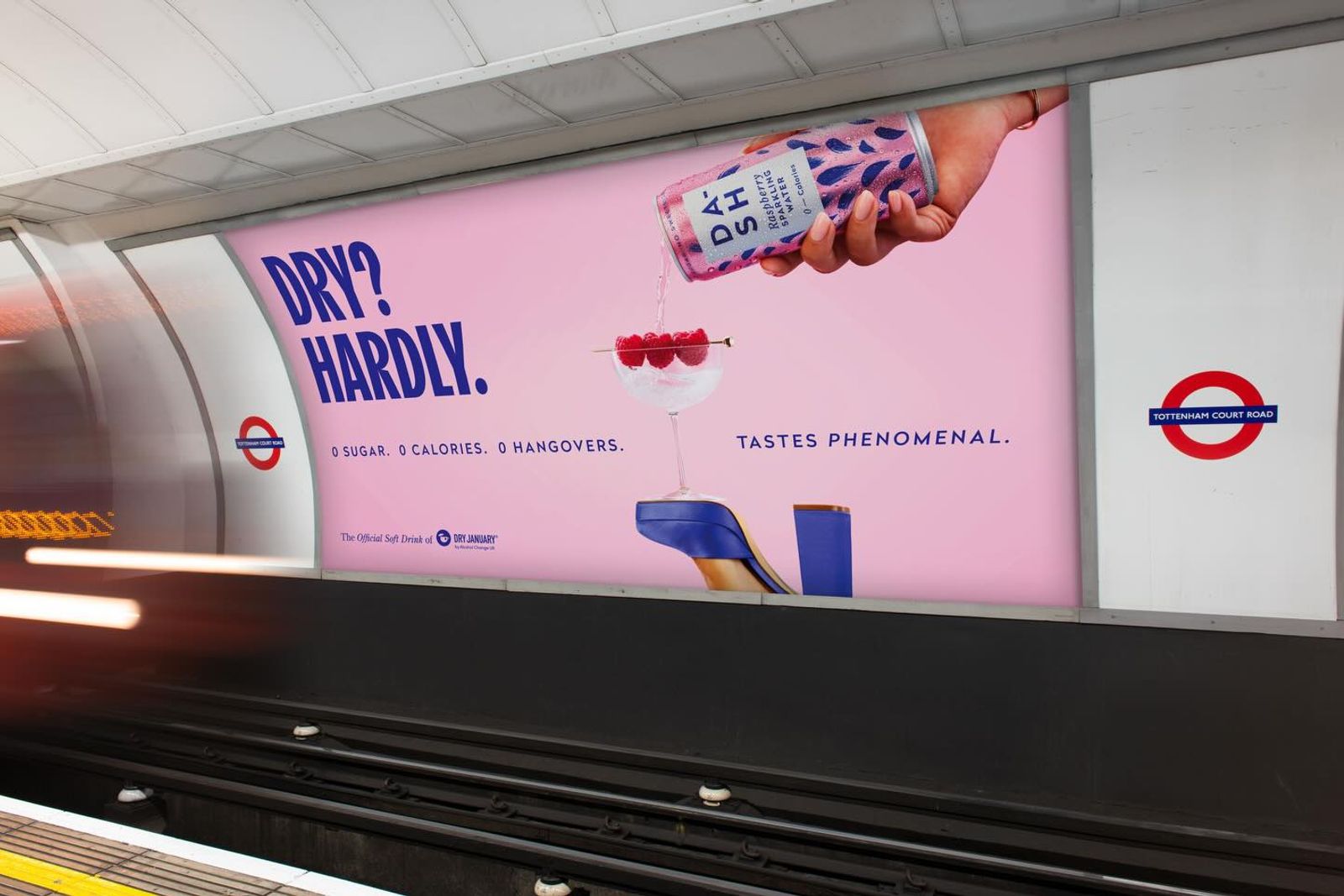
Dash Water, a UK sparkling water brand, saw international sales grow 64% in 2024, driven in part by new listings in France, Switzerland and the Netherlands.
What ecommerce localisation actually involves
Most brands think of localisation as translation: translate the product pages, maybe switch the currency, and we're done.
In practice, the brands that perform well in new European markets treat localisation as a full operational layer that covers language, pricing, payments, trust, shipping, and site structure.
Language, currency, payments, and trust signals
Getting the basics right in a new market means more than translating your homepage. Product pages, check-out, terms and conditions, returns policies, and customer service all need to work in the local language.
Product pages and check-out
The priority is removing any point of friction that signals to the customer that the experience wasn't built for them. That means localised product descriptions, size guides, and error messages, not just a translated homepage with English appearing the moment they try to buy.
Terms and conditions and returns policies
Both need to reference local consumer law. In the EU, distance selling rules give customers a minimum 14-day return window, and your policy needs to reflect that explicitly.
Customer service
The expectation is that support is available in the local language. That doesn't mean a local team from day one. It means having a clear process for handling queries in German, French, or Dutch before you launch, not after your first wave of complaints.
Currency
Displaying prices in euros is the minimum. You need to set local prices that reflect VAT differences across EU countries, any DDP cost layers you're absorbing, and local price sensitivity. A product priced at £45 in the UK doesn't automatically become €52.50 in Germany. It becomes whatever price makes sense for that market once you factor in your costs and positioning.
Payments
If your check-out only offers card payments, you're losing sales in markets where PayPal, Klarna, or iDEAL are the default.
Trust signals
The Ecommerce Europe Trustmark is a pan-European certification that signals to shoppers that a retailer complies with EU consumer law and has a dispute resolution process in place. 65% of European consumers say they are more likely to buy from a retailer displaying it than one that doesn't. For a UK brand with no existing reputation in a new market, that signal matters.
Localisation baseline for a new EU market
Returns: 14-day return window required underEU distance selling rules |
DDP vs. DAP, and local sites
We covered DDP and DAP in the customs section, but it's worth revisiting here from a customer experience perspective. Remember:
- DDP means the customer receives their parcel with no additional charges.
- DAP means they get an unexpected fee on delivery.
For a brand with no reputation in a new market, DAP’s surprise fee can lead to refused deliveries, returns, and customers who don’t come back. Think of DDP as a customer acquisition expense: the cost of a smooth first delivery in a market where you’re trying to build a reputation pays for itself in repeat purchases.
Local sites
On site structure, most UK brands don't need a separate website for each EU market on day one. A subdirectory approach (e.g., yourstore.com/de/) with proper hreflang implementation gives you localised content, currency, and language without the overhead of managing multiple standalone sites.
A dedicated local domain only makes sense once you've built meaningful volume in a specific market. Start with a subdirectory while you're still proving the business case.
Site structure approach | Best for |
Subdirectory (yourstore.com/de/) | Most brands starting out (one site, lower overhead) |
Subdomain (de.yourstore.com) | Brands that want clearer market separation |
Dedicated domain (yourstore.de) | Brands with established sales volume that justifies local SEO investment |
Retaining international customers after the first purchase
Acquiring a customer in a market where you have no brand awareness, no word-of-mouth, and no repeat customer base costs significantly more than acquiring one at home. The economics of international expansion only work if those customers come back. Here's what retention looks like when you're selling across borders.
The immediate post-purchase experience
The post-purchase window is where most cross-border brands lose customers they've already paid to acquire. A customer who receives a smooth, localised experience after their first order is far more likely to buy again than one who has to navigate a confusing returns process or wait for customer service to respond in the wrong language.
For each new market, the immediate post-purchase sequence needs to cover:
Confirmation and shipping updates in the local language. This sounds basic but it's where most brands fall short. An order confirmation in English sent to a German customer who browsed and ordered in German signals immediately that the experience wasn't built for them. Every automated touchpoint from purchase to delivery needs to be in the local language, with pricing in local currency.
Accurate delivery expectations. Dutch consumers are used to 2-3 day domestic delivery windows. German consumers expect to know exactly when their parcel will arrive, not just a range. A UK brand shipping cross-border cannot match domestic speeds, but it can set honest expectations at checkout and confirm them at every step. Customers who know what to expect forgive delays far more easily than customers who feel misled.
A returns process that works across a customs border. EU distance selling rules give customers a minimum 14-day return window. For a UK brand, every return also crosses a customs border in both directions, which adds cost and complexity. Building a clear, localised returns policy before you launch, and communicating it explicitly at the point of purchase, removes a significant reason for customers not to buy.
Reachable customer service in the local language. A customer with a problem who can get a resolution quickly in their own language is significantly more likely to buy again. This doesn't require a local team from day one, but it does require a plan for handling queries in German, French, or Dutch before the first orders ship.
Building longer-term retention by market
The immediate post-purchase sequence gets a customer to a second order. Building a customer base in a new market over time requires treating each market as its own retention programme, not a localised version of your UK strategy.
Segment by country from the start. Open rates, revenue per recipient, and unsubscribe rates will behave differently in Germany than in France. If you're measuring blended performance across all markets, you can't tell what's working where. Building country-based segments from day one gives you the data to make market-level decisions.
Localise across every channel you use. Win-back sequences, abandoned cart flows, and campaigns all need the same localisation treatment as your post-purchase flows. That means send time optimisation by time zone, language and tone that reflects local norms, and SMS programmes that go only to customers who have double opted-in, which is standard across most EU markets. In markets like France and the Netherlands, WhatsApp is an established channel for brand communication and needs to be part of any full EU retention strategy alongside email, SMS, and mobile push.
Treat consent seriously. EU consent rules are stricter than UK rules in several markets. France's CNIL is among the most active GDPR enforcers in Europe. Building compliant consent practices into your sign-up flows from day one is significantly easier than retrofitting them after you've already built a list.
One account. Every market. Localised data, marketing, customer service,, and reporting built in.
FAQs about international ecommerce
Do UK brands need a separate VAT registration for each EU country they sell in?
Not necessarily. The Import One-Stop Shop (IOSS) scheme allows UK brands to register once and report VAT on all EU distance sales of goods valued at £135 or less through a single monthly return. For orders above that threshold, standard import VAT rules apply in each destination country. The specifics depend on your business structure, sales volumes, and fulfilment model, so it's worth getting professional tax advice before you launch. From July 2026, the EU is also introducing a €3 customs duty on all ecommerce parcels under €150, which is separate from VAT and applies on top of existing obligations.
How much does it cost to launch an international ecommerce store in Europe?
Costs vary widely depending on how many markets you enter, whether you localise content in-house or with agencies, and whether you ship cross-border from the UK or hold stock in an EU warehouse. At the lower end, a UK brand can launch a subdirectory storefront (e.g., yourstore.com/de/) with localised content, local payment methods, and DDP shipping for a single market without a 6-figure budget. The bigger ongoing costs tend to be 3PL partnerships, localised customer service, and the DDP freight premium on every order. Start with one market, prove the economics, then expand.
Which ecommerce platform is best for selling internationally from the UK?
The right platform depends on your existing set-up, but the features that matter most for international selling are multi-currency support, hreflang implementation for localised storefronts, and integrations with cross-border shipping and tax tools. Shopify, which powers brands like Represent and Simba Sleep in their international expansion, offers built-in multi-currency and market management. WooCommerce and Adobe Commerce also support international selling with the right extensions. Whichever platform you use, connecting it to a B2C CRM like Klaviyo gives you the ability to run flows personalized for different markets, country-level segmentation, and localised campaigns from one account.
How do return rates in Germany affect international ecommerce profitability?
Significantly. German return rates in fashion exceed 40%, according to Nexi’s 2024 European Ecommerce Report. For a UK brand shipping DDP, each return crosses a customs border in both directions, adding cost each way. Building a local returns process before you launch, whether through a 3PL partner with EU warehousing or a returns management service, is worth modelling as part of your market entry costs.
How long does it take for a UK brand to see ROI from international ecommerce expansion?
There's no fixed timeline, but the brands that see returns fastest tend to share a few traits. They pick their first market based on operational simplicity rather than market size. They invest in localisation upfront rather than patching it later. And they build retention flows from day one, because the cost of acquiring an international customer only pays back if that customer buys more than once.
What payment methods do European customers expect when shopping from a UK online store?
It depends on the market. In Germany, PayPal dominates, with BNPL growing fast. In the Netherlands, iDEAL accounts for 70–73% of all ecommerce transactions. If your check-out only offers card payments, you will likely lose sales in most EU markets. Check which payment methods are standard in your target market and integrate them before you launch, not after you notice low conversion rates.
Related reading

Related content