L’impact de l’IA sur les consommateurs en 2026

Que pensent vraiment les consommateurs de l’IA en 2026 ?

Notre étude le montre très clairement, les acheteurs sont divisés. Découvrez les nouvelles tendances en matière d’IA et la façon dont 4 nouveaux personas de consommateurs transforment les stratégies des marques modernes à l’ère du shopping IA.

Prêt à utiliser ces insights ?

Un motif répétitif composé de portraits représentant chaque profil de client d'Ai.

Les expériences génériques
sont vouées à l’échec

Au cours de l’année écoulée, de nombreux consommateurs ont pris l’IA en main. Mais s’ils utilisent les LLM pour faire leur shopping, mener des recherches et prendre des décisions, ils ont également des avis plus nuancés sur le rôle de cette technologie dans leur vie, et ils ne sont pas tous sur la même longueur d’onde. Les marques sont désormais confrontées à un défi de taille : dans un monde où chacun a sa propre « zone de confort » en matière d’IA, quelles tactiques permettent d’offrir l’expérience appropriée ?


Notre réponse : appuyez-vous sur les données. Pour comprendre l’évolution des comportements, nous avons interrogé plus de 8 000 consommateurs du monde entier sur leur utilisation de l’IA, leur niveau de confiance et l’image que l’IA renvoie des entreprises. Découvrez ce que cela signifie pour votre entreprise en parcourant la cartographie de l’engagement avec l’IA et en étudiant nos insights.

Découvrez la cartographie de l’engagement avec l’IA

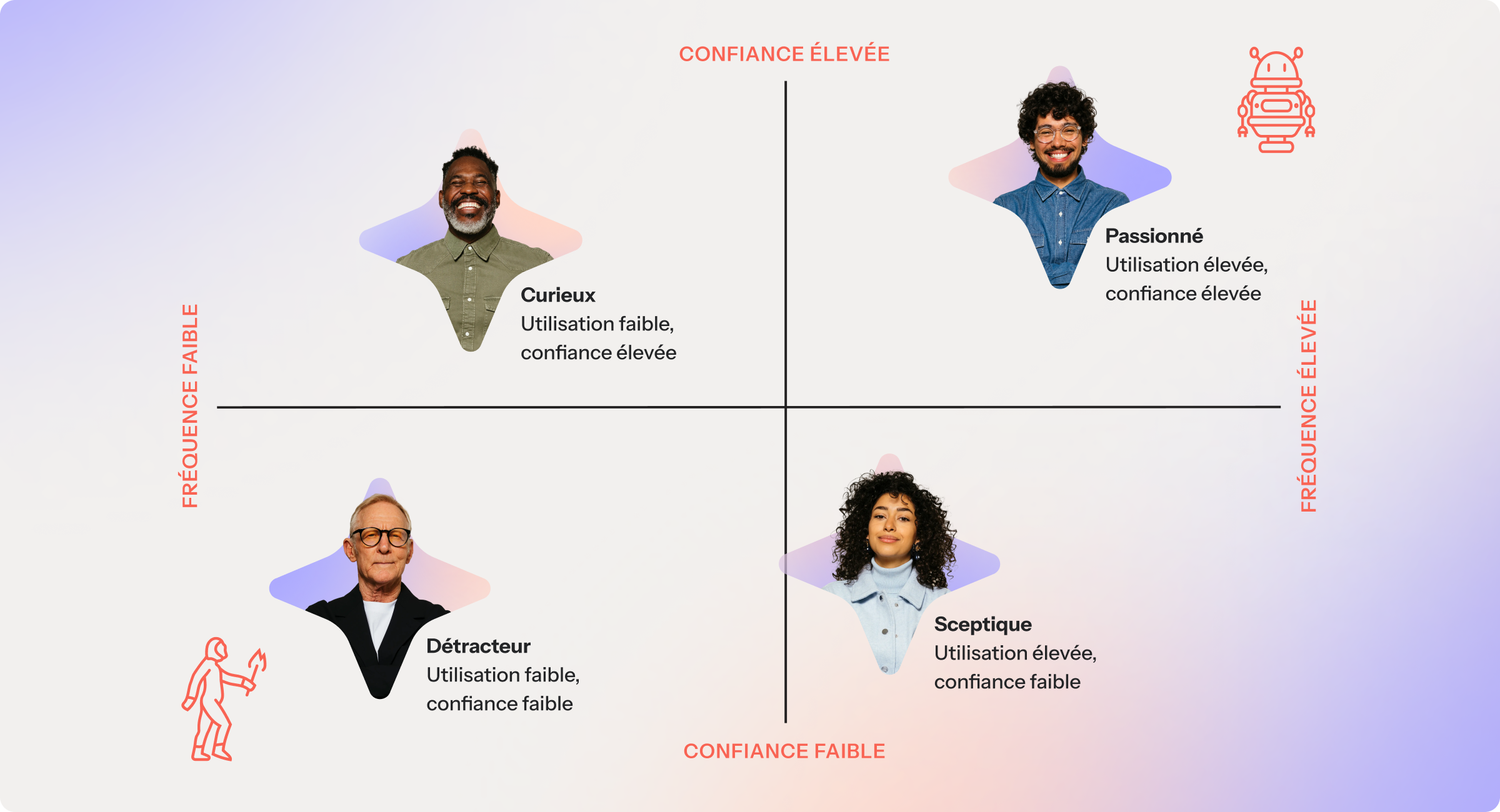
60 % des consommateurs du monde entier utilisent l’IA au moins une fois par semaine. Mais à quel point lui font-ils réellement confiance ? Découvrez comment les habitudes et les attitudes divergent au sein d’une clientèle fragmentée.

Un graphique à quatre quadrants représente l'utilisation de l'IA et le niveau de confiance de chaque profil de consommateur d'IA comme suit : l'enthousiaste (utilisation élevée, confiance élevée), l'évaluateur (utilisation faible, confiance élevée), le sceptique (utilisation élevée, confiance faible) et le réticent (utilisation faible, confiance faible).

The AI era isn’t about using AI everywhere. It’s about using it in ways consumers actually value. When shoppers feel understood, respected, and in control, AI becomes a better experience, not a bigger risk.
Jamie Domenici
CMO, Klaviyo

Découvrez 4 nouveaux personas de consommateurs
à l’ère de l’IA

Chacun représente un état d’esprit différent et une orientation potentielle pour votre stratégie en matière d’IA.

Photo portrait illustrant le profil de l'« passionné d'IA »   Répondre 83 56 0° 380 517,75 0 0 0 100 % 9,5 3x

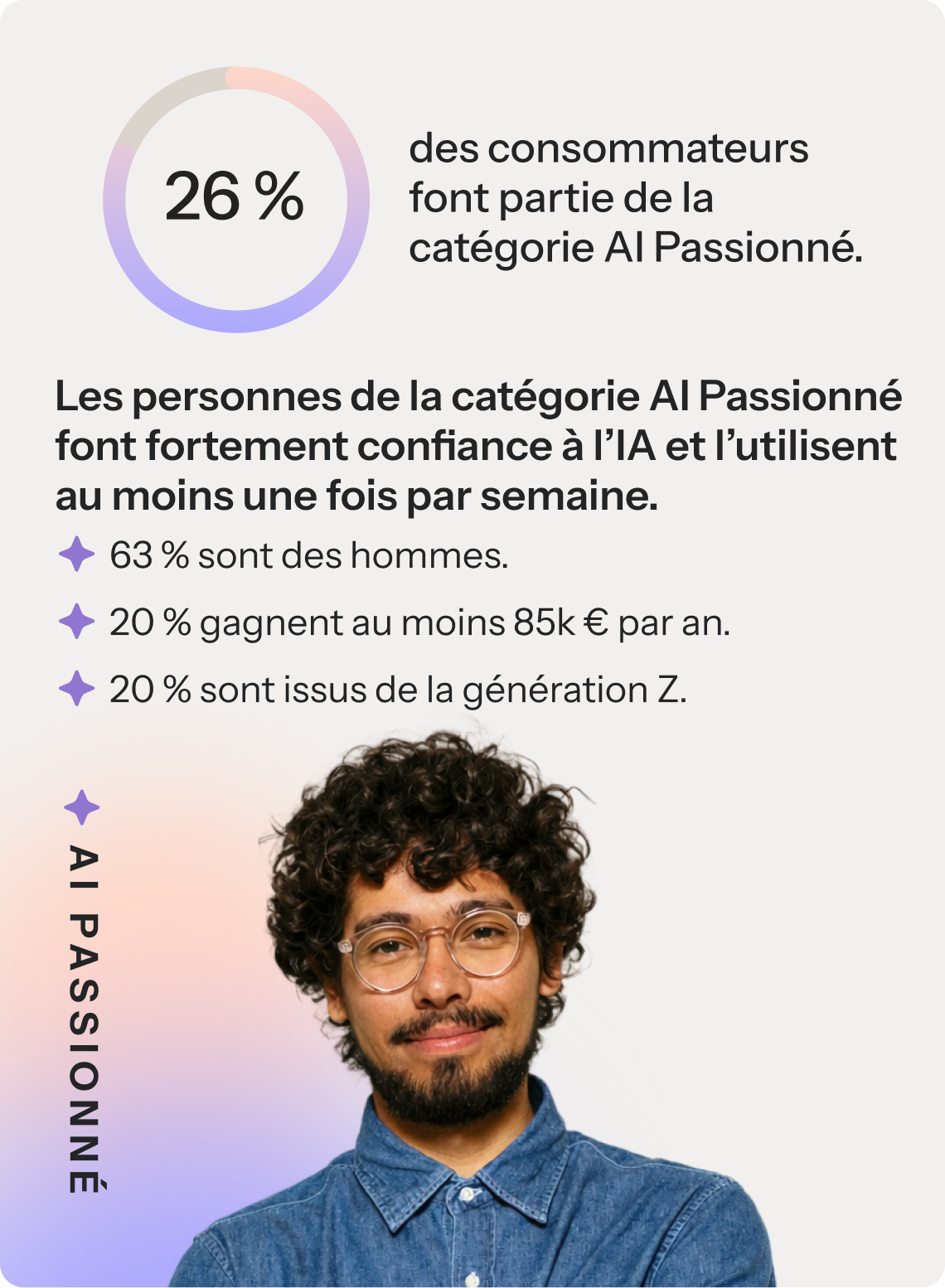
AI Passionné

« L’IA me facilite tellement la vie. Je l’utilise régulièrement et je lui fais une confiance quasi aveugle. »

 photo en gros plan représentant le personnage de l'évaluateur IA

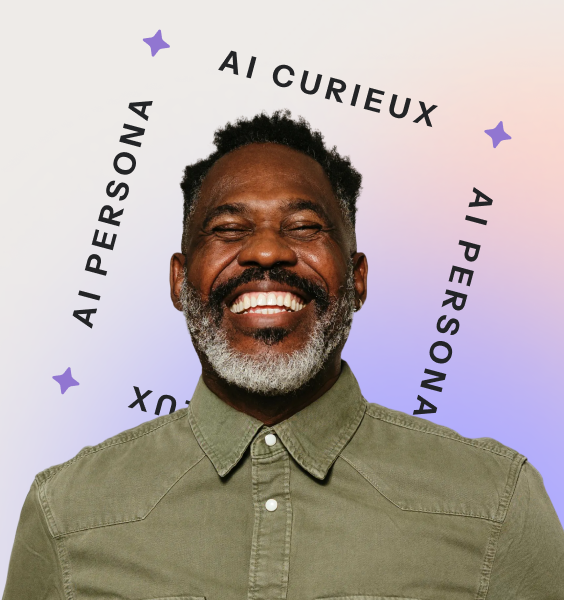
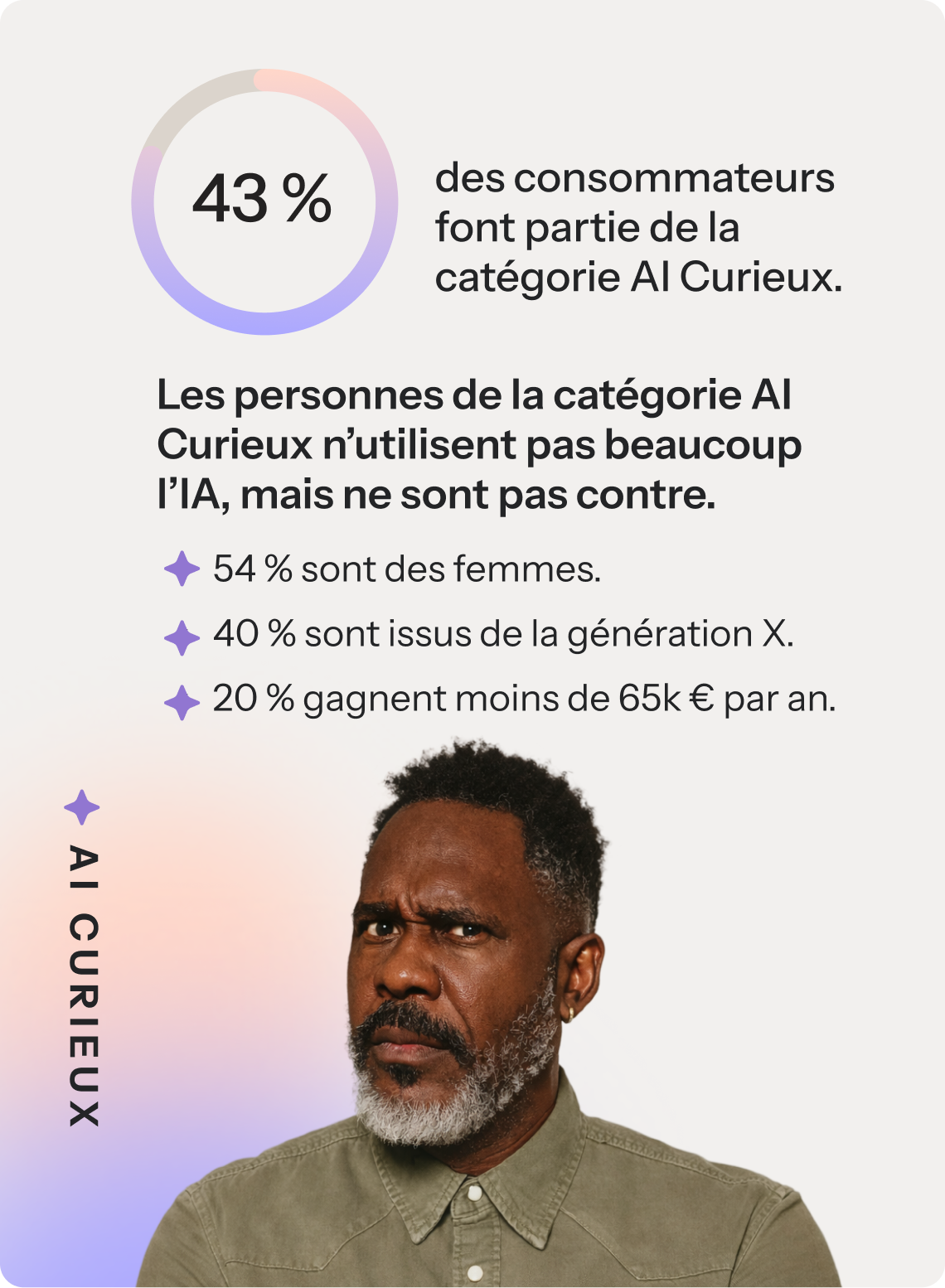
AI Curieux

« Je crois en l’IA, mais je l’utilise surtout pour quelques tâches spécifiques. »

photo en gros plan représentant le personnage de l'« AI Skeptic »

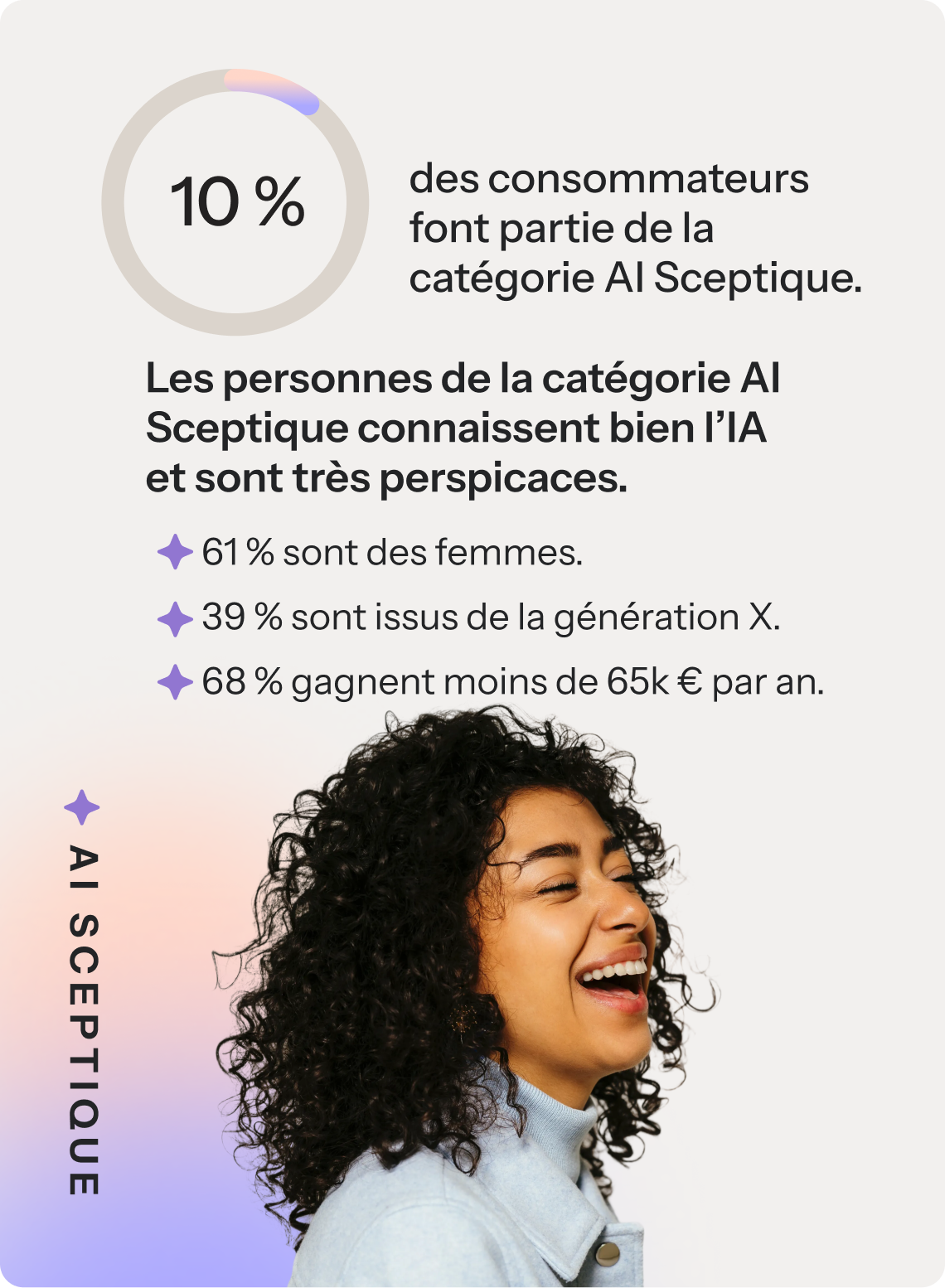
AI Sceptique

« L’IA peut avoir son utilité, mais elle ne fait pas tout. Je vérifie toujours les résultats. »

photo portrait représentant le personnage AI Holdout

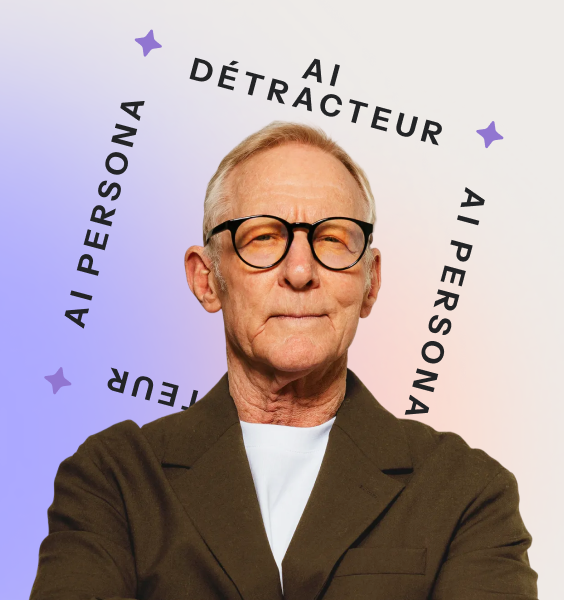
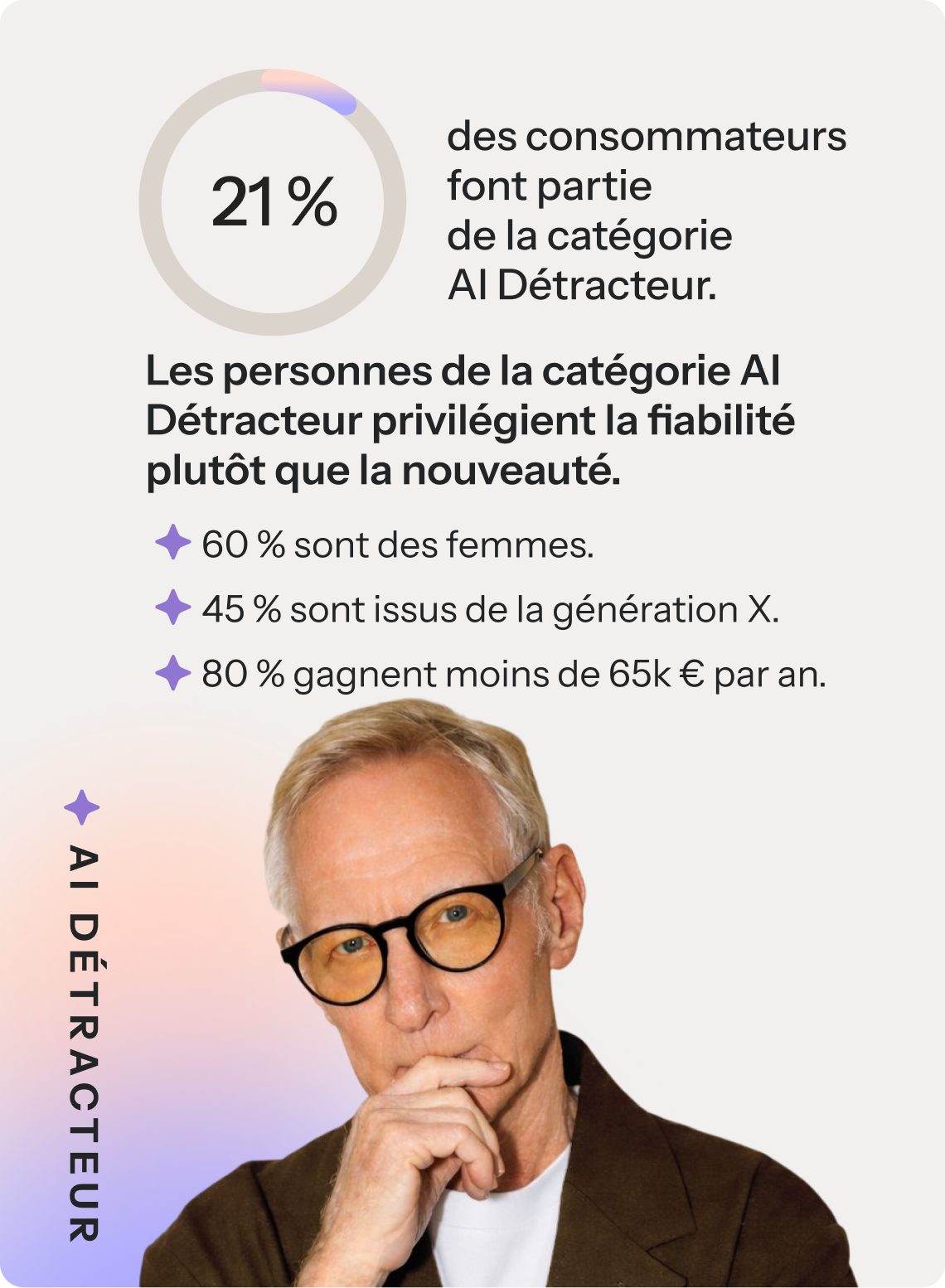
AI Détracteur

« Je n’ai pas confiance en l’IA. C’est un gadget et j’évite de l’utiliser. »

Personas à l’ère du shopping IA

Quels personas votre marque doit-elle cibler en priorité ?

Découvrez les habitudes et les mentalités des acheteurs d’aujourd’hui.

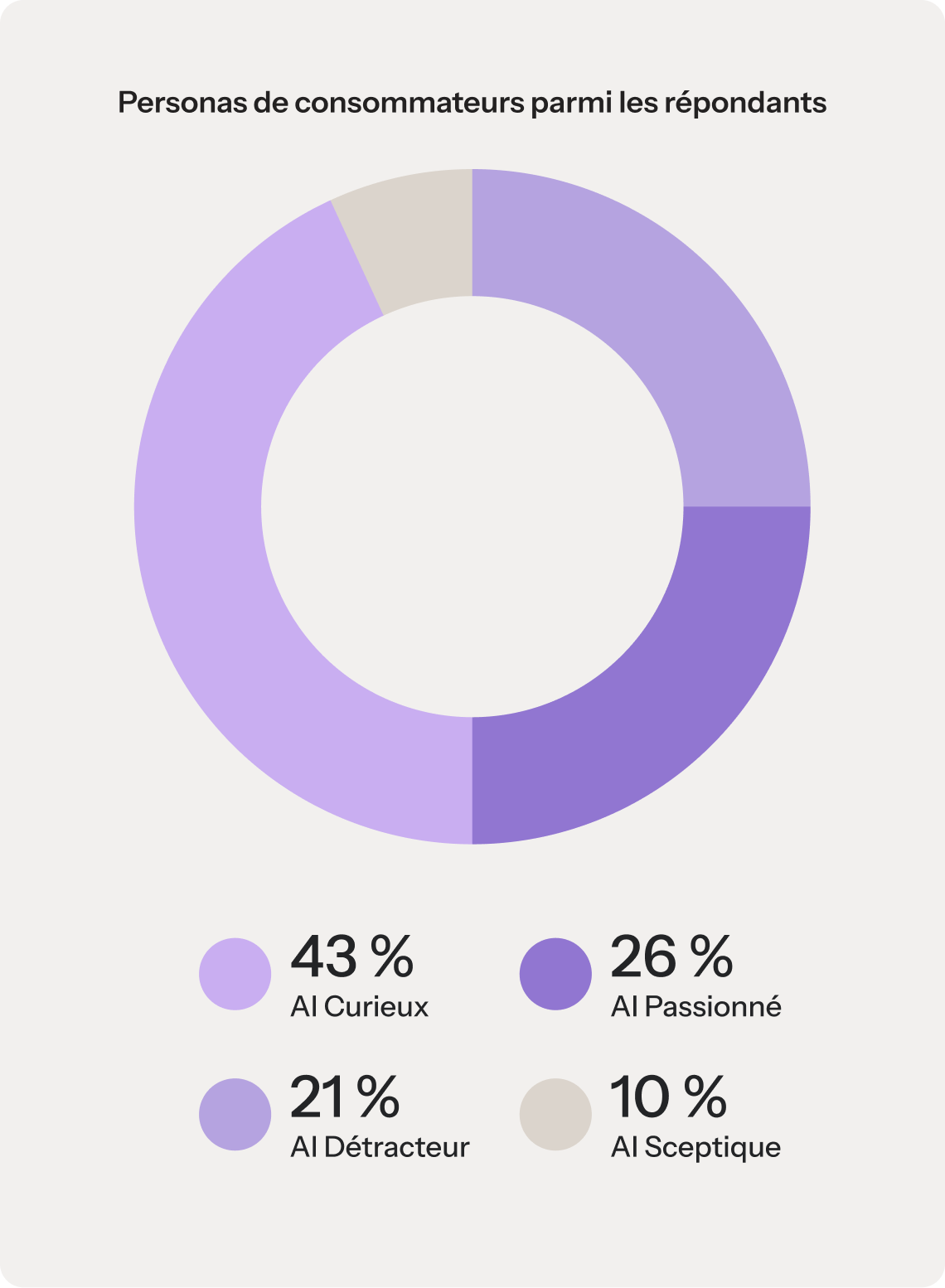
Un diagramme circulaire présentant les profils types des participants à l'enquête en matière d'IA. La répartition du groupe est la suivante : 43 % d'évaluateurs de l'IA, 26 % de passionnés de l'IA, 21 % de réticents à l'IA et 10 % de sceptiques vis-à-vis de l'IA.

Plus de la moitié des consommateurs interrogés font partie de la catégorie AI Curieux ou AI Passionné. Bien que les comportements d’achat varient naturellement en fonction de l’audience, une chose est sûre : l’adoption de l’IA par les consommateurs est désormais généralisée.

Un diagramme circulaire présentant les profils types des participants à l'enquête en matière d'IA. La répartition du groupe est la suivante : 43 % d'évaluateurs de l'IA, 26 % de passionnés de l'IA, 21 % de réticents à l'IA et 10 % de sceptiques vis-à-vis de l'IA.

The AI trust gap is real

When customers aren’t sure about AI, brands must focus on building confidence.

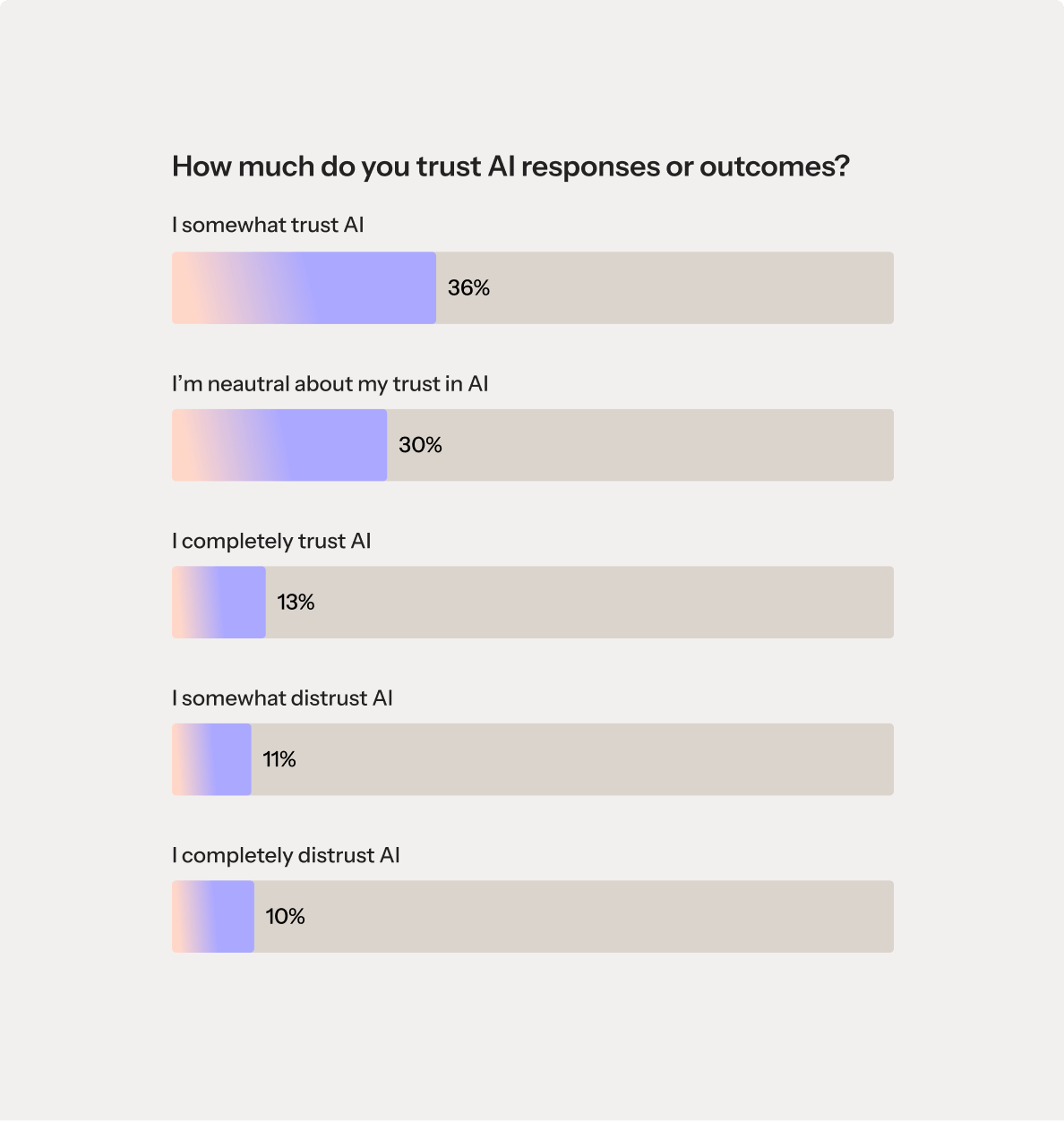
Only 13% of consumers completely trust AI

Many shoppers say they’re neutral or only “somewhat trust” AI, meaning that their research still goes beyond AI responses and outcomes. But as consumer relationships rely more heavily on AI and autonomous agents, brands must find ways to overcome that uncertainty. Where can your brand build more trust?

Start with what’s working. Some audiences already place more trust in AI. Lean on these early adopters to learn more about what resonates and where you can improve your customer experience.

Remember: accuracy is the antidote to distrust. AI tools that ground responses in precise real-time first-party data can help satisfy more skeptical shoppers, including those who want evidence-backed answers.

A bar graph titled "How much do you trust AI responses or outcomes?" The graph shows the following survey results: 36% I somewhat trust AI, 30% I'm neutral about my trust in AI, 13% I completely trust AI, 11% I somewhat distrust AI, 10% I completely distrust AI.
A photograph of a young woman.

Younger generations are more trusting

Millennial and Gen Z consumers are over 75% more likely than baby boomers to completely trust AI.

A photograph of a man working on a laptop.

Men trust AI more than women

Men are 60% more likely than women to “completely trust” AI. And while 63% of AI Enthusiasts are men, 61% of AI Skeptics are women.

A photograph of a European city.

European consumers lead the way

European consumers are 33% more likely than US consumers and 3x more likely than Australian consumers to “completely trust” AI.

Discover data-backed AI tactics for 2026

Our AI Consumer Personas Playbook breaks down the moves that resonate with emerging mindsets.

AI is the new shopping assistant

Revenue is on the line. Even if they don’t fully trust it, consumers are asking AI where to shop and what to buy.

A photograph of a woman sitting on a sofa and using a laptop.

The consumers we surveyed told us that AI has been the most helpful for finding information, doing research, and answering questions. But while people want to spend less time searching, they still need to trust that AI is responding with the correct details.

Since many shoppers already use LLMs like ChatGPT and Claude for these tasks, customer service and shopping assistants are a smart way to start introducing consumer-facing AI into your brand experience.

A photograph of a woman sitting on a sofa and using a laptop.

The AI era isn’t about using AI everywhere. It’s about using it in ways consumers actually value. When shoppers feel understood, respected, and in control, AI becomes a better experience, not a bigger risk.
Jamie Domenici
CMO, Klaviyo

AI slop hurts brand perception

When AI feels too obvious, impersonal, or poorly executed, it erodes trust.

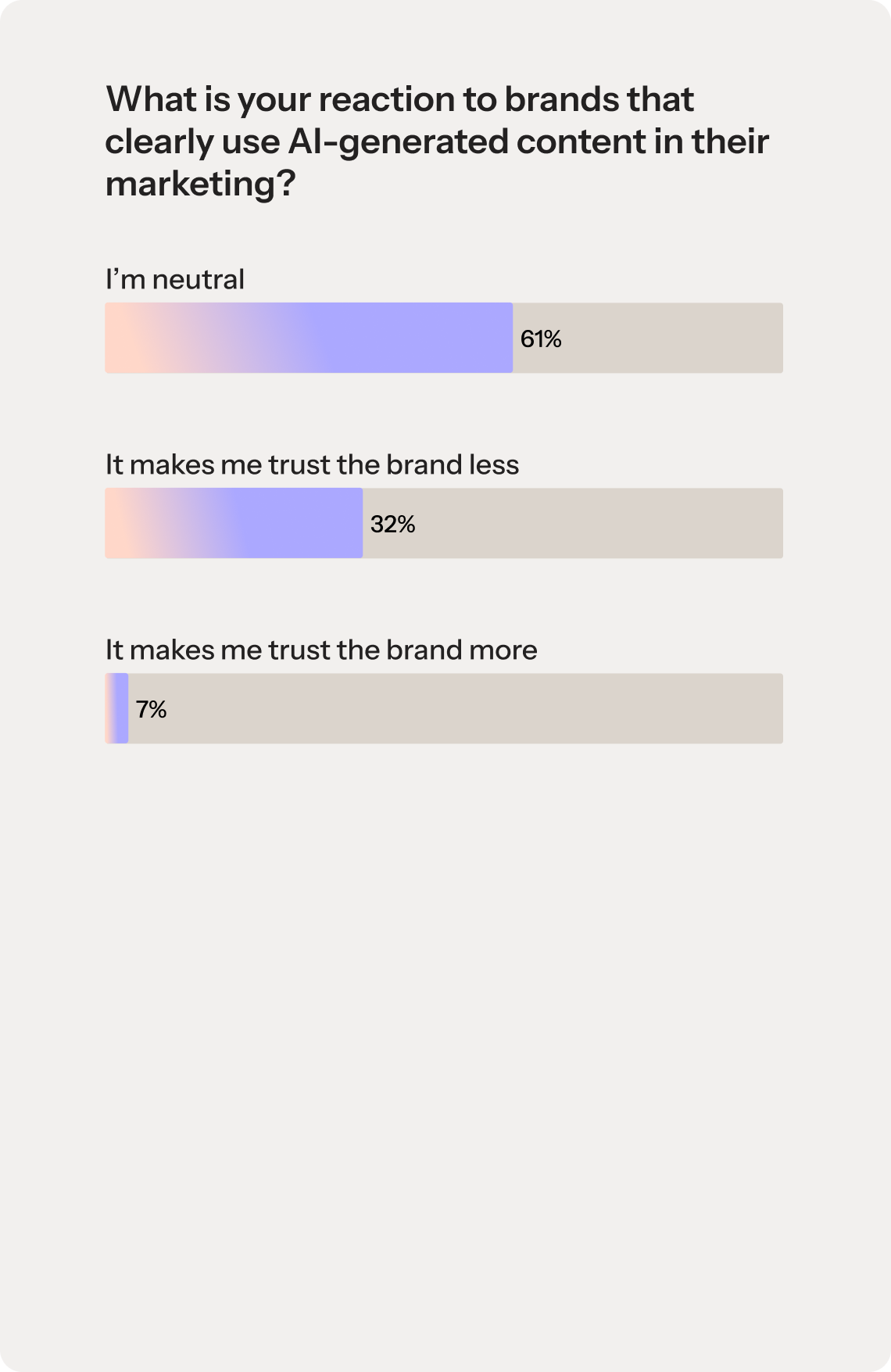
A bar graph titled "What is your reaction to brands that clearly use AI-generated content in their marketing?" The graph represents the following survey results: 61% I'm neutral, 32% it makes me trust the brand less, 7% it makes me trust the brand more.

As consumers grow more AI-savvy, they’re becoming more sensitive to low-quality AI content—also known as AI slop. It shows up as poorly generated AI images with errors or elements that aren’t quite right, and written content that’s overly robotic, formal, or generic.

Nearly 1 in 5 consumers told us that they see low-quality or generic AI content from brands weekly. For some, it leaves a meaningful impression: 32% say it makes them trust brands less. Recent backlash to AI ads from McDonald’s and Coca-Cola suggests that some consumers are especially sensitive to certain AI experiences.

Ultimately, some consumers are more open to brands using AI than others, assuming that AI helps improve their experience. But when it’s too obvious or poorly executed, AI can erode trust.

A bar graph titled "What is your reaction to brands that clearly use AI-generated content in their marketing?" The graph represents the following survey results: 61% I'm neutral, 32% it makes me trust the brand less, 7% it makes me trust the brand more.
A photograph of a woman using her phone.

Gen Z has higher chat standards

Gen Z is 10% more likely than the general population to say customer service chats feel too automated.

A photo of a man using a laptop computer.

Men notice recommendation quality

Men are 26% more likely than women to feel that some product recommendations are too generic.

A photograph of a city.

Some retargeting misses the mark

US consumers are 40% more likely than European consumers to say that post-purchase retargeting ads feel too automated.


Brands must adapt to keep customers satisfied

The right strategy looks different for every brand. It starts by understanding your customer base.

Now’s the time to take action

Shopping habits are changing fast. Consumers are already getting personal, and even emotional, with AI search engines. What does the future of marketing and customer service hold? We’re picturing full-blown, ongoing relationships with the AI agents at our favorite brands—and that day isn’t far away.

The moves you make now will determine how your business fares in this new era. More than 1 in 5 consumers tell us that they now start with LLMs when they want to make decisions, learn new things, solve problems, plan activities, and more. AI is becoming a go-to source for information that makes life easier—even when making highly personal decisions, like career changes and financial planning.

Ultimately, AI is starting to gain ground over traditional search engines and social media as the go-to place for information. But only when it’s accurate, relevant, and fast.

A photograph of a man looking at his phone.

Go behind the scenes with brands getting it right

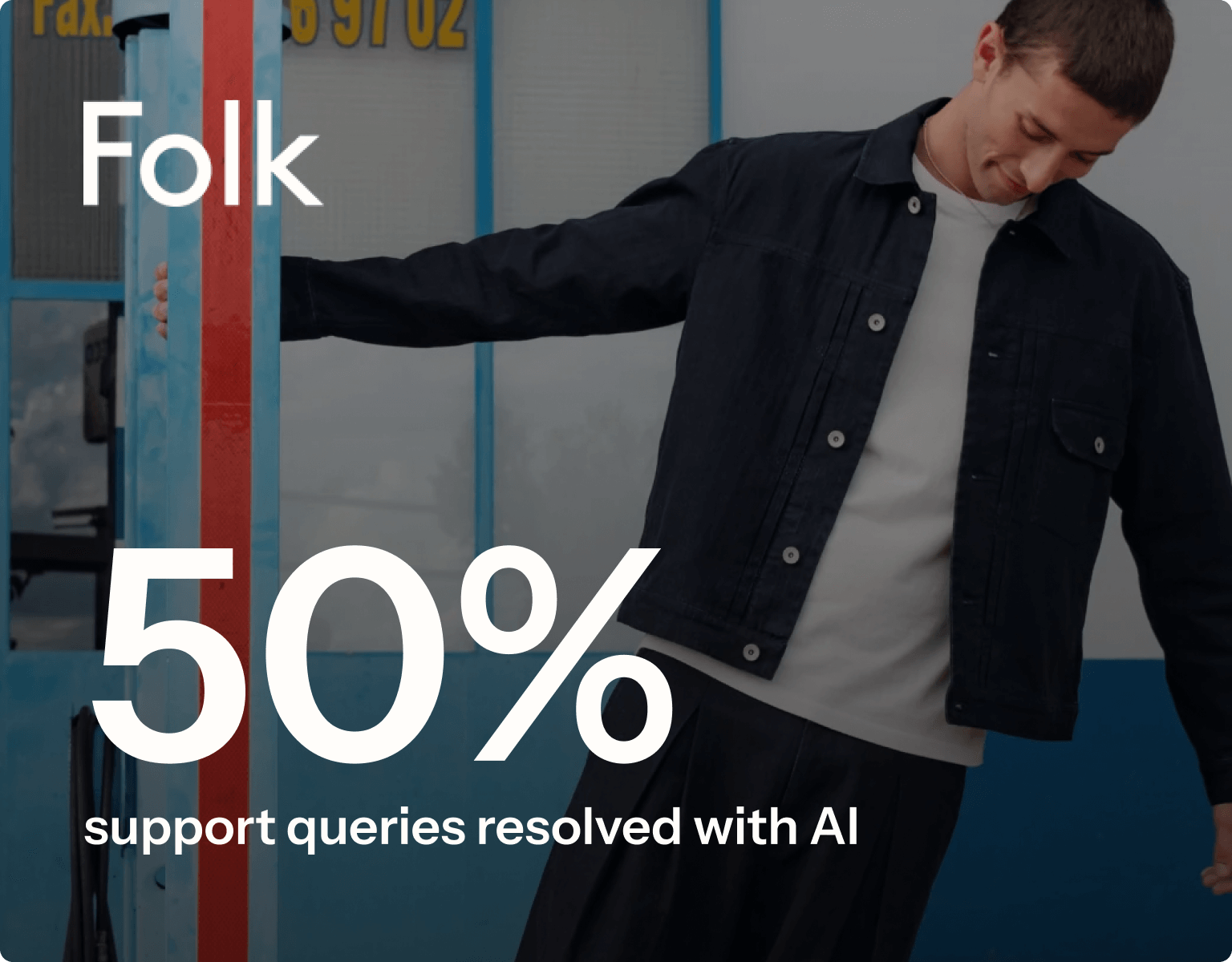
50% support queries resolved with AI.

Folk Clothing resolved over 50% of support queries with AI in a 90-day period

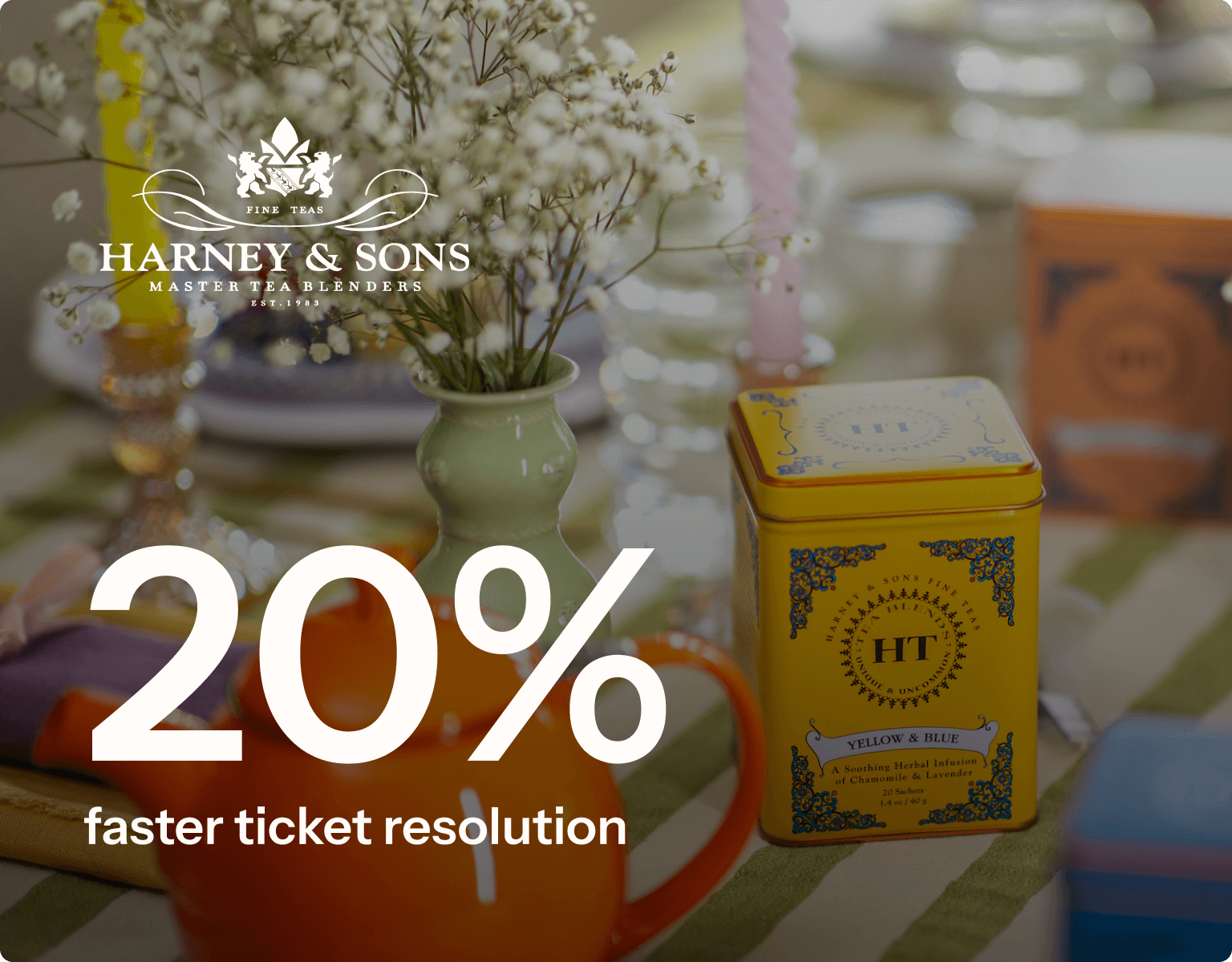
20% faster ticket resolution.

Harney & Sons reduced average ticket resolution time by 20% with AI

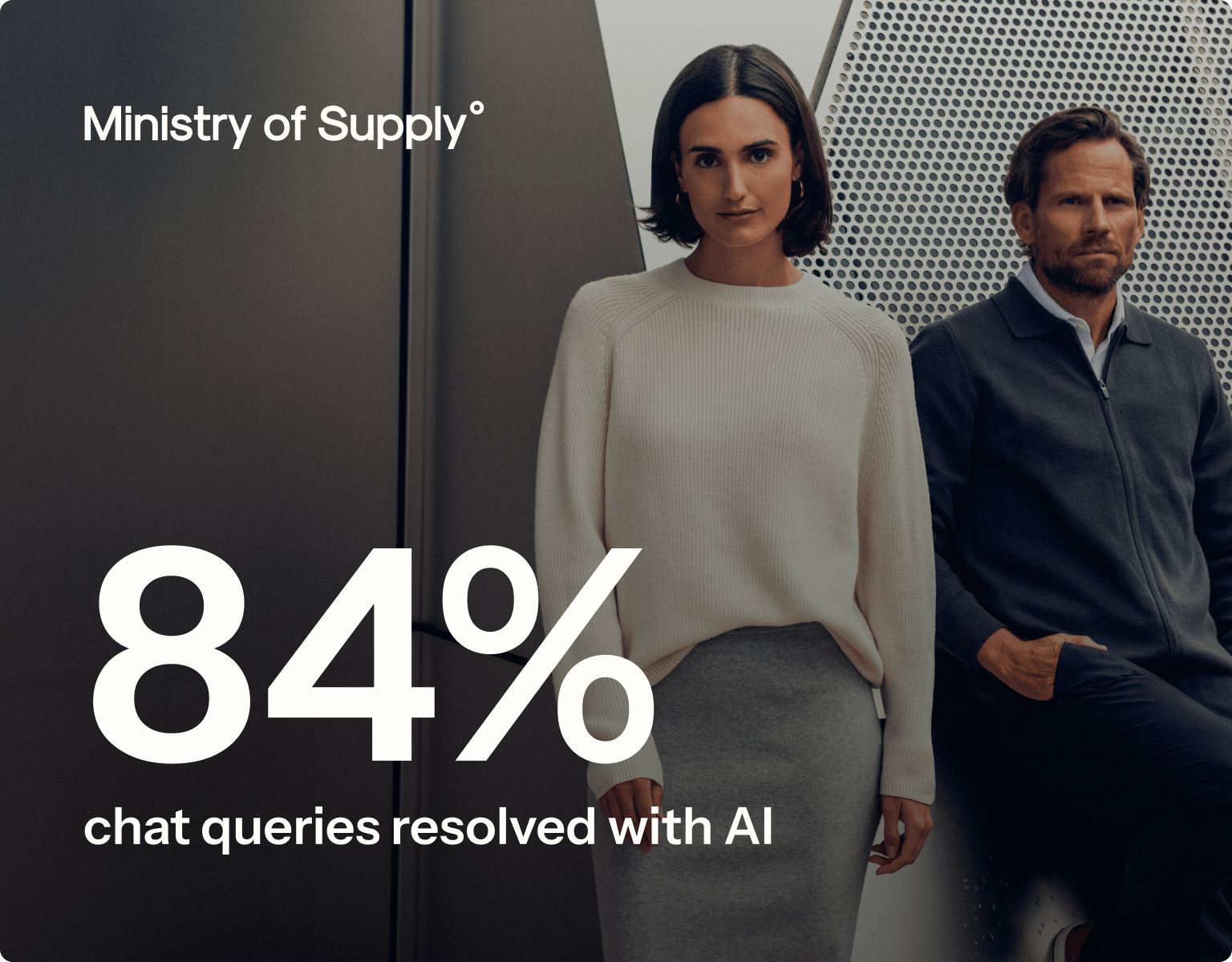
84% chat queries resolved with AI.

Ministry of Supply resolved 84% of product recommendation chat queries in 90 days

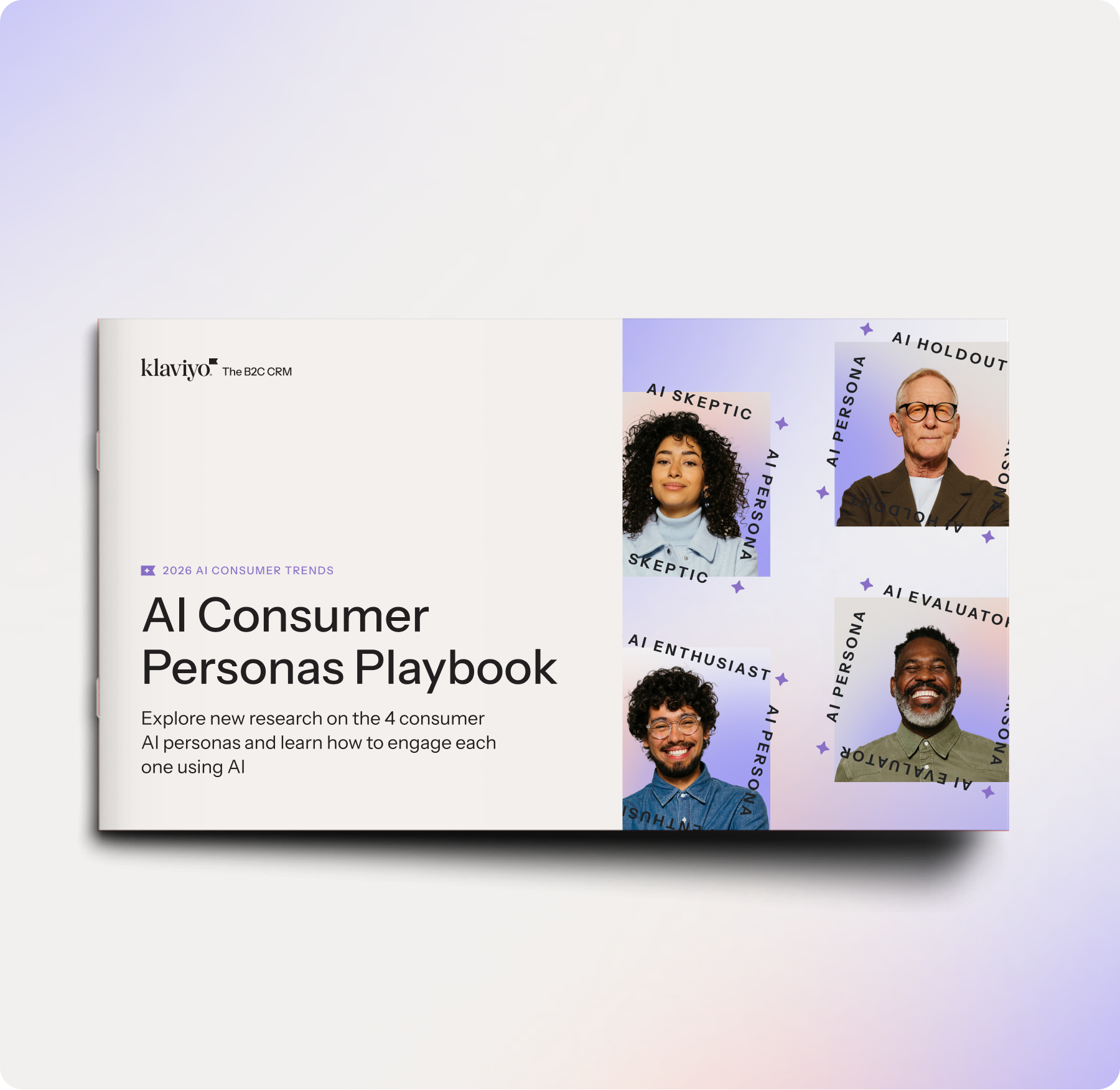
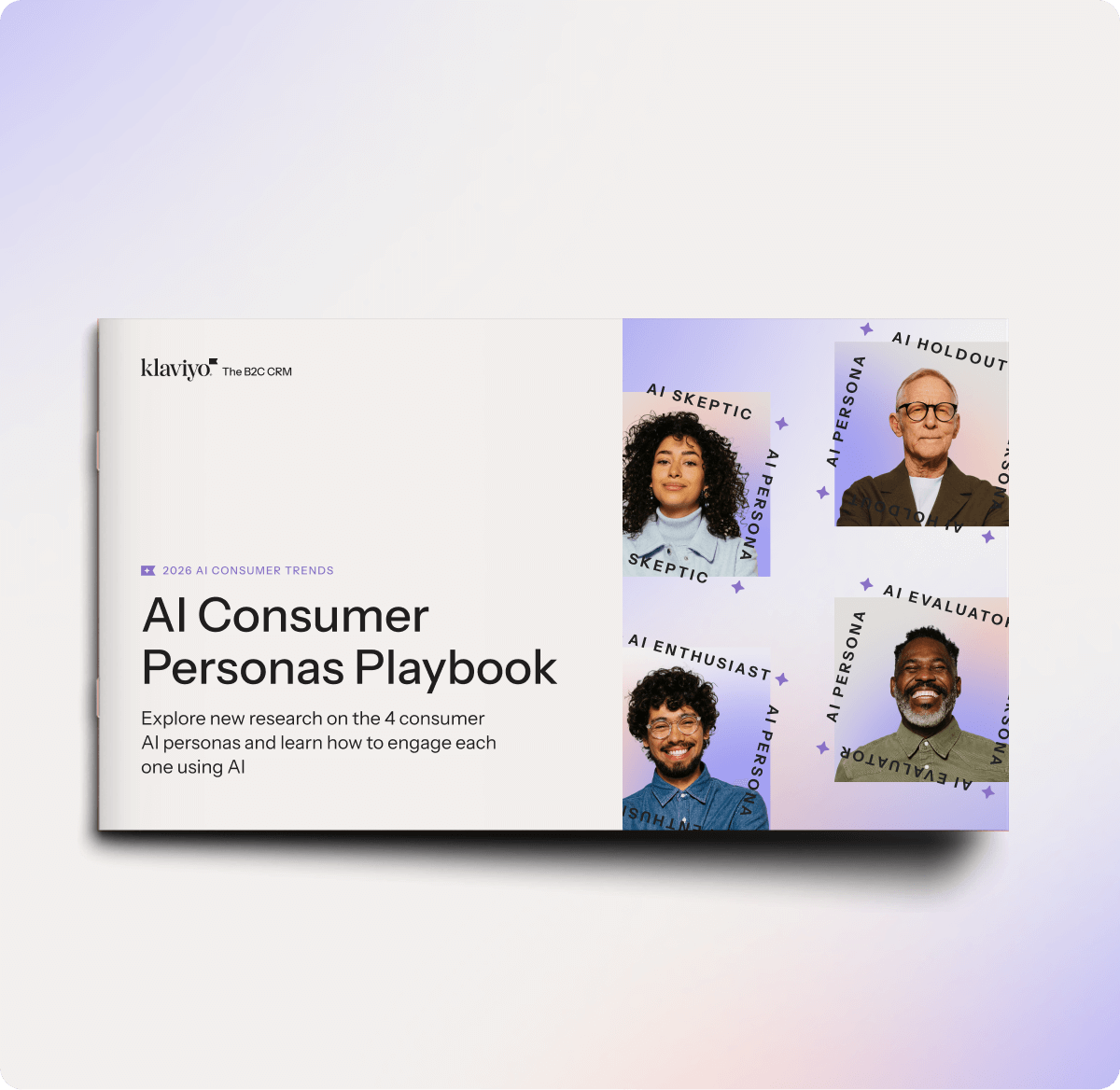
The cover of the AI Consumer Personas Playbook.

Grow your business with data-backed tactics for 4 new consumer personas

Sharpen your AI strategy and identify which personas your business should prioritize with our new AI Consumer Personas Playbook.


Methodology

In December 2025, Klaviyo surveyed 8,000 global consumers, age 18 and up, from the US, the UK, France, Germany, Spain, Italy, Australia, and Singapore. Insights were compiled in collaboration with Datalily.


Grow your business with data-backed tactics for 4 new consumer personas

Sharpen your AI strategy and identify which personas your business should prioritize with our new AI Consumer Personas Playbook.